
Post-impeachment — breaking bad
We want a country that Filipinos deserve, but this small theater we call the impeachment trial of a Vice President is only one side of the fulcrum.

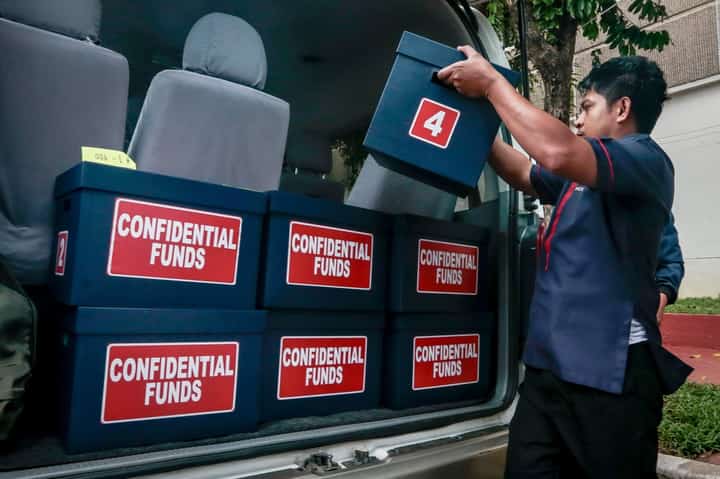
BOXES containing Commission on Audit documents related to the alleged misuse of confidential funds are transported after the adjournment of the 11th day of the impeachment trial of Vice President Sara Duterte on Monday in Pasay City.
Photograph by Aram Lascano for DAILY TRIBUNE
For brevity, the Articles of Impeachment are as follows: Art. I, misuse of confidential funds; Art. II, unexplained wealth; Art. III, bribery; and Art. IV, grave threats — in that order, the end goal of which is removal and perpetual disqualification from public office.
At the trial, the prosecution broke the order of presentation with Art. IV first, followed by Art. I. In the former, it necessitated trimming the witness list for redundancy or strategy. In the latter, before “impeachment fatigue” catches up, the prosecution might thereafter proceed to Art. II if it aims to save the day, lest Art. III becomes a mere reboot or reset of Art. I, both having the same melting point, figuratively stated.
Whatever the “order of battle” or pecking order of the two remaining articles, the prosecution’s last hurrah rests on Art. II. Even AI or social media is deceived into hypothesizing that people are “sharply divided” or “evenly split,” since there can only be one version of the truth when the bubble bursts.
The prosecution’s iconic declaration — “knowing when to stop” — marks a milestone that ensures the speedy pace of the trial in the coming days without taxing the time of the court. Both ways, it sounds good, unless it’s a Trojan horse that will take the viewing universe by surprise.
What if, by some parliamentary maneuver, the court divides the house to short-circuit the process, operationalizing thereby the official interpretation on a two-thirds vote formula? With one more senator beyond the Senate’s coercive jurisdiction, and who might face plunder charges upon return, a dwindling population of its members favors the administration, whatever the game plan may be.
The end result will make uncertain who really won when adversarial counsels display fairly great skill in presenting their case. As this trial draws to a close, there’s an intellectual footprint that legal scholars or students of policy could revisit at a later time. The presiding judge has done a commendable job of taming the beast.
So what scenario or vistas are seen on the intellectual horizon? Let’s circle back to the articles of impeachment. Given that the witnesses presented in Art. IV were largely from the National Bureau of Investigation, relevant and critical congressional bills or resolutions, as well as emerging frontiers of academic research, must undertake seminal and surgical theoretical and conceptual innovations to streamline the agency’s mandate to a more satisfactory level.
Furthermore, given that the witnesses for Art. I are key state auditors of the Commission on Audit, no less than a serious, total overhaul of this constitutional body is in order. Verily, existing circulars — old and new — must undergo legal consolidation or codification, because the morphology of audit has been compromised.
Unless it undergoes a total overhaul, it risks becoming an enabler of the corruption it aims to eradicate. Where the witnesses in the trial were samples of the kind of state auditors we have, it brings to a high level of uncertainty what their audits have really accomplished.
Again, it becomes a menu for public sector reform, not only as far as policymakers are concerned but more so academics, taxpayers, direct stakeholders, the private sector — or a whole constellation of state and non-state actors and players who have skin in the game.
Absolutely, it cannot be left to the apparent level of competence that state auditors exhibit now, lest we go down the rabbit hole.
There’s no forgetting the great challenge before us as well-meaning citizens of this democratic Republic. We want a country that Filipinos deserve, but this small theater we call the impeachment trial of a Vice President is only one side of the fulcrum.
There’s equal urgency to get to the bottom of things in light of the perceptibly widespread cracks in the walls of flood control projects that take away lives, injure many and deprive countless of our countrymen of shelter.