
Lower GDP is just temporary, Palace says
Malacañang on Friday said that even though the country’s gross domestic product has further decreased to 2.3 percent from 2.8 percent last quarter, considered to be the lowest in five years, the numbers are just temporary and the country’s growth will eventually bounce back.
“We acknowledge that the country's economic growth in the second quarter was 2.3%. This result was lower than we had hoped. The numbers show the challenges we have faced, but they do not determine the country’s long-term direction. This slowdown is only temporary,” the Executive Department said in a statement on Friday.
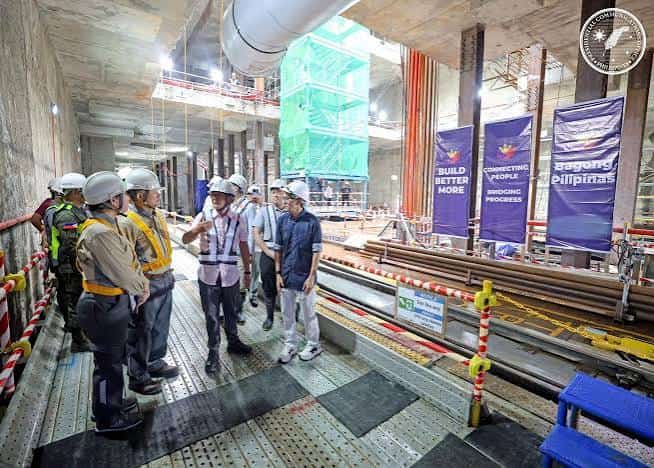
According to the Palace, the lower GDP growth was a result of unusual events, especially the impact of the Middle East conflict, which has affected inflation, fuel prices, jobs, and remittances, along with a temporary slowdown in public construction as the government increased efforts to address corruption in infrastructure spending.
“As the government continues to speed up spending and release budgets more quickly, we hope the economy can start to pick up in the second half of the year as well,” it said.
Complementing the reaction, the government said exports grew by 12.2 percent because of the strong demand for electronics and semiconductors, AI-related products, and agricultural goods like products.
On the other hand, merchandise exports have seen double-digit growth for five straight quarters, while manufacturing grew by 2.6 percent, showing the strength of our industrial production even as construction slowed down.
“Agriculture grew by 2.7%, helped by ongoing government support for farmers and fisherfolk. Government spending rose to 8.3% as we focused on helping families most affected by higher prices. Tourism is bouncing back. Travel exports rose by 12.6%, and more visitors helped boost services exports,” Malacañang’s statement said.
Although consumer confidence is still low, the government maintained that businesses are starting to improve, and manufacturing activity continues to expand, supported by strong global demand for technology products and the expected recovery of infrastructure spending.
“The administration is focused on accelerating growth in the second half of the year by fast-tracking high-impact infrastructure projects, maintaining price stability, continuing targeted assistance for vulnerable sectors, including the expanded UPLIFT assistance reaching 7.5 million families, the P12/L Fuel Subsidy Program and the Bawat Bayan Makikinabang Rice Program, expanding exports and improving competitiveness, positioning the Philippines to benefit from the global AI and digital economy through investments in skills, technology, and higher-value industries, such as Pax Silica,” the statement further read.
Apart from the said interventions, the Marcos administration stressed that it has key Legislative-Executive Development Advisory Council measures that will support the middle class and consumption, including the proposed EPIRA amendments banning distribution utilities and electric cooperatives from passing system loss charges and their corresponding VAT onto ordinary consumers, the Sariling Kuryente Act, the increase in the personal income tax exemption threshold to P350,000, the Minimum Corporate Income Tax (MCIT) exemption for small businesses, General Tax Amnesty, and Travel Tax abolition. (RAFFY AYENG)