




F@ck Silica?
It also seems highly suspect why anyone would want to tap the Philippines as a critical partner in such a massive undertaking.

Text size
It also seems highly suspect why anyone would want to tap the Philippines as a critical partner in such a massive undertaking.
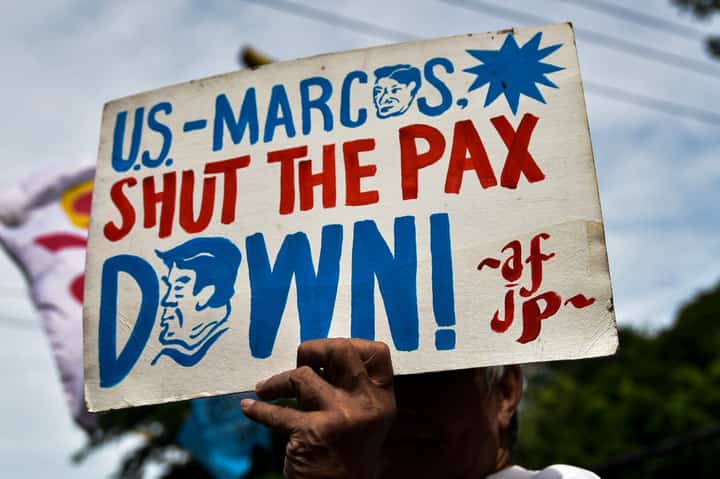
When the President mentioned Pax Silica in his recent State of the Nation Address, many people could not immediately react because they simply did not know what it was. In fact, when the Vice President was asked about it, she, too, could not comment.
Despite the confusion, however, the administration continues to push the project because it promises to create hundreds of thousands of new employment opportunities and allow the country to become an active player in the global AI and semiconductor ecosystem.
Through targeted tech hubs and industrial zones, it seeks to enable the Philippines to take part in building secure and resilient supply chains for semiconductors, artificial intelligence infrastructure and critical minerals.
For a country that struggles to attract foreign direct investment compared with neighboring ASEAN countries, this is certainly a welcome development. For so long, our economy has been driven primarily by household spending, retail activity and the service sector.
While household final consumption has historically accounted for roughly two-thirds of gross domestic product, jobs have largely come from retail, food, tourism and business process outsourcing, rather than farming or manufacturing. This partly explains why the country remains poor.
Unlike developed countries that adopted a state-guided capitalist model historically built on rapid, export-driven industrialization, the Philippines remains stuck with a mixed-market, developing capitalist economy that neither produces nor creates enough. This is why any opportunity to pursue advanced technology manufacturing should be seized — at all costs, in fact.
However, it also seems highly suspect why anyone would want to tap the Philippines as a critical partner in such a massive undertaking. Given the high cost of doing business here, restrictive ownership limits and infrastructure gaps, it does not make sense why any foreign group would establish a massive industrial hub that would be prohibitively more expensive to build in the Philippines.
Mineral processing, semiconductor manufacturing, energy systems and digital logistics are already costly enough. So why make them even more expensive?
Maybe, just maybe, the social and environmental costs pointed out by critics really do outweigh the perceived benefits. Which is why only a country like the Philippines would be desperate — and willing — to absorb them.
VP denies Gracioso’s cash-delivery allegations
Early-stage cancer can be more easily treated than in the later stages. That is why doctors recommend regular cancer…
‘As far as I recall and based on the record, there is no showing.’
President Ferdinand Marcos Jr. is flying to Singapore for a five-day working visit upon the invitation of Singaporean…
