
Diesel nears P100/L anew as fuel price surge hits

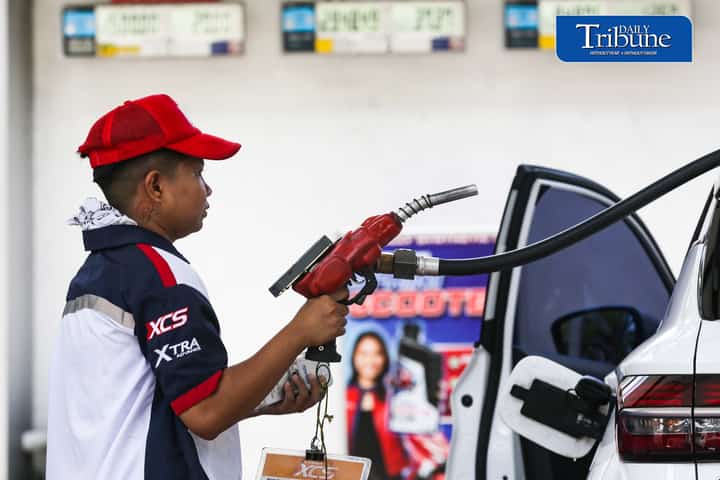
Diesel prices in Metro Manila are inching closer to the P100-per-liter mark this week after another hefty oil price hike takes effect tomorrow, pushing pump prices to as high as P94.57 per liter and premium diesel past P100.
The Department of Energy (DOE) on Monday announced another round of hefty fuel price increases, with pump prices rising by P3.65 per liter for gasoline, P10.68 per liter for diesel, and P11.77 per liter for kerosene as global oil markets continue to react to tensions in the Middle East.
The latest adjustments pushed diesel prices in the National Capital Region (NCR) to P80.88-P94.57 per liter, bringing regular diesel within striking distance of the P100-per-liter mark.
Premium diesel now sells for P84.38 to P101.43 per liter. Gasoline prices range from P69.85 to P99.75 per liter, depending on the fuel grade, while kerosene costs P106.77 to P137.27 per liter.
Common retail prices in NCR are now estimated at P85.65 per liter for RON97/100 gasoline, P85.35 for RON95, P75.65 for RON91, P88.58 for diesel, P89.78 for premium diesel, and P120.67 for kerosene.
Despite the sharp increase, Energy Secretary Sharon S. Garin assured the public that the country’s fuel inventories remain sufficient and that supply is stable.
“We cannot control what is happening in the Middle East, but we can control what is happening in the Philippines as far as the law will allow us,” Garin said.
“Let me assure the public on the point that matters most. Our fuel supply is sufficient. Inventories remain adequate. Filipinos can go about their normal routines and operations with confidence.”
Garin noted that while the government cannot influence global oil markets, it is focused on measures it can implement domestically to cushion the impact on consumers.
“We are living through a period of global volatility that no single country can control.
What we can control is how we respond. That is why the DOE is taking significant steps right now to help manage prices and monitor fuel supply. What is truly under our control is our electricity consumption,” the Energy chief said.