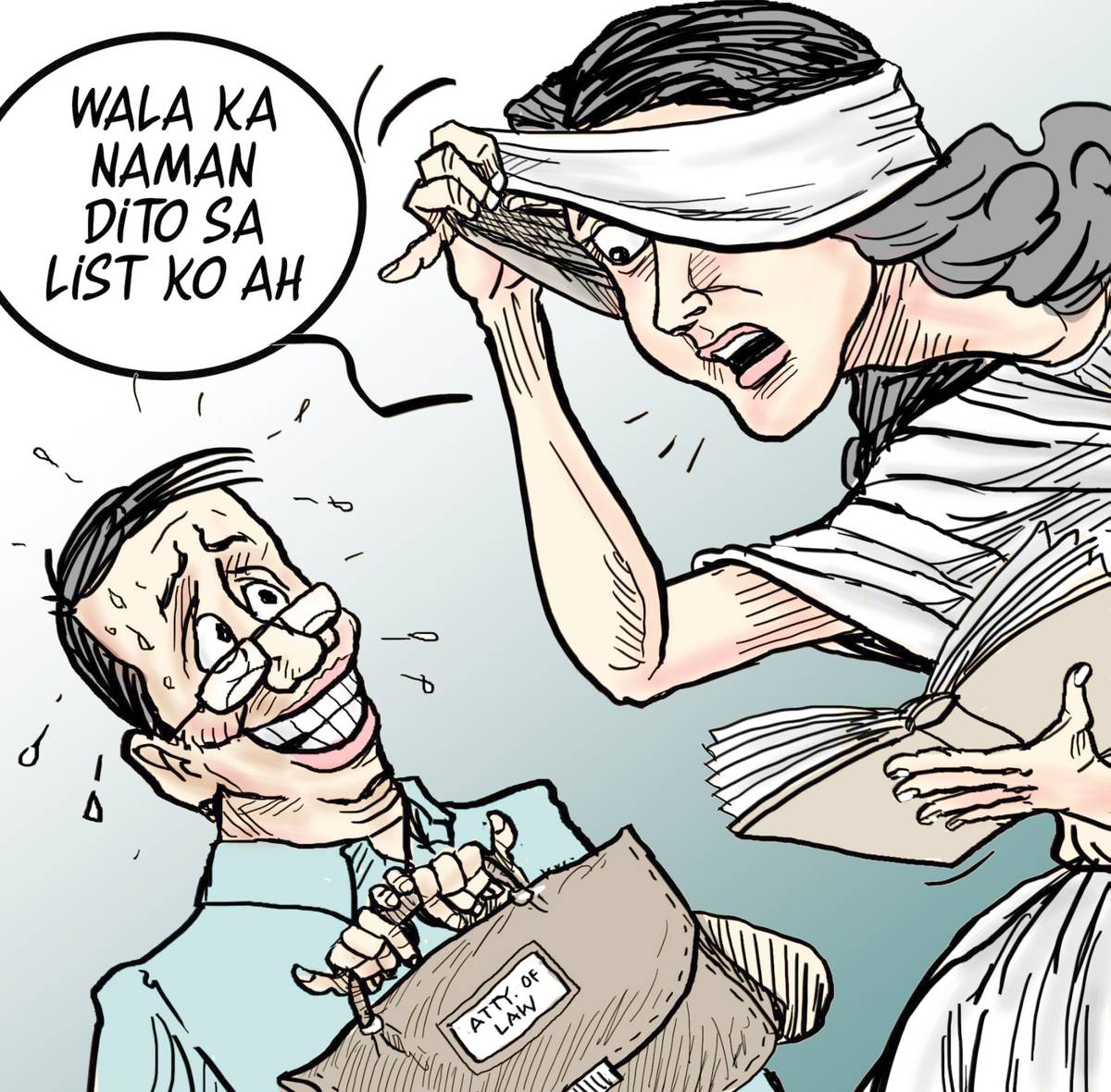
Imaginary lawyer


In one of the country’s most closely watched proceedings, a senator took the microphone and casually counted who among the judges had legal training. Nosy Tarsee noticed that a handful of names rolled off the tongue with confidence. The lawyers were identified. A current law student was acknowledged. Then came another name — described as a law graduate.
There was just one problem. Public records tell a different story.
The senator mentioned has long been associated with claims of academic distinction, including assertions made decades ago about earning honors from one of the country’s premier universities.
Those claims have repeatedly been challenged over the years, with the university itself clarifying its official records. Likewise, while the senator did enroll in law school, there is no record of completing the law degree or passing the Bar exams.
Yet, in the heat of a nationally televised proceeding, the description slipped by almost unnoticed.
Perhaps it was an honest mistake. Perhaps it was based on an old misconception that had circulated for years. Or perhaps it reflected how easily narratives become accepted as fact when repeated often enough.
Whatever the explanation, the incident serves as a reminder that credentials matter — especially in proceedings where legal expertise carries significant weight.
Ironically, the very same institution now scrutinizing evidence and demanding precision is populated by individuals whose own backgrounds are sometimes accepted without verification.
If testimony, documents, and exhibits must withstand rigorous examination, shouldn’t public claims about qualifications receive the same treatment?
The issue is bigger than one senator or one mistaken remark. Public office does not require a law degree, nor should the lack of one diminish a legislator’s ability to craft policy or represent constituents. Many effective lawmakers have never attended law school.
What matters is accuracy.
Titles should not be casually bestowed. Academic achievements should not be embellished. Professional qualifications should not be assumed.
In an era where fact-checking is only a few clicks away, repeating inaccurate credentials only fuels public skepticism toward institutions already struggling to maintain trust.
The lesson from this episode is straightforward: before assigning someone a degree they never earned or a professional license they never obtained, it pays to check the record.
After all, facts are supposed to be the foundation of justice.