




China played the long game

Text size
Artificial intelligence (AI) may dominate today’s headlines, but China’s biggest advantage may have been built long before ChatGPT, Gemini or large language models existed.
It was electricity.
As Washington and Beijing compete for leadership in artificial intelligence, policymakers often focus on chips, algorithms and computing power. Yet experts increasingly argue another resource could determine who ultimately wins the AI race: energy.
Former US Treasury Secretary Henry “Hank” Paulson warned that while the United States continues to lead in artificial intelligence, its growing shortage of electricity could become its biggest obstacle.
“We’re ahead of China when it comes to AI,” Paulson said. “But the biggest potential drag we have is not having enough electricity to power our data centers.”
Data centers powering AI models consume enormous amounts of electricity, with demand expected to rise sharply over the coming decade.
China anticipated that reality years before artificial intelligence became mainstream.
Former US Ambassador to China Nicholas Burns said decades of investment in transmission lines, renewable energy and grid expansion have fundamentally reshaped the country’s energy landscape.
“I used to travel a lot by train in China,” Burns said. “The degree to which China is building transmission lines all across the country... it’s staggering.”
Those investments did not begin because of AI.
According to Elizabeth Economy, senior fellow at the Hoover Institution, Beijing started pursuing renewable energy aggressively as early as the late 1980s and early 1990s, steadily incorporating clean energy into successive national development plans.
“AI is very late to the game,” Economy said. “Renewables have been part of the Chinese plan for decades.”
Today those early decisions are paying dividends.
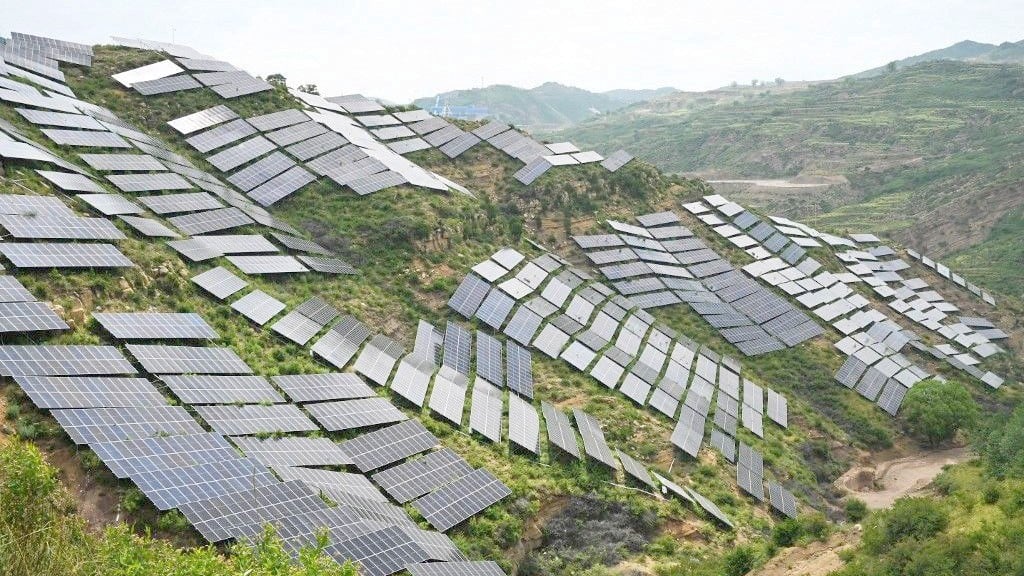
China now leads global supply chains for electric vehicles, lithium batteries, solar panels and wind turbines while continuing to invest heavily in power generation. Economy noted that China invested roughly US$1 trillion in clean energy last year alone, viewing the sector not only as an environmental priority but also as an economic opportunity.
“This is a real economic play,” she said. “Clean energy is green for the environment... and it’s green for money.”
The lesson extends beyond geopolitics.
Growth rarely happens because of decisions made yesterday. It happens because of investments made years, sometimes decades, before anyone else recognizes their importance.
China’s renewable energy strategy was not built around artificial intelligence. Artificial intelligence simply arrived at a moment when those investments had matured. That long-term thinking may prove to be one of Beijing’s greatest competitive advantages.
Housing is probably the biggest issue affecting people the world over.
Malacañang on Monday called for a more thorough investigation into the questioned flood control projects in Taguig…
The defense on Monday backed the move by senator-judges to exclude a prosecution witness who testified on the firearms…
