
Ebola treatments trials start next week
The trials will start at a hospital in DRC’s northeastern Ituri province.
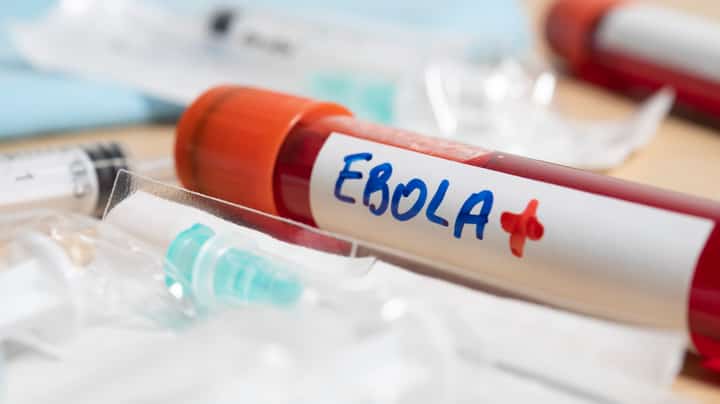
GENEVA, Switzerland (AFP) — Trials of two separate potential treatments to fight the deadly Ebola outbreak in the Democratic Republic of Congo (DRC) are expected to begin next week, the World Health Organization (WHO) said on Wednesday.
A total of 1,048 Ebola cases, including 277 deaths, have been confirmed in DRC since the outbreak was declared on 15 May — although many experts believe the true toll is significantly higher.
This outbreak is down to the rare Bundibugyo species of Ebola virus — for which there are no approved vaccines or treatments.
WHO chief Tedros Adhanom Ghebreyesus said Wednesday that “preparations are now complete for a trial of two therapeutics that’s expected to start in DRC next week.”
The trial, he said, would evaluate whether the monoclonal antibody MBP134 and the antiviral drug remdesivir “can help to reduce mortality in patients with Bundibugyo virus — alone, or in combination.”
Tedros thanked the United States and Gilead Sciences for donating the doses needed for the trial.
The trials will start at a hospital in DRC’s northeastern Ituri province — where the vast majority of cases have been detected — Vasee Moorthy, who leads the WHO’s research and development blueprint arm, told Agence France-Presse.
The numbers of patients required would depend of how effective the therapeutics appear to be: the more effective they are, the fewer patients who would be needed, Moorthy said.
Between 500 to 1,000 people were expected to take part, he added.
Moorthy said preparations were all but complete, and the trials should provide answers as to whether each treatment, as well as both in combination, were safe and effective.
Tedros said the WHO and its partners were working closely with affected communities “to inform and involve them in the trial.”
“We are also working to ensure the communities have access to the therapeutics, should they prove safe and efficacious,” he said.
Tedros said the trial would be conducted by the WHO and a consortium of partners, including DRC’s National Institute for Biomedical Research, the Alliance for International Medical Action and Oxford University.