
VLF REVIEWS PART 1: ‘Tengang Kawali’, ‘Kapit Tuko’


FROM the tech-heavy 'Password123, Pilipinas321,' which uses a cybercrime setting to deliver a sharp commentary on corruption, to 'Lualhati,' a poignant story of forbidden love and faith in a convent that left audiences in tears, this year’s festival pulls no punches.
When you’re a playwright, you strip away masks and notions of what is acceptable, and walk naked on the page without shame.
Here, the stage becomes a space where modesty, religious constraints, and societal rules are shed to reveal the innermost psyche.
Here are my reviews of Sets A and B of the ongoing Virgin Labfest 2026.
Set A: ‘Tengang Kawali’
A “tengang kawali” is someone who deliberately ignores what they hear, pretending not to listen or refusing to acknowledge uncomfortable truths. This is the political set — a commentary on society, governance, corruption, greed, and oppression.
1. 'Password123, Pilipinas321'
What begins as a jargon-heavy exchange between co-workers involved in cybercrime suddenly escalates into a tense finale. Playwright Anthony Kim Vergara, an IT professional by trade, may have drawn inspiration from the 2023 ransomware attack on PhilHealth.
Beneath the computer jokes and technical language lies an unsettling portrait of the country's casual tolerance for corruption. From petty scams to large-scale fraud, the play examines a disturbing nonchalance toward theft and greed. The set design is particularly impressive.
2. 'Patayin ang mga Surot'
Floyd Scott Tiogangco’s EJK-themed play relies heavily on stars Donna Cariaga and Lian Silverio for its laughs. The CCP Black Box Theater frequently erupts as the married couple trades banter on the final night of Rodrigo Duterte’s presidency.
The play is highly predictable, with the surot (bedbug) serving as an obvious metaphor that I will not spoil. While it offers little in the way of fresh insight and largely pokes fun at DDS culture, Cariaga and Silverio’s impeccable comedic timing elevates this lowbrow comedy. Beneath the humor, however, lies a portrait of the drug war and its victims.
3. 'Human Rights Story of the Year'
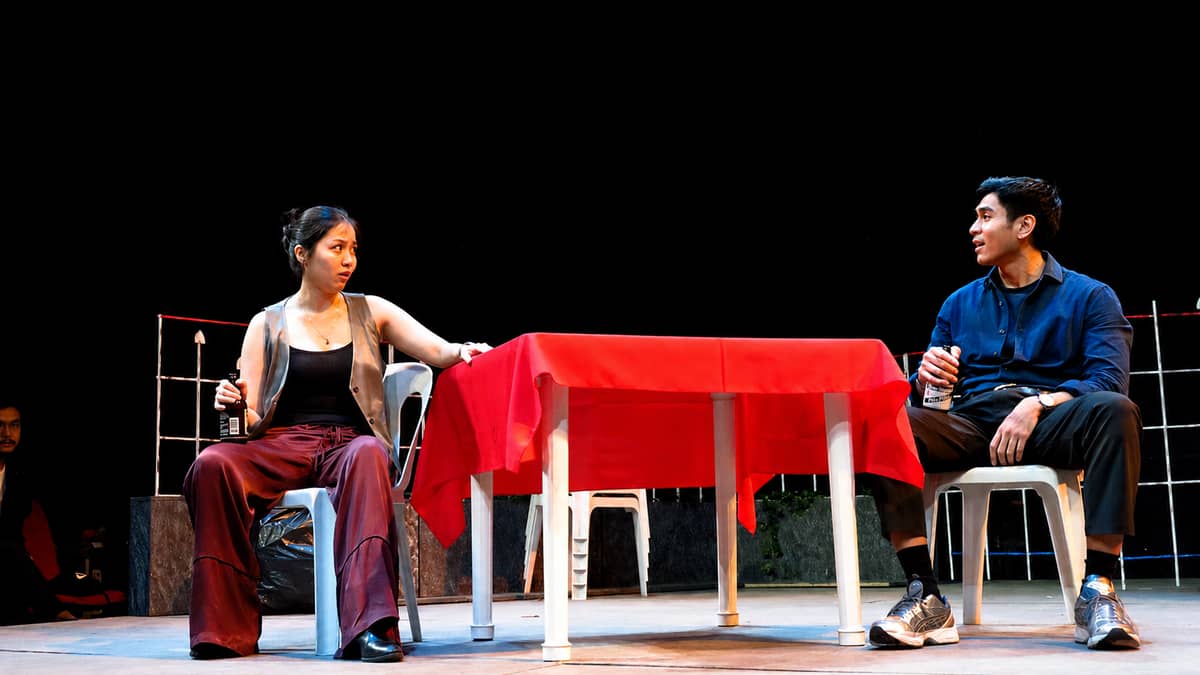
Elijah Felice Rosales’ two-hander is essentially an argument between former colleagues, played by Justine Peña and CJ Navato. With the stage stripped bare, the audience is forced to focus entirely on the text and performances.
HUMAN RIGHTS
The repeated use of “Ish” and “Doy” at the end of nearly every sentence feels unnatural, but the material itself is compelling. As the pair excavate each other’s compromises and failures, the play offers a provocative commentary on journalistic ethics, integrity and accountability.
Set B: ‘Kapit Tuko’
A tuko (tokay gecko) is famous for its powerful grip. This is the religious-queer set, centering on individuals who refuse to let go — whether of dogma, God, love, or personal needs. It explores the collision between faith and identity, where the pain of breaking religious rules overlaps with the pain of denying one’s own desires.
1.'Haram'
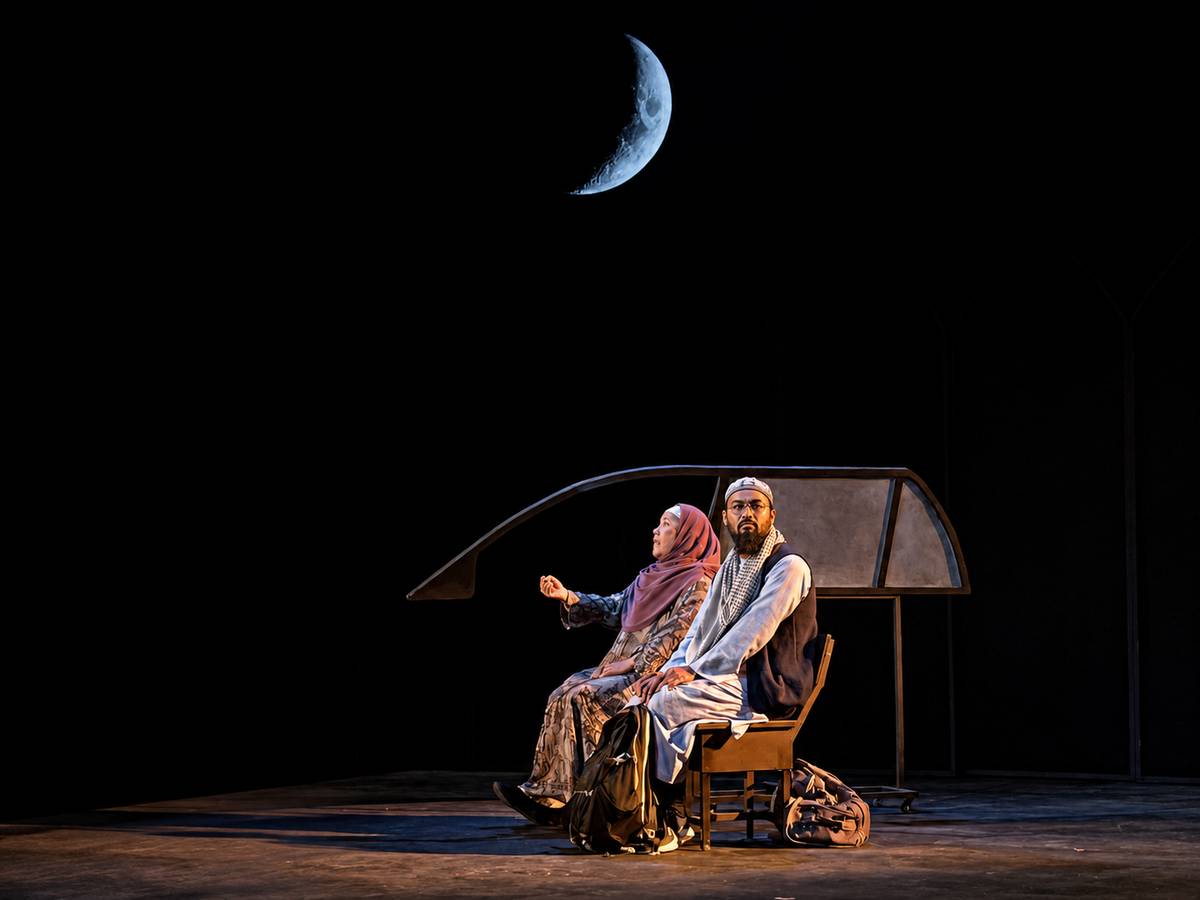
Alab Usman’s Haram (Forbidden) arguably has the most intriguing premise of the set, depicting queer Muslims through three interconnected vignettes. What could have been a difficult but necessary conversation about LGBTQ+ Muslims is weakened by uneven pacing.
HARAM
The play offers glimpses into the pain of being labeled haram, the burden of religious anxiety, and the ways some queer Muslims remain devoted to their faith. However, the material lacks the bite, vulnerability, and candor needed to fully realize its themes. Despite its rich subject matter, it often feels surface-level.
2. 'Balos'
Neil Arkhe Azcuna’s play is the strongest entry in the set — an intelligent, accessible, tightly constructed drama about ideology, fanaticism and compassion.
Set in a secluded hospital during the 2017 Marawi siege, a group of healthcare workers faces a moral dilemma under extreme pressure. The play is anchored by the ever-reliable Bong Cabrera as Dr. Abdul, whose commanding stage presence remains among the most compelling in Philippine theater.
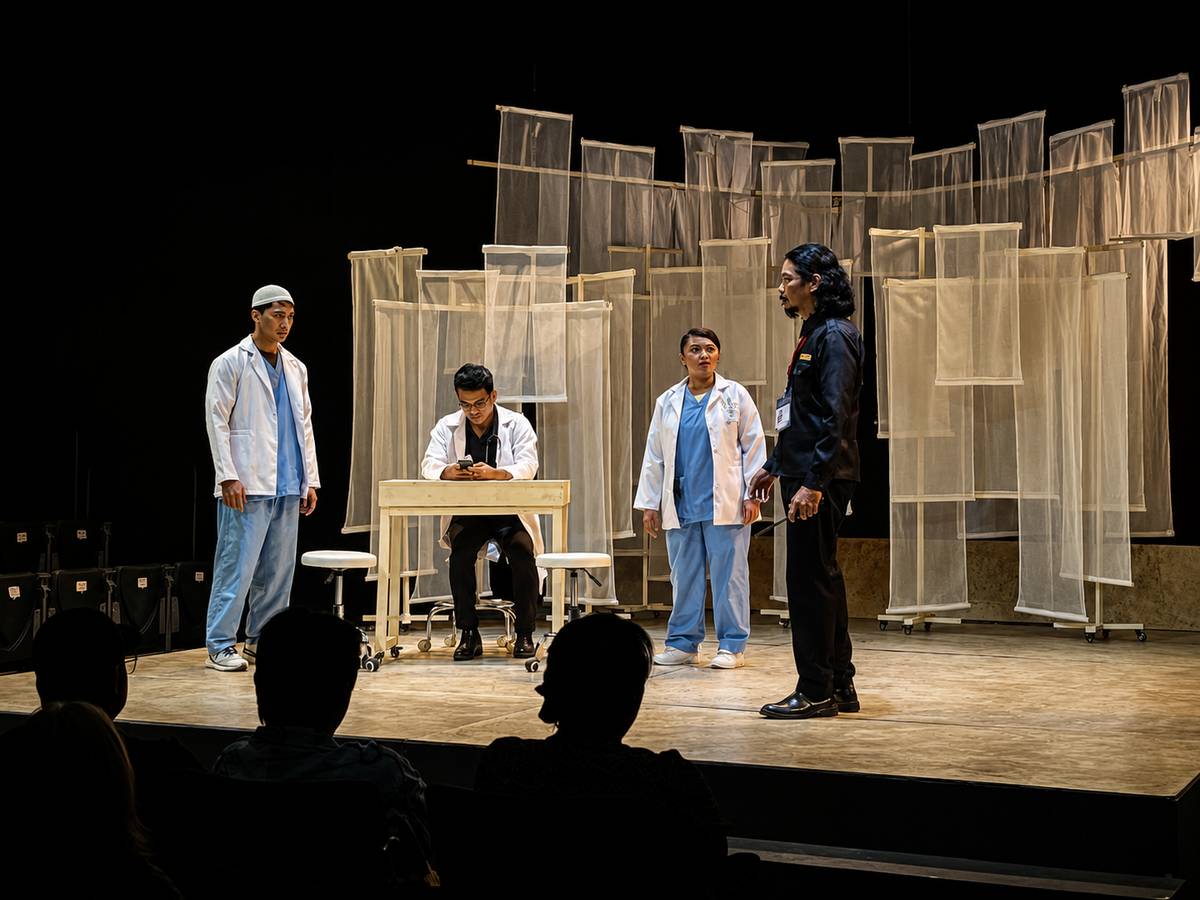
SET during the 2017 Marawi siege, Neil Arkhe Azcuna’s 'Balos' is a tightly woven drama about a medical team facing an intense moral dilemma.
With precise dialogue and emotional restraint, Balos demonstrates that the human condition is rarely black and white. It presents a provocative interplay of faith, prejudice, duty and accountability. The suspense lies not in the siege itself, but in the characters' internal conflicts.
3. 'Lualhati'
LGBTQ+ scholars have suggested that the relationship between Ruth and Naomi in the Book of Ruth can be read through a romantic lens. Playwright Gab Mactal draws from this biblical text while weaving in the writings of Thomas Aquinas.
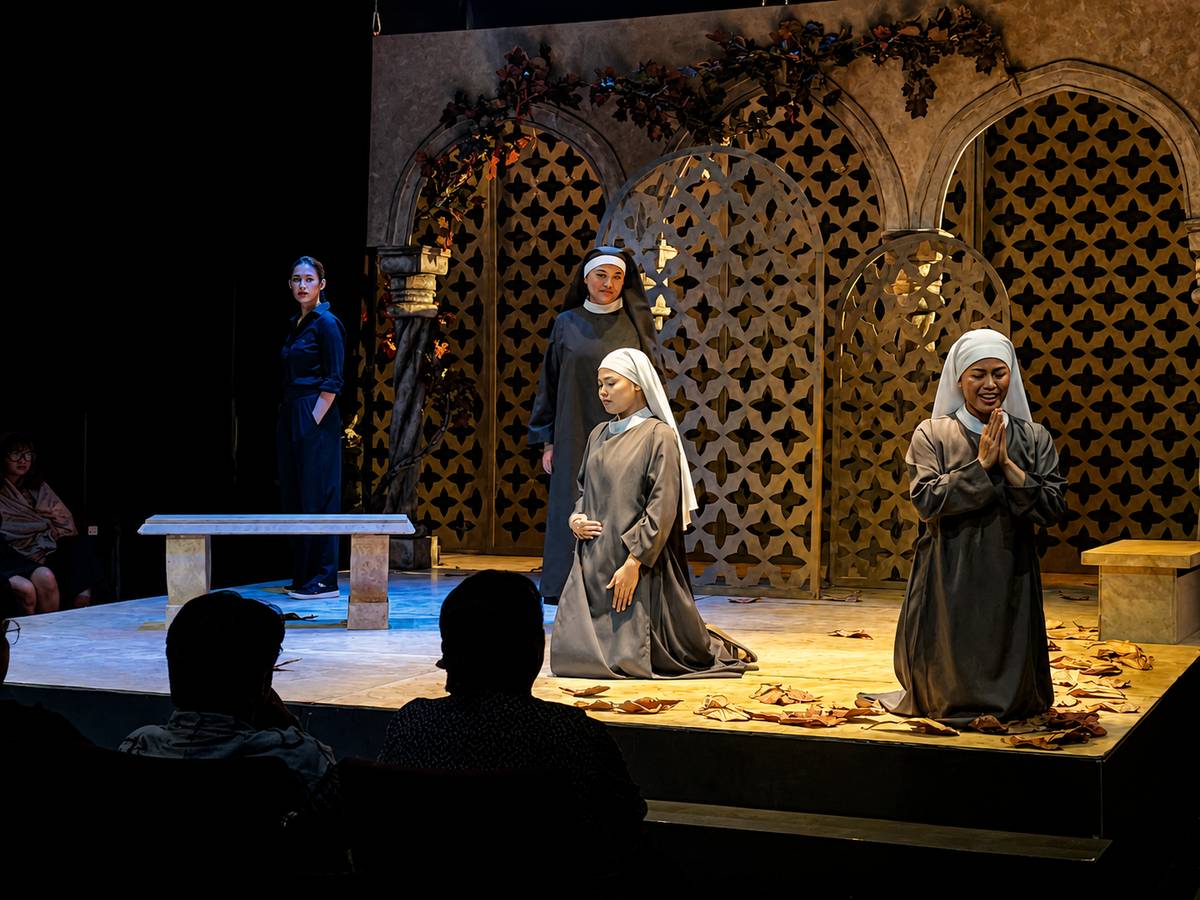
A beautiful set design transports audiences into a convent, where Jacinta, a philosophy teacher, and Lualhati revisit their shared past in search of closure.
LUALHATI
Time collapses as the adult women interact with their younger selves onstage. While the device can occasionally be distracting, Mactal ultimately crafts an exploration of forbidden love within the Catholic Church — and, more poignantly, the devastating interruption of a love before it had the chance to begin.
At the 4 June matinee, audience members could be heard sniffling throughout the theater, with some visibly wiping away tears. Angel Aquino, who plays Jacinta, remained emotional and was still weeping during the curtain call.
VLF XXI runs until 28 June at the Tanghalang Ignacio Gimenez of the Cultural Center of the Philippines.