
Coup pal
Once Trillanes inserted himself into the scene like an overcaffeinated stage actor, the arrest attempt ceased to look like a sober legal procedure but a politically weaponized spectacle.

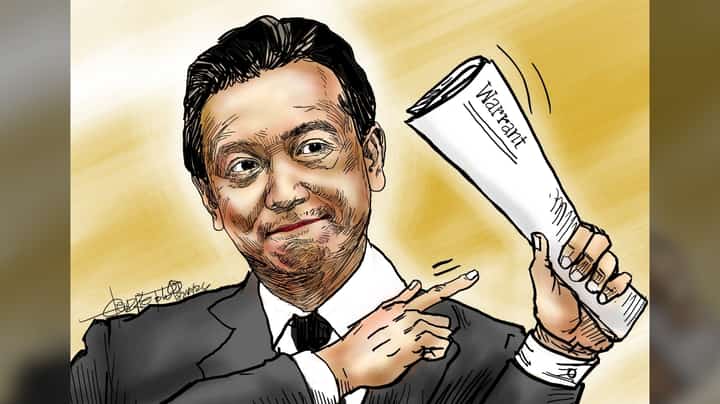
Hothead Antonio Trillanes IV has always fancied himself a revolutionary. History, unfortunately for him, keeps casting him instead as a man forever confusing melodrama with courage.
Real coup plotters seize the center of power. They storm palaces, military headquarters, broadcast stations and airports. They move with the cold precision of men determined to overthrow governments.
Trillanes? He occupied a serviced apartment and later barricaded himself inside a luxury hotel.
This “sundalong kanin” leading a rebellion from Oakwood and the Manila Peninsula is the political equivalent of trying to launch a revolution from the breakfast buffet. And now the same man is once again trying to turn the Senate into a theater stage.
The latest spectacle came during the attempt by the National Bureau of Investigation to serve an ICC-issued warrant on Senator Ronald “Bato” dela Rosa. The situation was already volatile enough: an international tribunal, sovereignty questions, Duterte loyalists on edge, television crews circling like vultures over fresh roadkill.
Then Trillanes arrived carrying what he claimed was a copy of the arrest warrant. No, he waved it before the cameras like a bingo caller announcing the lucky numbers at a barangay fiesta. That single act poisoned the entire operation.
Whether one likes Bato or despises him is irrelevant. Whether one supports the ICC or considers it a foreign intrusion is beside the point. Once Trillanes inserted himself into the scene like an overcaffeinated stage actor, the arrest attempt ceased to look like a sober legal procedure but a politically weaponized spectacle.
Because if the authorities were genuinely attempting to effect an arrest under sensitive legal conditions, why was one of Duterte’s loudest political enemies publicly brandishing documents before service had even been completed?
Who authorized that? Who leaked it? Why was a former mutineer functioning like some freelance spokesperson for an international tribunal?
The answers hardly matter now. The perception had already detonated like a fragmentation grenade.
Then, as if the circus lacked only a fire-eater, Trillanes turned his fury on Interior and Local Government Secretary Jonvic Remulla.
All Remulla said was that procedures had to be carefully followed — through Interpol and the Philippine Center on Transnational Crime, the designated coordinating body for international law enforcement requests — in effecting the arrest.
That was enough for Trillanes to demand Remulla’s resignation. Only in Philippine politics can the arsonist lecture the fire department about safety regulations.
Remulla’s statement was hardly radical. It was the bare minimum expected from a Cabinet secretary handling a politically explosive situation. The arrest of a senator, an international court, and constitutional questions is not a drunken karaoke contest conducted on impulse.
Procedures exist precisely to prevent legal disasters and political bloodbaths. But Trillanes thrives on blood pressure, not procedure.
For years, Trillanes has survived politically not by persuasion but by perpetual agitation. He is the opposition’s human air raid siren — always blaring, always urgent, forever announcing the collapse of democracy sometime before lunch. And yet voters outside his narrow anti-Duterte constituency have repeatedly rejected him.
Trillanes lost the vice presidential race in 2016, failed in his Senate comeback bid in 2022, and lost the Caloocan mayoral race in 2025. The revolutionary mystique wears thin when the electorate keeps handing you rejection slips every election cycle.
Perhaps that is why Trillanes keeps returning to spectacle. Spectacle is oxygen for failed politicians who mistake noise for relevance.
The tragedy is that the ICC issue and the drug war deaths are serious matters deserving credibility and discipline.
Instead, the public got another Trillanes performance — papers waving, cameras rolling, outrage flowing by the gallon. The old mutineer never really changed. He merely traded combat boots for press conferences.
And somewhere under all this noise lingers the enduring image of a Philippine rebellion under Trillanes: not tanks rolling into Malacañang, not radio stations seized at dawn, but armed men skulking around inside a five-star hotel while room service waited nervously downstairs.
Pathetic.