
Why disaster response is no longer enough for the Philippines
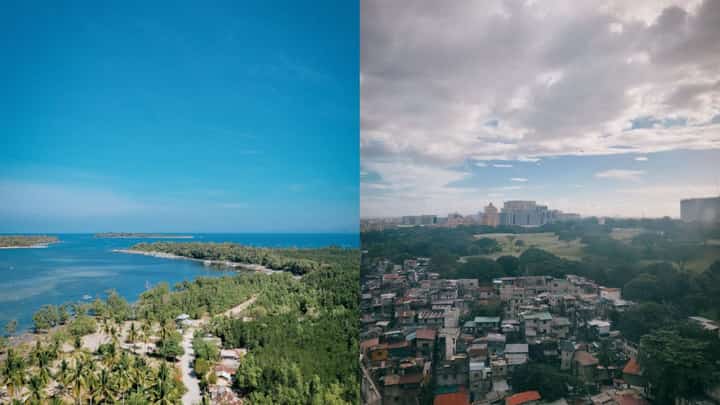
THE contrast between the country’s vulnerable coastlines and rapidly urbanizing cities highlights the growing challenges of climate risk, environmental pressure, and disaster preparedness across the Philippines.
PHOTOS courtesy of Alyanna Maneja
The Philippines’ repeated exposure to earthquakes, typhoons, and flooding is highlighting the growing need for long-term climate adaptation instead of relying mainly on disaster response and recovery efforts.
In September 2025, a strong earthquake in Cebu City disrupted mobility and damaged infrastructure in already vulnerable communities. Weeks later, Typhoons Kalmaegi, locally known as Tino, and Fung-wong, or Uwan, caused widespread flooding and displacement across Luzon and parts of the Visayas, forcing families to evacuate and suspending classes and transport operations.
Ranked highest in the World Risk Report 2025 with a score of 46.56, this is highlighting the country’s growing vulnerability to climate-related and geological hazards. While billions are spent yearly on emergency response, relief operations, and reconstruction, recovery alone cannot keep pace with intensifying climate extremes. In 2026, P39.8 billion was allocated for disaster response efforts, yet many communities continue returning to the same fragile conditions after every storm.
Despite billions allocated yearly for relief and reconstruction, experts said many communities continue returning to the same fragile conditions after every disaster. In 2026 alone, P39.8 billion was earmarked for emergency response and recovery efforts.
Climate experts warned that reactive spending alone cannot keep pace with intensifying climate extremes. Stronger typhoons, heavier rainfall, rising sea levels, and interconnected infrastructure risks are expected to worsen in the coming years, affecting transport systems, food supply, housing, and essential services.
They stressed the need for anticipatory adaptation, which focuses on reducing risks before disasters occur. Proposed measures include resilient infrastructure standards, climate-informed land use planning, risk-based zoning, and strategic relocation of assets from highly vulnerable areas.
Local Government Units were also urged to strengthen coordination, technical capacity, and access to climate data to support long-term resilience planning.
Building resilience requires long-term planning, sustained investment, and stronger governance measures aimed at reducing risks and protecting communities from future climate impacts.