
Public libraries as critical infrastructure
Libraries have long served as community hubs, providing open access to knowledge, resources, and essential services for all.


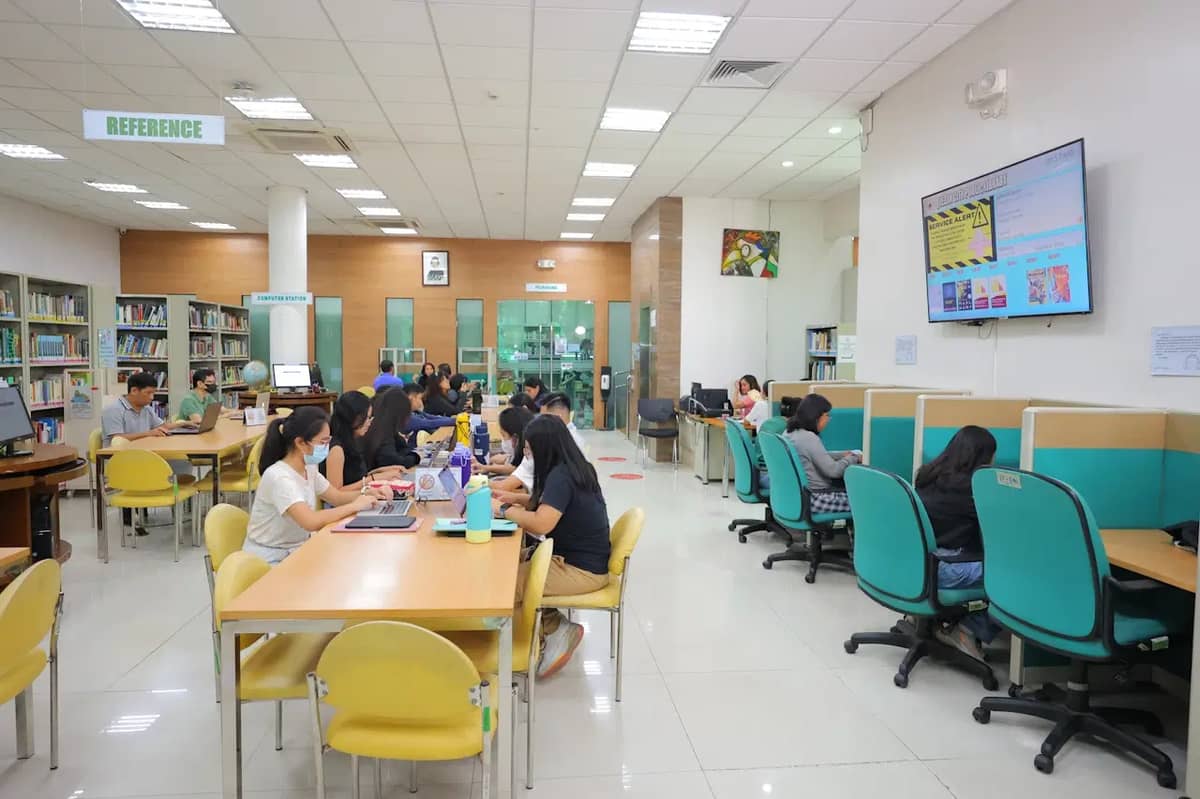
THE Quezon City public library environment supports both individual study and digital access, reinforcing its role as a community learning hub.
PHOTOGRAPHS courtesy of qc public library
When we speak of infrastructure, what usually comes to mind are concrete structures or utilities. Although these are undeniably important, there is also a necessity for social infrastructure in our cities to address the needs of the Filipino people. A clear concern is the current character of our demographic.
There is a crisis in education as EDCOM 2 noted that around 18 million high school graduates are functionally illiterate as of 2025. This poses a serious concern for the future as a lack of comprehension will limit economic productivity, weaken civic participation and reduce social mobility.
The Philippine Statistics Authority reports basic literacy at around 94 percent, yet functional literacy drops closer to 70 percent. This means that many Filipinos can read and write but struggle to apply information in real situations. The World Bank describes this gap as “learning poverty,” where children reach age 10 without the ability to read and understand simple text.
A plausible solution is already written into law. Republic Act 7743 mandates every city and municipality to establish and maintain public libraries and barangay reading centers. However, the National Library of the Philippines counts roughly 1,500 public libraries and reading centers against more than 1,600 local government units. Some cities operate active systems while others rely on small rooms within municipal buildings. The issue is about priority as libraries compete with health, safety, and economic programs in local planning.

BOOK Nook installations place reading within everyday spaces, allowing children to encounter books without the need for a dedicated trip to a library.
PHOTOGRAPHS courtesy of qc public library
The law clearly espouses that knowledge should be treated as a public good and as something meant to be part of daily life. Public libraries perform this function directly. They provide access to books, reference materials, and digital tools. Many also serve as internet access points through programs linked to the DICT. In areas with limited connectivity, libraries become essential entry points to information and opportunity.
Local models show how this works in practice. The Quezon City Public Library system operates a network of branches with integrated digital services, extending access beyond a single site. This distributed approach improves reach without requiring large capital investment.
A second model focuses on proximity. The National Book Development Board introduced Book Nook with reading spaces placed in malls, parks, and other public areas. These installations remove the need for a dedicated visit and position reading within everyday routines. This shift reflects a practical reality that access depends on convenience. A library that requires travel competes with work and daily obligations. A library encountered along the way becomes part of habit.
Public collections should include Filipiniana with works by Filipino authors, regional histories, and materials in local languages. These are often unavailable in commercial circulation or confined to academic institutions. In such a globalized world, these types of work are particularly important as they reflect and examine our own realities. They provide local frameworks for analysis and action as it is how Filipinos explain our own politics, economics, and culture.
From a planning perspective, this expands the role of learning infrastructure. Libraries preserve and circulate knowledge while remaining relatively low-cost to build and maintain. Unlike large civic facilities, they rely on curation and programming more than construction. This makes them scalable and adaptable across different urban conditions.
The direction is clear. The legal framework exists. The need is measurable. Working models are already in place. The remaining task is integration.