
Banks stay strong in second half of 2025 — BSP
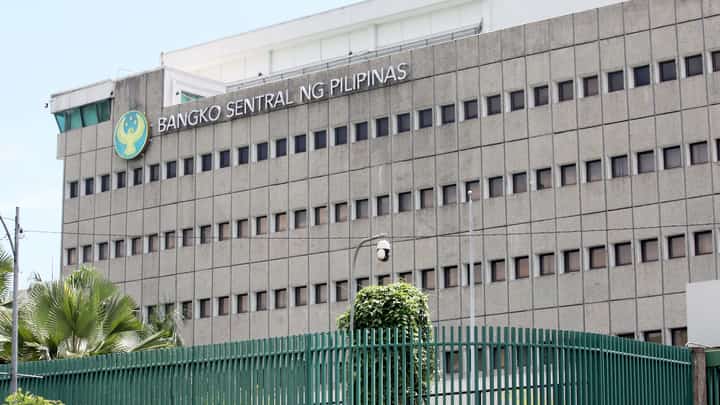
The Philippine financial system remained resilient in the second half of 2025, with banks and non-bank financial institutions sustaining growth, strong capitalization and stable liquidity despite external uncertainties, according to the Bangko Sentral ng Pilipinas (BSP).
In its Second Semester 2025 Report on the Philippine Financial System, the BSP said the banking sector continued to provide steady support to economic activity through sustained lending growth and expanding financial services.
“Banks and non-bank financial institutions play a vital role in mobilizing funds to different economic activities,” said BSP Governor Eli M. Remolona Jr.
“The BSP remains committed to fostering a regulatory environment that supports their continued growth and resilience while advancing the interest of Filipino financial consumers,” he added.
The BSP said total assets of banks rose 8.9 percent to P29.9 trillion as of end-December 2025, slightly below the 9-percent growth recorded a year earlier but still outpacing the expansion of the broader economy – which contracted sharply in the second half of last year amid the flood control scandal.
Public confidence in the banking sector remained firm, with deposits increasing 7.4 percent year-on-year to P21.9 trillion, reflecting sustained trust in the financial system. Bank lending expanded by 11.7 percent to P17.1 trillion, supporting household consumption and business investments, including financing for priority and underserved sectors.
The BSP said asset quality remained manageable, with the non-performing loan ratio at 3.1 percent as of end-December 2025, supported by prudent lending standards and a loan-loss coverage ratio of 97.2 percent.
Capital and liquidity buffers also stayed well above regulatory thresholds. The banking sector’s solo capital adequacy ratio stood at 15.8 percent, while the consolidated ratio reached 16.2 percent, both significantly higher than the BSP’s minimum requirement of 10 percent.
Liquidity indicators likewise remained strong, with universal and commercial banks posting a liquidity coverage ratio of 172.3 percent and a net stable funding ratio of 132.7 percent, both comfortably above the regulatory floor.
The BSP also highlighted the continued expansion of services among non-bank financial institutions under its supervision, including trust entities and foreign currency deposit units, which broadened access to credit, investment and asset management products.
The central bank said the sector’s resilience reflects ongoing reforms aimed at strengthening governance, risk management and digital transformation across the financial system. The report comes as the BSP continues to tighten cybersecurity oversight, strengthen fraud monitoring systems and expand financial inclusion initiatives amid rising digitalization and global economic risks.