
Carandang may reappear in VP Sara’s impeachment trial amid AMLC report

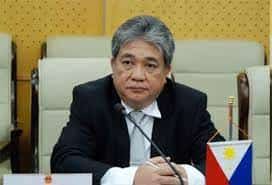
Former Deputy Ombudsman Melchor Arthur Carandang may emerge as a key figure in the impeachment proceedings against Vice President Sara Duterte, as House prosecutors weigh whether to call him as a witness over allegations tied to the Duterte family’s alleged unexplained wealth.
In a radio interview on Monday, House Committee on Justice Chairperson Rep. Gerville Luistro said the prosecution panel has yet to decide if Carandang will testify before the Senate impeachment court, but acknowledged that his earlier disclosures involving Anti-Money Laundering Council (AMLC) reports could become significant in the case.
Luistro noted that Carandang was the first official to publicly disclose the AMLC report involving alleged suspicious bank transactions linked to the Duterte family, which was later denied by former President Rodrigo Duterte and eventually led to Carandang’s dismissal from office.
“Then Overall Deputy Ombudsman Carandang was the first to release this AMLC report, which was totally denied by the former president and even led to his dismissal as Overall Deputy Ombudsman,” Luistro said in mixed English and Filipino.
He pointed out that Carandang largely disappeared from public view after the controversy, while former Senator Antonio Trillanes IV continued releasing documents related to the allegations.
“Since then, we have not heard from Carandang, and it was Senator Sonny Trillanes who kept sharing with the public the documents obtained by Overall Deputy Ombudsman Carandang,” she added.
According to Luistro, the same AMLC report and allegations referenced by Trillanes in his affidavit concerning the Duterte family’s bank accounts may become relevant during the impeachment trial.
“This pertains to the same AMLC report or allegations of Sen. Trillanes in his affidavit about the bank accounts of the Duterte family,” she said.
Luistro stressed, however, that any decision to present Carandang as a witness would still depend on the collective assessment of the House prosecution panel once it is fully constituted.
She added that prosecutors would also need to consider whether Carandang is willing to testify, noting that handling an unwilling witness in impeachment proceedings could create practical complications.
The lawmaker also said prosecutors may seek financial documents directly through Senate subpoenas once the impeachment court convenes, arguing that the Senate may have broader authority to compel records in impeachment cases.
“Unlike what happened in our proceedings, there were still debates about subpoenaing bank records, so we opted to subpoena the AMLC instead. In the Senate, they can directly pursue those records because there is no doubt this is an impeachment case,” she explained.
The issue resurfaced following a recent Supreme Court ruling that voided Duterte’s dismissal of Carandang.
Carandang figured prominently in 2017 investigations into alleged ill-gotten wealth linked to Duterte after then Ombudsman Conchita Carpio-Morales inhibited herself from the case.
In a decision promulgated on 29 January 2026, the High Court’s Third Division ruled that the president does not have administrative or disciplinary authority over a deputy ombudsman.
The SC affirmed a Court of Appeals ruling that nullified the 30 July 2018 decision of the Office of the President, which had found Carandang administratively liable for grave misconduct, graft and corruption, and betrayal of public trust, and ordered his dismissal from service.