
What the Navotas landfill fire says about our cities
Landfills are essential to our cities as they are our scalable and regulated destination for this residual waste stream.


Metro Manila generates an estimated 9,000 to 10,000 tons of solid waste daily, according to the Metropolitan Manila Development Authority. Despite recycling and diversion efforts, a large fraction of that waste remains non-recoverable. A landfill is a waste disposal facility designed, operated and closed so that waste remains isolated and controlled over its full lifecycle. Hence, landfills are essential to our cities as they are our scalable and regulated destination for this residual waste stream.
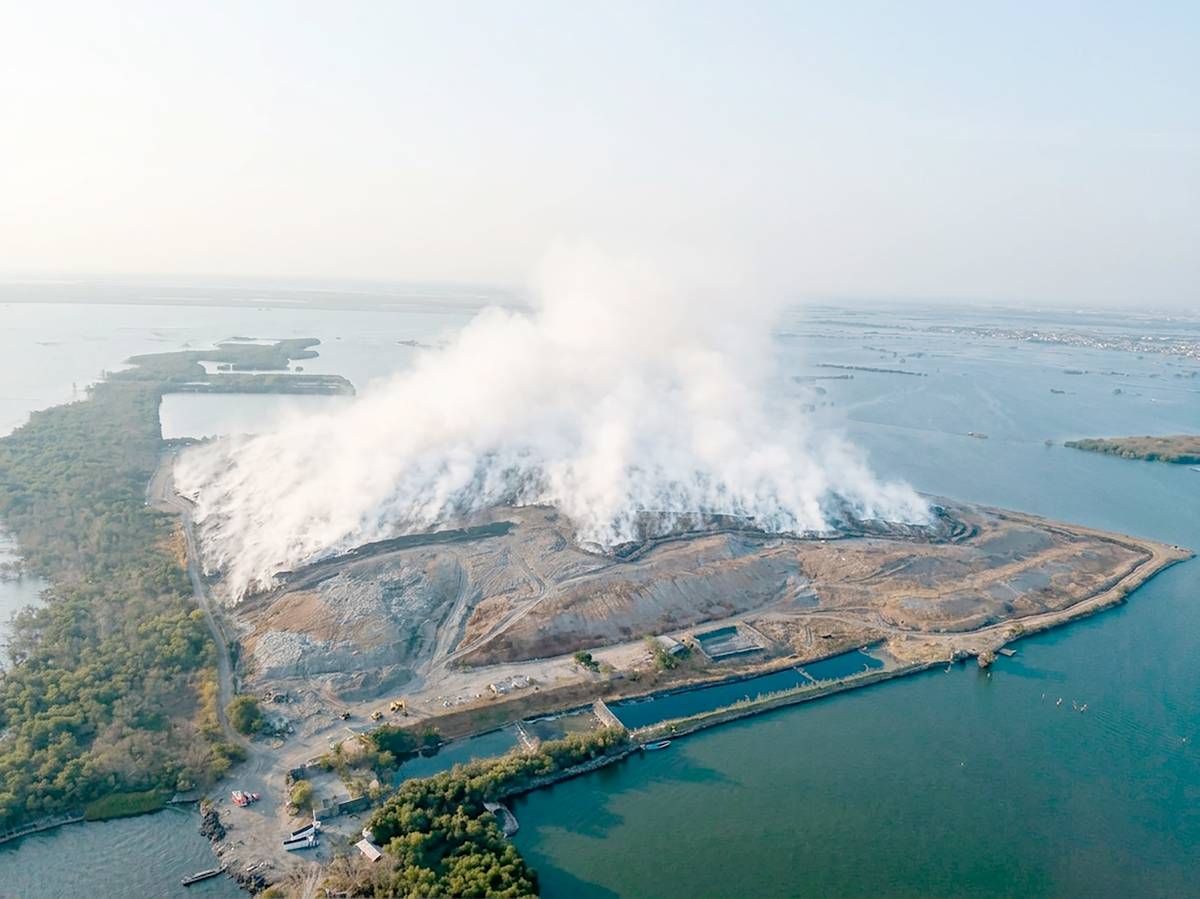
THERMAL drone images from the Manila disaster department reveal a fire still burning beneath the Navotas Sanitary Landfill, its heat spreading unseen as smoke drifts over the city.
PHOTOGRAPH COURTESY OF MANILA PIO
This becomes clearer when viewed against the broader national context. A 2023 report from the Commission on Audit notes that only 39 percent of barangays (16,418 of 42,046) were served by operational Materials Recovery Facilities as of 2021. At the same time, just 29.25 percent of local government units (478 out of 1,634) had access to sanitary landfills.
Composite liners isolate waste from groundwater, drainage layers limit leachate buildup, gas wells capture emissions, and final caps reduce infiltration. Most facilities are designed with monitoring horizons of at least 30 years after closure.
The garbage contained within a landfill is constantly transforming. Organic materials decompose and produce landfill gas composed of roughly equal parts methane and carbon dioxide. Methane has a global warming potential more than 25 times that of carbon dioxide over a 100-year period, and landfills account for roughly 11 percent of global methane emissions.
Landfill fires are rarely surface-level events. They typically originate deep within the waste mass, where heat from microbial activity and gas buildup accumulates. The consequence is severe both from an environmental, public health, and waste management standpoint.
Burning landfills release particulate matter and trace gases that affect air quality. The World Health Organization links elevated PM2.5 (particles less than 2.5 micrometers) exposure to respiratory and cardiovascular risks. Disturbed cover systems also increase the risk of leachate generation, particularly in coastal and flood-prone areas like Navotas, where excess runoff can interact with surrounding waterways. Disruptions at a landfill can ripple across the city’s waste network forcing rerouting of daily collection flows and increasing logistical strain.
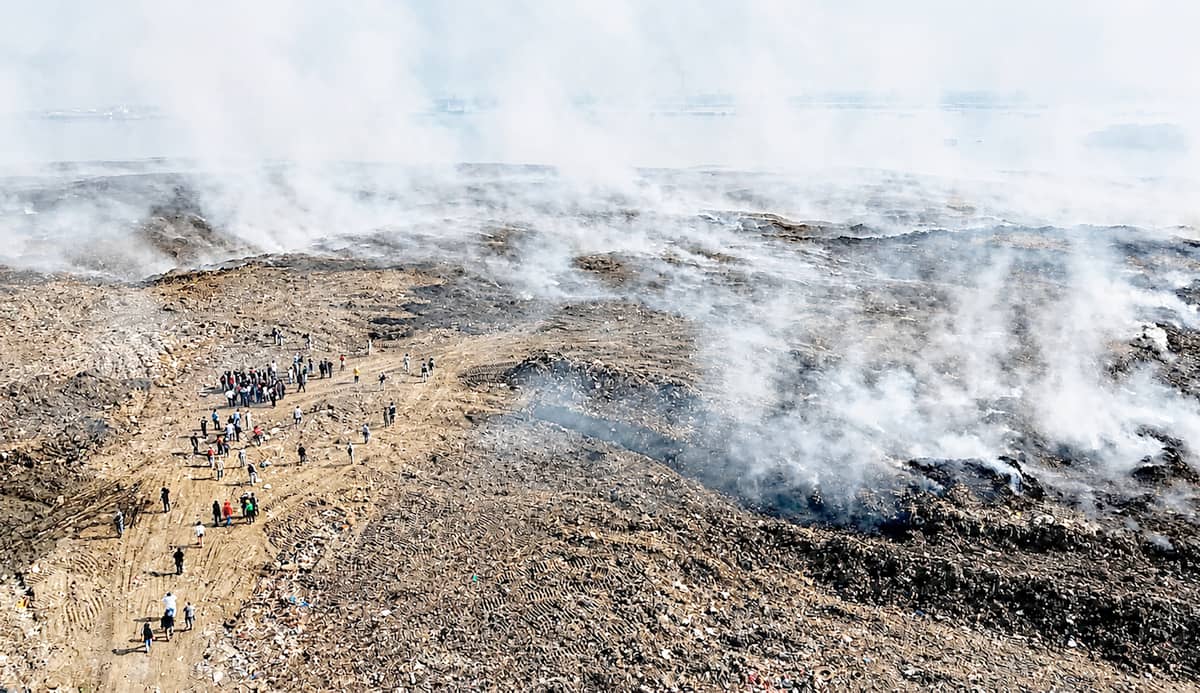
An aerial view of the Navotas Sanitary Landfill on 16 April shows a fire that has been burning for days, affecting nearby communities in Navotas, Malabon and Obando, Bulacan.
DAILY TRIBUNE FILE PHOTO
These fires are difficult to extinguish because they are sustained internally that often manifests as persistent smoke rather than visible flames. Landfills are ideally designed around equilibrium with controlled gas pressure, stable moisture levels, and minimal oxygen intrusion. But factors such as increased waste volume, extreme rainfall, and aging infrastructure can disrupt these conditions which can start fires.
There is also a broader implication. Landfills sit at the end of a chain that begins with everyday consumption. Their condition reflects how waste generation continues to grow in our cities. A well-functioning landfill can contain and control but it cannot reduce the volume it receives. That responsibility lies upstream as both public and private institutions must play their roles in reduction, segregation, and recovery.
Seen this way, the fire in Navotas is less an isolated event than a clear signal for investing in waste management infrastructure and good practices. It brings into focus the systems we rely on but rarely consider, and it underscores the need to treat them as essential infrastructure as planned, managed, and invested in with the same rigor as the more visible parts of our cities.