
Fed holds rates, pressures Philippines outlook
The US being the world’s largest economy, decisions by the Federal Reserve have significant spillover effects on other central banks. While the Fed and the Bangko Sentral ng Pilipinas set policy independently, the Fed’s stance often constrains the BSP’s policy space in practice.
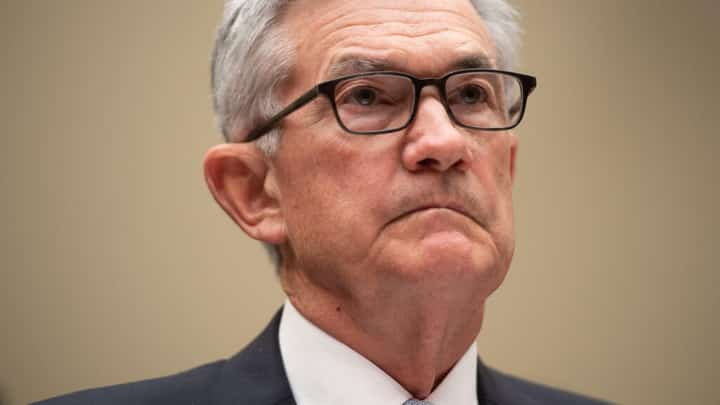
The Federal Reserve has decided to hold interest rates amid rising global inflationary pressures and economic uncertainty stemming from the Middle East conflict — factors that could worsen the Philippines’ already fragile outlook.
In his final press briefing as Fed chair on Wednesday (Thursday Philippine time) Jerome Powell said that the Federal Open Market Committee (FOMC) has resolved to keep its key policy rate at 3.50 percent to 3.75 percent — marking the third consecutive meeting in which the Fed maintained a “wait-and-see” stance.
High level of uncertainty
“We see the current stance of monetary policy as appropriate to promote progress toward our mandate of maximum employment and 2 percent inflation goals,” he said. “Developments in the Middle East are contributing to a high level of uncertainty about the economic outlook, and we will remain attentive to risks to both sides of our dual mandate.”
The U.S., being the world’s largest economy, decisions by the Federal Reserve have significant spillover effects on other central banks. While the Fed and the Bangko Sentral ng Pilipinas (BSP) set policy independently, the Fed’s stance often constrains the BSP’s policy space in practice.
The BSP last week raised its key policy rate to 4.50 percent, with Governor Eli Remolona signaling the effective end of the central bank’s easing cycle as the Middle East conflict pushed its 2026 and 2027 inflation forecasts beyond target.
In theory, higher interest rates in the Philippines relative to the US should support the peso and help temper inflation — albeit at the cost of slower growth and potentially more volatile capital flows.
Peso remains weak
However, despite relatively higher domestic rates, the peso has remained weak — trading at P61.48 as of Thursday, near historic lows — while inflationary pressures persist. The BSP expects April inflation to settle between 5.6 percent and 6.4 percent.
The global energy shock triggered by the Middle East conflict has been cited by central bankers and economists worldwide as a key driver of current market distortions. Compared with the US, the Philippines faces greater exposure due to its heavy reliance on imported oil.
This risk premium may help explain why capital inflows remain subdued despite higher interest rates, with investors favoring relatively safer US assets.
US dollar a safe-haven asset during global uncertainty
Similarly, in foreign exchange markets, the US dollar continues to be viewed as a safe-haven asset during periods of global uncertainty.
The BSP had cut rates nine times since August 2024, for a cumulative 200 basis points (2 percentage points), from a peak of 6.5 percent, with the most recent cut implemented in February this year.
The last two cuts were meant to support growth following the economic fallout from the flood control scandal, which weighed on infrastructure spending and investor confidence.
Most multilateral lenders and global financial institutions have since downgraded the Philippines’ growth outlook, citing both domestic governance issues and external risks.
Potential rebound second half of 2026
While the BSP still sees a potential rebound in the second half of 2026, the Middle East conflict has prompted further downward revisions.
Economy, Planning, and Development Secretary Arsenio Balisacan has acknowledged that the country may miss its 2026 growth target amid the ongoing energy crisis.
Remolona has maintained a hawkish stance, signaling that additional rate hikes remain on the table if spillover effects intensify. The BSP, whose primary mandate is price stability, is prepared to tighten policy further “as many times as needed” to contain inflation.