
The Trailblazer: Dumapong-Ancheta opens door for para athletes
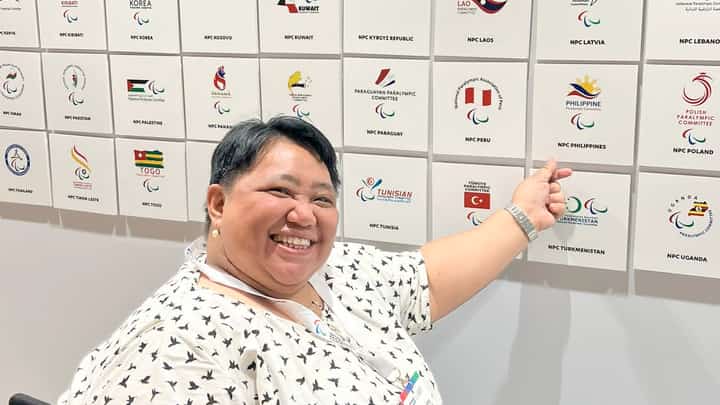
ADELINE Dumapong’s inclusion to the Philippine Sports Hall of Fame is not just a personal victory; it is also a win for countless para athletes who are dreaming of making it big despite their physical disabilities.
Photographs courtesy of ADELINE DUMAPONg-ANCHETA/FB
Some victories are measured in medals, others in the doors they open for those who come next.
For former Paralympian Adeline Dumapong-Ancheta, the weight she lifted through decades of sacrifice has become heavier in meaning than any barbell she ever carried, as her recent inclusion in the Philippine Sports Hall of Fame stands as a landmark moment for inclusion, visibility, and the continuing rise of para sports in the country.
Long after stepping away from active competition, Dumapong-Ancheta, 52, remains what she has always been — a trailblazer whose story stretches far beyond the platform.
Her name has long been etched in Philippine sports history as the country’s first medalist after winning bronze in powerlifting during the 2000 Sydney Paralympic Games.
But honors of this scale still came as a surprise to someone who never seemed to chase recognition.
“Yes, of course I’m very honored and humbled at the same time,” Dumapong-Ancheta said in an episode of Off the Court, the online sports show of DAILY TRIBUNE, last Thursday.
“Because, like you said, I am the only para athlete included in the batch. I never thought that I would be nominated for the Hall of Fame.”
The humility was unmistakable as she joins the fifth batch of Hall of Famers, which includes Ramon Fernandez of basketball, Mansueto “Onyok” Velasco of boxing, Eduardo Pacheco of basketball and football, Beatriz Lucero-Lhuillier of gymnastics and taekwondo, Cecil Mamiit of tennis, and Isidro del Prado of athletics.
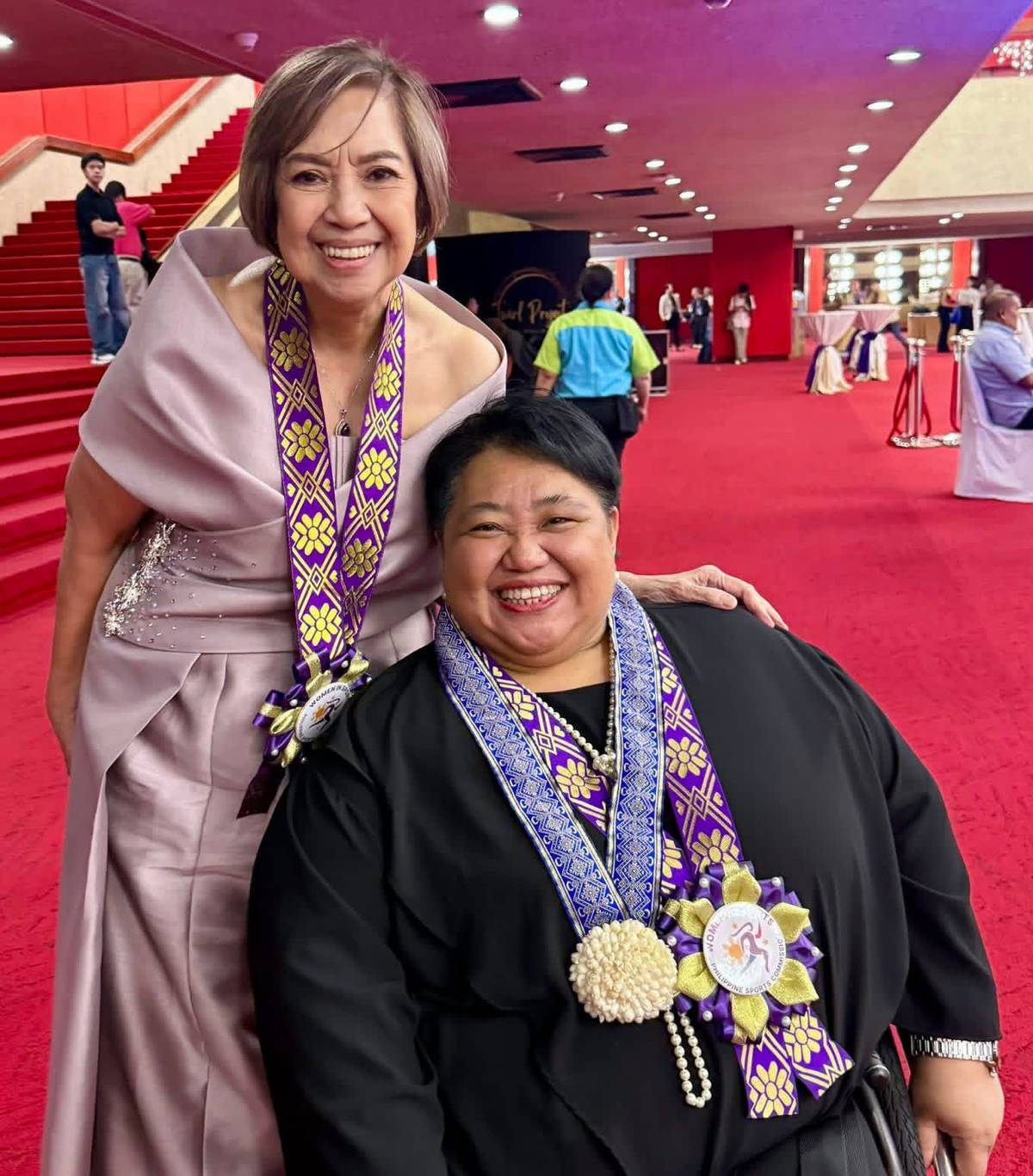
PHILIPPINE Sports commissioner and bowling great Olivia ‘Bong’ Coo is among the sports executives who recognize the greatness and contributions of Adeline Dumapong-Ancheta to Philippine sports.
Setting the tone
Dumapong-Ancheta admitted that she never saw herself as someone whose time to enter the prestigious Hall had arrived.
“Actually, when they were calling for nominations, I saw it but didn’t pay attention to it,” Dumapong-Ancheta said. “I never really thought that my time would come for that.”
Yet perhaps that disbelief reveals why her journey resonates so deeply.
Dumapong-Ancheta belongs to a generation that fought for space when para sports was barely understood, much less celebrated.
Shen said when she began competing in the late 90s, opportunities were limited and public perception was narrow.
“It’s nice to think about it because when I was starting, no one looked at para sports seriously,” Dumapong-Ancheta said.
“They looked at it as part of rehab, as part of welfare, you know? But now, it’s really part of development, and you can see the change in how people look at it,” she added, her words capturing the arc of her life in sport from marginalization to recognition, from being overlooked to being honored among the country’s finest athletes.
The Kiangan, Ifugao native has a stacked résumé that justifies her being the first para-athlete to join the Hall of Fame.
Apart from her Sydney medal, she also won six ASEAN Para Games gold medals in the women’s 85-kilogram category and also conquered the 1999 Asian Bench Press Championships in Manila, the 2000 Malaysian Paralympiad in Kuala Lumpur, the 2007 Asian Powerlifting Open Championship in Manila, and the 2009 World Abilitysport Games in India.
For Dumapong-Ancheta, the Hall of Fame nod is not merely personal validation. It is proof that attitudes are evolving and institutions are becoming more inclusive.
“I think whoever is in the panel, you can see that it’s inclusive. Their minds are open,” Dumapong-Ancheta said. “We are also part of it, so yeah, I’m thankful.”
No signs of stopping
Even in retirement, however, Dumapong-Ancheta has hardly slowed down. If anything, she has redirected the discipline that once fueled her training into service for others.
Dumapong-Ancheta remains involved with the national para powerlifting team, helping shape the next generation of athletes in the sport.
She contributes to development work and continues to lend her voice to advocacy efforts while hosting her own weekly radio show, “In and Out the Zone: Women in Sports,” on DZSR Sports Radio 918.
“Well, for one, I’m part of the coaching staff of the national team for powerlifting, right? Then, I also help out in the office, in PhilSPADA (Philippine Sports Association for the Differently Abled), when they ask me to help out, for example, in their development programs,” Dumapong-Ancheta said.
‘It’s nice to think about it because when I was starting, no one looked at para sports seriously.’
“I also make development programs for powerlifting because, of course, I owe a lot to that sport and to the para sports movement.”
Her commitment extends beyond sport. Dumapong-Ancheta also works on projects focused on women with disabilities, particularly on dignity and health issues that often receive too little attention.
“Aside from that, I am also a project manager in an organization where we promote menstrual health and dignity for women with disabilities,” Dumapong-Ancheta said, adding that “I’m also the president of Rodalio On Wheels, a performing group composed of persons with disabilities.”
Whether through sport, advocacy, or the arts, she has consistently pushed for one thing: visibility.
For years, para-athletes have delivered medals and pride to the Philippines, often with fewer resources and less attention than their able-bodied counterparts. Recognition has not always kept pace with achievement, but Dumapong-Ancheta’s inclusion helps correct that imbalance.
For younger athletes now entering the system, Dumapong-Ancheta hopes her journey becomes a signpost.
“Because when we say, okay, someone got there first. If someone got there first, you know there will be a next one,” Dumapong-Ancheta said.
“Of course, this is all going to be an encouragement for the younger athletes that it’s possible.”
She did her best when few were watching, when support was scarce, when recognition seemed distant. Now, with history finally catching up to her, the nation is left to recognize what she always was: not merely a Hall of Famer, but a standard-bearer for courage, dignity and inclusion.