
Paying tribute to life’s unheralded ‘salt’: electricity
No one praises the salt; they simply declare the soup delicious. Its true worth appears only in its absence, when the meal tastes incomplete.

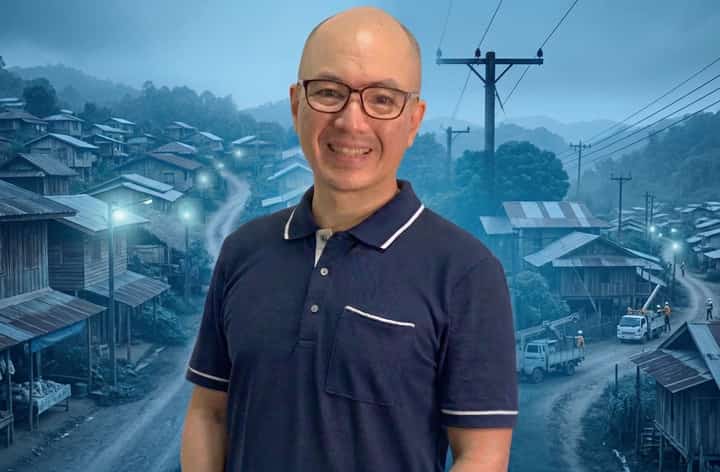
SECRET salt Suiee Suarez, vice president for corporate affairs of AboitizPower, likened the power grid as the unseen seasoning of modern life — quiet, essential, and missed only when it’s gone.
Photographs courtesy of Aboitiz Power
Suiee Suarez, AboitizPower vice president for corporate affairs, first encountered the metaphor that now defines his view of energy during a trip to Florence.
He bit into a slice of Pane Toscano, the traditional unsalted Italian bread, and tasted only absence.
Suarez described the loaf as looking magnificent, with its golden crust, airy crumb, but it fell flat on the palate, a confusing emptiness where flavor should have bloomed.
That moment in Tuscany planted the seed for an idea he has since woven into his life’s view.
Electricity, Suarez argues, is the salt of modern life: essential, invisible, and valued only when it vanishes.
As vice president for Corporate Affairs at one of the country’s largest power producers and distributors, Suarez explains during a meeting with DAILY TRIBUNE officers and editors that he leads efforts to translate the complex world of generation, transmission and distribution into stories that connect with policymakers, communities, and ordinary citizens.
He consistently highlights the human dimension of the grid, the engineers who balance supply and demand during holidays, the electricians who reach remote barangays, and especially the linemen who restore power after typhoons.
His recent essay, “The Salt of the Grid,” captures this perspective through the vivid contrast he drew from that first disappointing taste of Italian bread.
Suarez recalls how he learned the bread’s history: a 12th-century dispute between Pisa and Florence blocked the salt trade, forcing bakers to improvise without the essential ingredient.
The resulting tradition of unsalted Pane Toscano persists today. From that experience, he extracted a deeper lesson on value.
In a well-stocked kitchen, a pinch of salt transforms a dish. It dissolves completely into a simmering stew, elevating the meal without drawing attention to itself.
No one praises the salt; they simply declare the soup delicious. Its true worth appears only in its absence, when the meal tastes incomplete.
Suarez applies the same insight to daily life in the hyper-connected Philippines of 2026 where people depend on another silent salt, which is electricity, that flows through walls and beneath streets, quietly enabling safety, convenience and connection.
Yet it remains taken for granted until blackouts occur. Suarez held that for many, a power failure is merely an inconvenience but for more than 1.5 million unenergized and underserved Filipino households scattered across remote islands and mountain ranges, electricity is a painful void.
He draws a biological parallel as well. Just as the human body cannot function without a baseline level of salt, a dignified life requires a subsistence level of electricity, enough for a light bulb, a fan and a charged mobile device.
Suarez emphasizes the need to distinguish “luxury emissions” tied to excess consumption from the consumption required simply for survival. Electricity preserves a fisherman’s catch in a freezer, pumps clean water, maintains vaccine potency in refrigerators, and allows students to study after dark or access the internet.
Energy workforce as seasoners
It separates stagnation from survival. What gives Suarez’s reflection its force is the sharp contrast he draws between the elegant, effortless image of Pane Toscano and the gritty labor of the energy workforce.
If electricity is the salt of the modern world, he explains, then the engineers, plant operators, electricians, linemen and meter readers are the hands that season the meal. Behind every flick of a switch lies colossal human effort. In the Philippines, that effort is often heroic. Linemen climb poles in the muddy aftermath of typhoons to restore power.
Engineers work through holidays, away from their families, to maintain the delicate balance of supply and demand and electricians trek into hinterlands to connect last-mile households.
These men and women, Suarez says, are the true “salt of the earth,” laboring in dirt, under the sun, and through mud so the invisible ingredient continues to flow.
At AboitizPower, this perspective shapes real-world action. Visayan Electric’s free house-wiring initiative has modernized electrical systems for thousands of indigent households in Cebu, with accredited electricians ensuring safe, lasting connections.
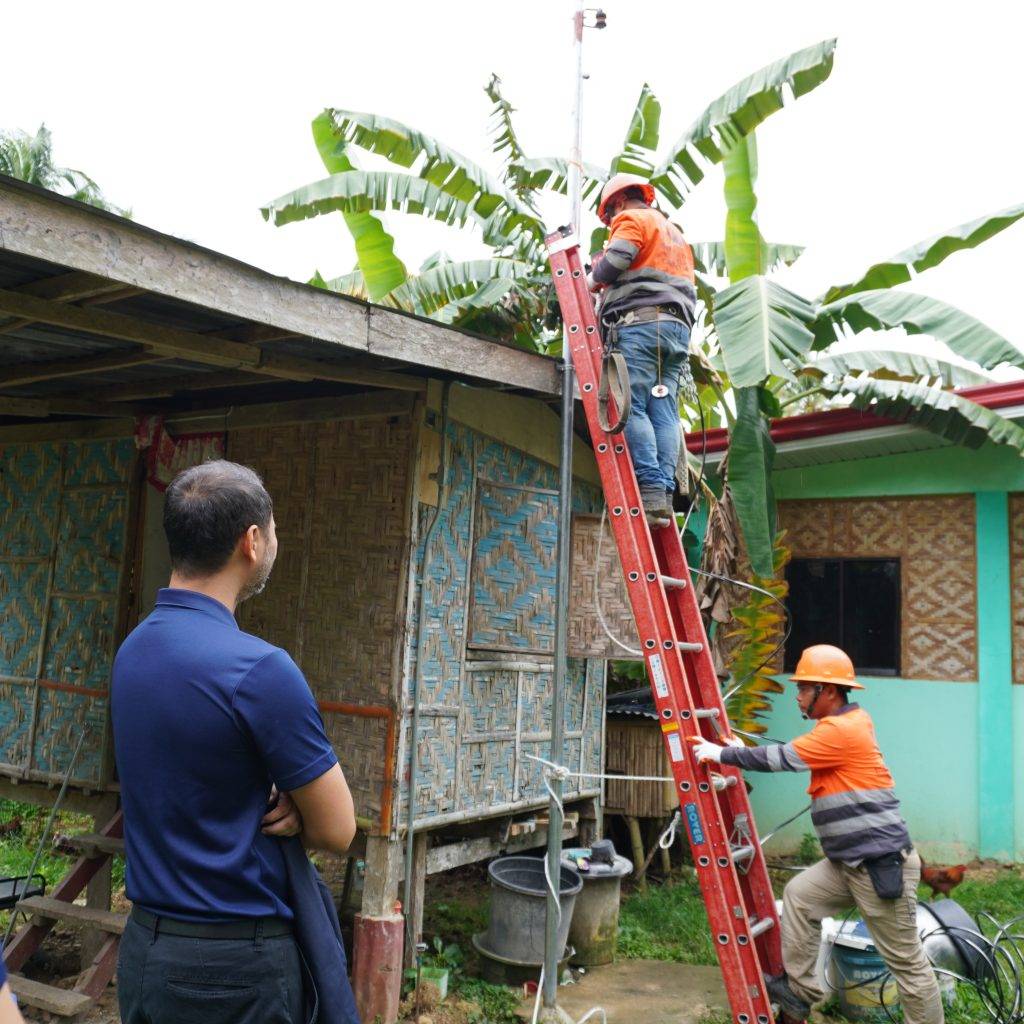
FIRST light In Cebu, indigent households switch on electricity for the first time through Visayan Electric’s free house-wiring program — where accredited technicians bring safe connections and a long-awaited current of possibility into every home.
Davao Light’s Sitio Electrification Program has brought power to dozens of remote communities in Davao City, enabling small businesses to operate and children to read at night.
These programs advance the national goal of total electrification, reaching the remaining unenergized households one careful connection at a time. Suarez’s writing amplifies these efforts, reminding audiences that electrification delivers dignity through human hands.
Yet appreciation must come with responsibility. Suarez insists that electricity, like salt, should be used wisely rather than wasted and it should flavor lives sufficiently and well, not to excess.
The 1.5 million households still without power cannot be forgotten; their situation must fuel determination to achieve full electrification across the archipelago.
Only then will daily life cease to feel bland from lack of access and opportunity.
The Pane Toscano story reveals Suarez’s talent for making the technical profoundly human. A bland slice of bread becomes a lens for understanding why linemen deserve more than passing gratitude when the lights return.
Society, he warns, must never taste the meal, enjoy its fullness, and forget to thank the hands that stirred life and flavor into it with salt.
In an archipelago where typhoons test the grid and remoteness challenges every connection, Suarez’s message carries quiet urgency.
While not glamorous like salt, electricity dissolves into the background but the men and women who deliver it, climbing poles in the rain, balancing supply on sleepless nights, wiring homes one careful connection at a time, are the true seasoners of modern life.
For Suarez, the lights stay on, the meal is flavored, and the hands behind them are remembered.