




REVIEW: ‘The Drama’ — discomfort and the limits of dark comedy
The film asks a question: if the person you love has a disturbing past, would you still marry them?


Text size
The film asks a question: if the person you love has a disturbing past, would you still marry them?
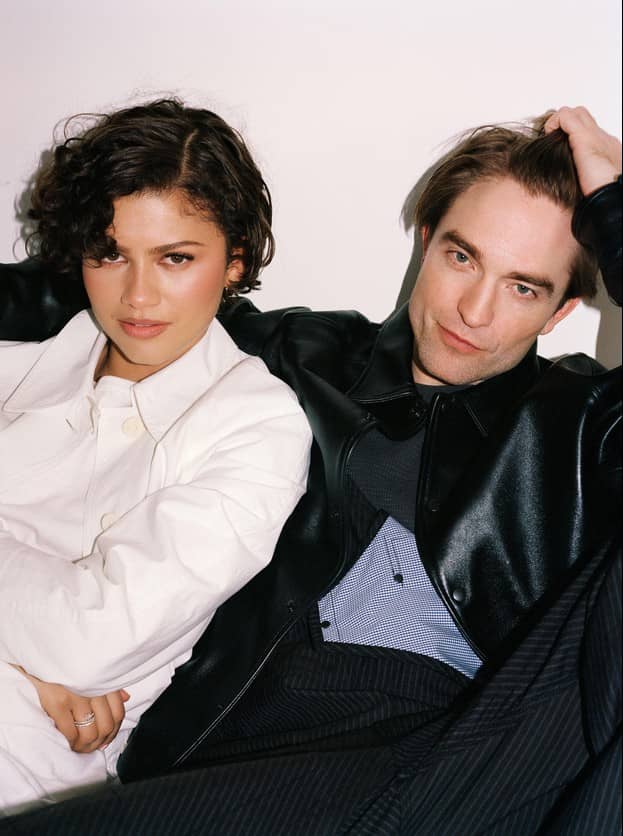
ZENDAYA and Robert Pattinson in ‘The Drama’ (2026).
PHOTOGRAPH COURTESY OF IMDB
In this review, I will mention the film’s plot twist, the “revelation,” so anyone who has not seen The Drama — well, tread at your own risk.
Directed and written by Kristoffer Borgli, the same Norwegian filmmaker behind Dream Scenario (2023), and arguably Nicolas Cage’s strongest leading performance, this film once again proves Borgli knows how to direct actors. Zendaya and Robert Pattinson deliver nuanced performances.
The Drama is a psychological drama and romantic dark comedy about a couple, Emma and Charlie (Zendaya, Pattinson), who are preparing for their wedding. The turning point comes during a drunken food-tasting night with their maid of honor, Rachel (Alana Haim), and best man, Mike (Mamoudou Athie), where each confesses the worst thing they have ever done. Emma reveals that at 15, she planned a school shooting but did not carry it out.
Before even watching the film, I already knew this twist due to news reports. March for Our Lives, a youth-driven organization created by survivors of the mass shooting at Marjory Stoneman Douglas High School in Parkland, Florida, criticized the film.
So, Borgli uses mass shooting as the conflict in a love story, and does so within a dark comedic framework. That is where the film falters. It’s hard to laugh at satire based on a tragedy that remains immediate and unresolved. Satire uses humor to provoke thought and criticism, and some satires work — even when tackling sensitive, relevant issues. But mass shooting is not suitable for humor, even as satire.
The attempts at dark humor are clear. A smoothie Emma prepares resembles blood. Flashbacks show her younger self recording a manifesto, only for her computer to fail. These moments aim for irony, but the subject resists that tone. The humor does not land in a way that feels appropriate.
But, at the same time, the film doesn’t feel entirely in bad taste because it portrays a tragedy that is hard to ignore. Mass shootings are inseparable from American reality. They are terrifyingly frequent. But of course, the film refuses to examine that reality in depth, because The Drama, first and foremost, is a love story.
Hence, it is ambitious in that way. But that’s why the conflict also weakens. The film asks a question: if the person you love has a disturbing past, would you still marry them? The film also repeatedly asks what constitutes guilt. Is it fantasy, intention, planning, or action?
In one scene, Charlie nearly cheats out of mental overload, then stops himself, slapped by a sense of morality. Here, Borgli draws a parallel between impulse and restraint, but this comparison feels simplified when placed beside Emma’s history.
The 2020 Polish film The Hater thoroughly examines the psychology behind radicalization and violence, and because it is a serious drama, it nails the subject matter in a satisfying way. Here, the act exists as a narrative device rather than a subject of inquiry. Because, again, The Drama is a love story. Therefore, it cannot go deeper into the psychology of terrorism. So, it is quite unsettling that Borgli chose mass shooting as a conflict for a “romantic comedy,” especially when he wouldn’t be tackling it with depth, but with visual comedy and as a romantic dilemma.
Emma, at 15, also does not fit the expected profile of a mass shooter. She was not withdrawn or passive in flashbacks. She easily retaliates. She claims that at 15, the idea of committing a mass shooting felt “aesthetically cool,” combined with depression and exposure to online groups.
Yet the film avoids deeper examination of her psychology, her background, or any formative trauma. And that creates a disconnect. The audience is asked to consider forgiveness without fully understanding the character.
Contemporary psychologists and terrorism researchers generally agree that loneliness can be a risk factor, especially when combined with humiliation or grievance and exposure to radical networks (often online). So one of the more compelling elements for discourse is Emma abandoning her plan and later becoming involved in a gun control group — purely for social acceptance. Her healing stems from social acceptance, not from a clear moral reckoning.
Still, the film refuses to delve deeper into Emma’s tendency toward violence because this is, after all, a love story. Perhaps her involvement in gun control eventually led her to understand the gravity of what she nearly did, even if her initial motivation came from a desire for belonging?
There is also a glaring narrative flaw. Emma mentions in their meet-cute that she is deaf in one ear, yet Charlie never questions it in two years? Especially since that detail connects directly to her shocking past.
Visually, the film reinforces its tension through unsettling music, loaded dialogue, and imagery that echoes violence, like camera flashes that remind you of gunfire. You also experience Charlie’s distress and his spiraling as the wedding nears.
Overall, The Drama remains absorbing but conflicted. The performances are strong, the direction confident, and the premise provocative. Yet, again, the use of mass shooting within a dark comedic love story creates persistent discomfort, preventing full appreciation of the film. Sure, it invites reflection — but only at a surface level.
3 out of 5 stars
Now showing in Philippine cinemas
Marathon dancing is not for the faint-hearted. Nigerian professional dancer Benjamin Daniel did it in an attempt to set…
A war of words has erupted between the Chinese Embassy in Manila and the maritime research group SeaLight over…
Marcos acknowledged the Philippines still has significant ground to cover relative to its regional and global peers.
