
Lift off! Food for men (and woman) on the moon
NASA reveals special menu for lunar mission crew
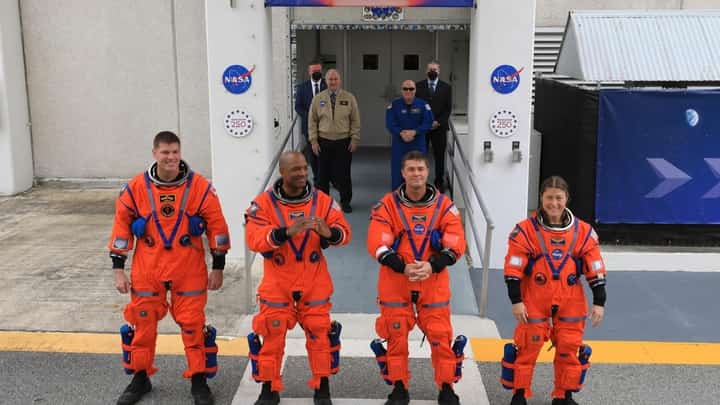
For their 10-day exploration, the crew has been equipped with “life support systems” — which includes food, of course. But being a “life support system” doesn’t mean that the astronauts’ food are bland, boring and basic enough only for survival.
“The food flying aboard Artemis II is designed to support crew health and performance during the mission around the moon. With no resupply, refrigeration, or late-load capability, all meals must be carefully selected to remain safe, shelf-stable and easy to prepare and consume in NASA’s Orion spacecraft. Food selections are developed in coordination with space food experts and the crew to balance calorie needs, hydration and nutrient intake while accommodating individual crew preferences,” NASA explained.
Designing food systems for Orion, said NASA, requires balancing nutrition, safety and crew preference within strict mass, volume and power limits inside a compact, shared cabin. Foods must be easy to store, prepare and consume in microgravity while minimizing crumbs and waste. Preparation is intentionally simple, using ready-to-eat, rehydratable, thermostabilized or irradiated food that can be safely prepared without interfering with crew operations or spacecraft systems.
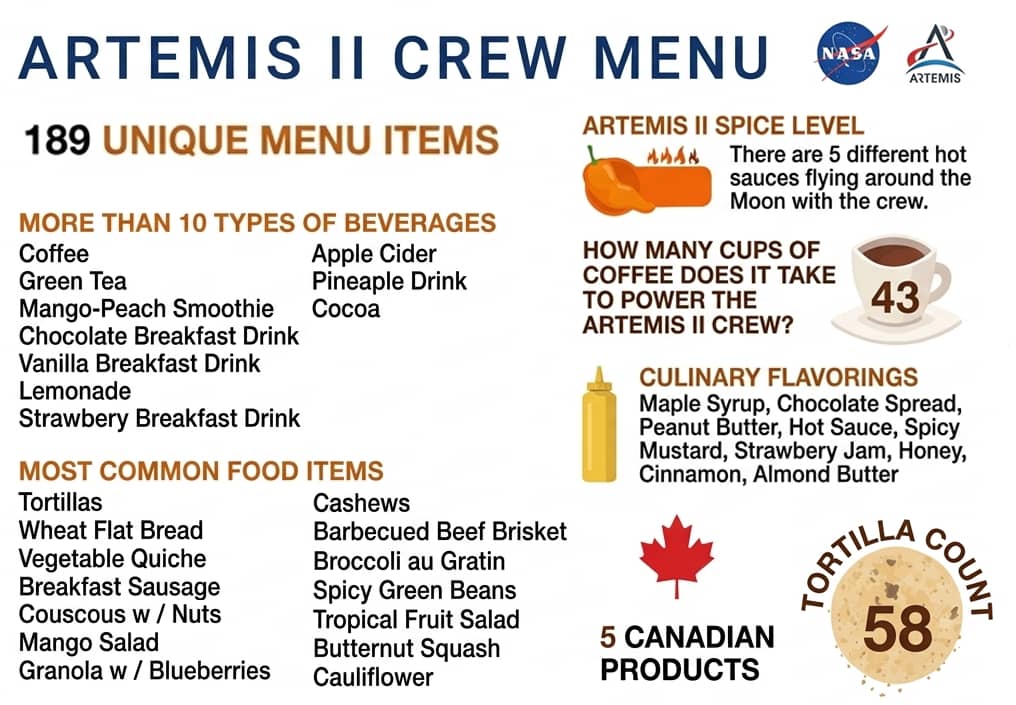
INFOGRAPHIC COURTESY OF NASA
“Fresh foods will not be flying on Artemis II as Orion does not have refrigeration nor the late load capability required for fresh foods. Shelf-stable foods help manage food safety and quality throughout the intended shelf life in a compact, self-contained spacecraft, while also reducing the risk of crumbs or particulates in microgravity,” NASA added.
The agency also explained the differences between food for regular mission days and launch and re-entry.
“On a typical mission day — excluding launch and reentry — astronauts have scheduled time for breakfast, lunch and dinner. Each astronaut is allotted two flavored beverages per day, which may include coffee. Beverage options are limited due to upmass constraints, which restrict how much food and drink can be carried onboard,” NASA shared.
“Menus are tailored based on the spacecraft’s food preparation capabilities during each case of flight. Certain foods — such as freeze-dried meals — require hydration using Orion’s potable water dispenser, which is not available during some phases, including launch and landing. As a result, foods selected for those phases must be ready-to-eat and compatible with the spacecraft’s operational constraints, while a broader range of food options are available once full food preparation systems are up and running.”
Based on an infographic that NASA released, the crew’s 189-item menu includes anything from basic coffee and green tea, to the fancier mango-peach smoothie and apple cider for drinks; and from the basics wheat flat bread to the gourmet mango salad, granola with blueberries, butternut squash and couscous with nuts. Moreover, the crew can enjoy five different levels of spicy sauces and a long line of culinary flavors, including maple syrup, cinnamon and almond butter.
Last but definitely not the least, the crew nibble on candy-coated almonds, cake, cookies, cobbler, chocolate and pudding. They made sure to leave some “space” for dessert — pun intended.