
Four astronauts strap in for first U.S. lunar mission since Apollo
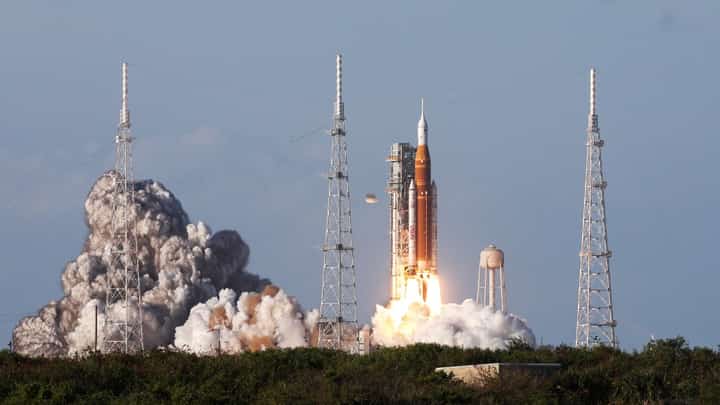
The Artemis II mission launched from Kennedy Space Center in Cape Canaveral, Florida, on 1 April 2026. Four astronauts—three Americans and one Canadian—blasted off on the first crewed lunar flyby in over 50 years. With a thunderous roar, the massive rocket lifted off around 6:35 p.m. local time.
AFP
Four astronauts strapped into their capsule Wednesday, ready to launch on a historic flight around the Moon — the first U.S. crewed lunar mission in more than 50 years.
The Artemis 2 mission, years in the making and delayed by technical setbacks and cost overruns, is scheduled to lift off from Florida as early as 6:24 p.m. EDT (2224 GMT). Weather forecasts were 90% favorable.
Less than two hours before liftoff, NASA reported a minor technical issue with the rocket’s flight termination system, a critical safety feature, but officials said the problem was resolved.
The crew includes Americans Reid Wiseman, Victor Glover and Christina Koch, and Canadian Jeremy Hansen. Their roughly 10-day mission will orbit the Moon without landing, echoing Apollo 8 in 1968.
The flight marks several historic firsts: the first person of color, the first woman and the first non-American on a lunar mission. If successful, the astronauts will travel farther from Earth than anyone in history.
It is also the first crewed flight of NASA’s Space Launch System, a giant rocket designed to enable repeated Moon missions and eventually establish a permanent lunar base.
Retired astronaut and Arizona Senator Mark Kelly said the mission is bigger than the crew. “They’re doing it for the country,” he said.
Authorities expect about 400,000 spectators along Florida’s Space Coast. The mission is seen as a step toward a Moon landing in 2028, amid international competition and political pressure from President Donald Trump, who hailed the launch on social media.