
Fueled by passion: Chan rallies behind Filipinos’ Olympic dream

FOR Philippine Olympic Committee secretary general Atty. Wharton Chan, sports governance is more than meetings — it’s a lifelong passion dedicated to the rise of the Filipino athlete.
Photographs courtesy of WHARTON CHAN/FB
The life of a sports official is often measured in calendars, committee meetings, and international competitions.
But for Philippine Olympic Committee (POC) secretary general Atty. Wharton Chan, it is defined by something far more enduring: passion.
Behind the high-stakes preparations of the local Olympic council lies a man whose journey through sports governance was forged by a lifelong immersion in athletics and a deep-seated commitment to Filipino athletes.
During a recent episode of Off the Court, the weekly online sports show of DAILY TRIBUNE last Thursday, Chan revealed that sports have always been in his DNA.
“As a young kid, I was already exposed by my parents to martial arts like taekwondo, aikido, and judo. We often trained in a gym,” said the 40-year-old Chan, who has been serving as the most trusted deputy of POC president Abraham “Bambol” Tolentino for the past three years.
“At the same time, I was also into golf. Sports have always been part of my personal life.”
Chan’s early exposure to sports made it easier for him to embrace the challenges of running an agency that makes critical decisions for the national squad — from the Southeast Asian Games and Asian Games all the way to the Olympics.
“With that, I consider myself a sportsman. Sports became my passion,” added Chan, who also serves as secretary general of the Samahang Kickboxing ng Pilipinas.
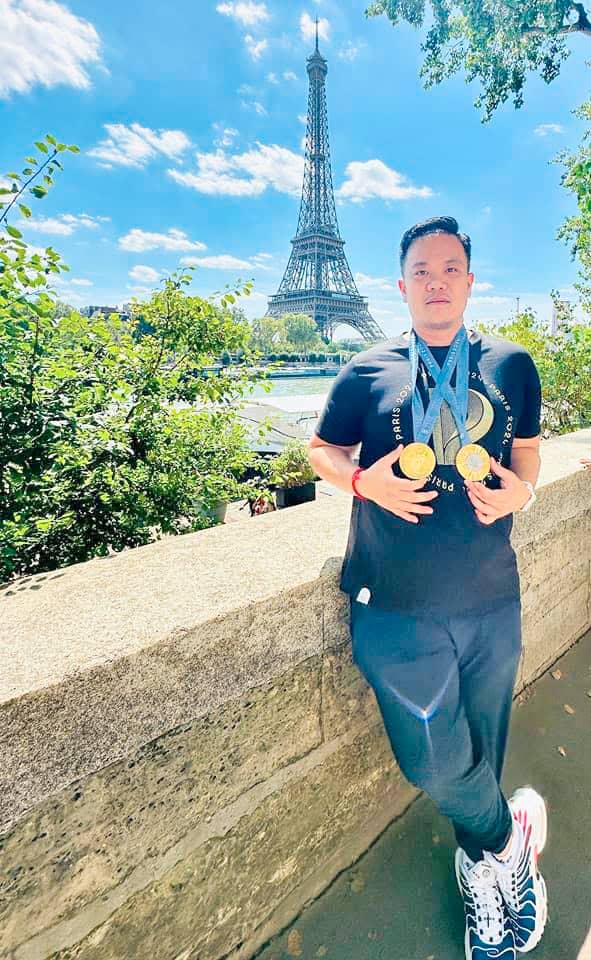
WHARTON Chan will never get tired helping Filipino athletes realize their Olympic dream.
Humble beginnings
Beyond organized competition, Chan’s connection to physical activity was deeply personal. A sense of adventure and endurance defined his youth, eventually translating into his involvement in combat sports.
“When I was young, my bike was just a BMX, and I rode it from Tagaytay to Manila,” Chan recalled. “That’s why sports is in my heart. When I got involved with kickboxing, I grew to love it — I love seeing athletes succeed.”
In this arena, Chan began to see sport as a vehicle for social change. His own training gave him a clear understanding of the struggles faced by athletes, especially those from modest backgrounds.
“Kickboxing often attracts athletes who aren’t well-off,” Chan noted, emphasizing his goal of using the sport to provide athletes a better life. “A lot of them are athlete-scholars. That is what touched my heart and drove me to devote my time to them.”
Law and sports
While sport anchored his passion, his background as a lawyer provided the tools to navigate the complex landscape of sports politics. Interestingly, his legal career wasn’t just a childhood ambition, but a journey of self-discovery.
After graduating from college at just 19, Chan worked for several years before enrolling at the Arellano University School of Law with a “trial mindset” that quickly turned into a genuine pursuit.
“I was exposed to the real world at a very young age,” Chan added.
“It wasn’t really an ambition initially, but I considered the law because I’m very good with memorization and analogies.”
The experiment became a defining chapter of his life. He finished the program in four years and passed the bar exam right on his first take.
Today, while his role at the POC offers no financial windfall — and often requires him to utilize his own personal funds — Chan finds satisfaction in the success of the Filipino athletes.
“We know we are working for free here. It is exhausting, both physically and financially,” said Chan, who handles the unenviable task of traveling for crucial overseas meetings with Tolentino, especially in the Olympic Council of Asia and the International Olympic Committee, while balancing the needs of his athletes and his young family.
But he isn’t complaining.
“It’s okay because I enjoy helping the athletes and the stakeholders.”

OLYMPIC medalists Hidilyn Diaz and Carlos Yulo see Wharton Chan not just as a mere sports administrator, but a trusted ally and confidant in their pursuit of sporting history.
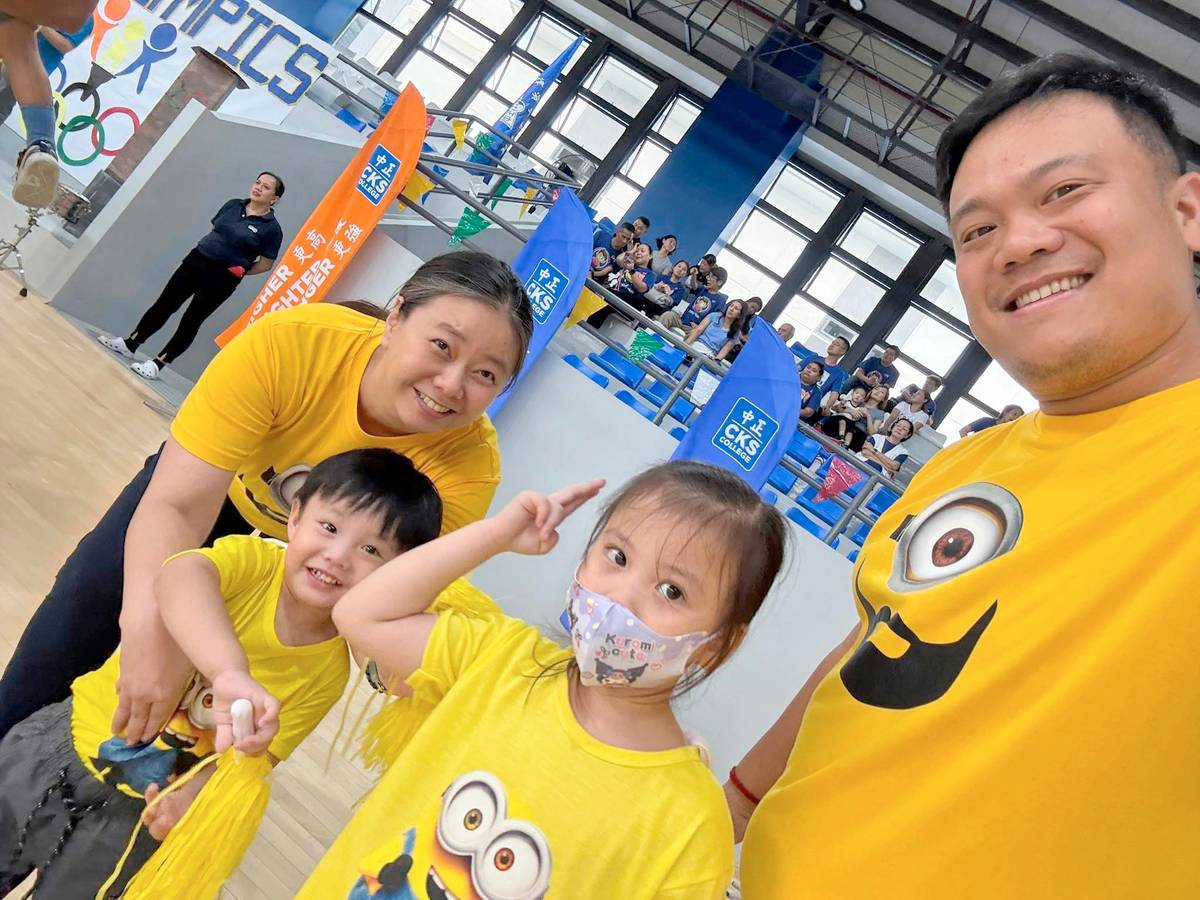
DESPITE the many hats he wears in Philippine sports, Wharton Chan remains anchored by his role as a devoted father and a loving husband.
A balancing act
Despite the demands of the POC, Chan remains a present father. In fact, his Sundays are already “blocked off,” reserved exclusively for his three children.
“As much as possible, if I don’t have anything in the morning, I make sure to bring the kids to school,” Chan said. “And if I have time in the afternoon, I pick them up and accompany them to their extracurricular activities. Sunday is for the family.”
Chan, who wears many hats, believes success is not measured solely by career milestones, but by the ability to maintain balance and purpose. He credits his family’s unwavering support for his ability to stay the course.
“I am very lucky to have a very understanding family and wife. That’s very important,” Chan said with a smile, fully knowing that having “a happy wife” would lead to a “happy life.”
In the world of sports governance, the waters aren’t always smooth. Chan has navigated his share of triumphs, failures, and even controversies.
Yet, by choosing purpose over fatigue and acceptance over complaint, he remains ready to tackle any challenge head-on — all for the sake of Filipino athletes who have been working hard to keep the Olympic dream alive.