
State of national confusion
Instead of providing the public with a clear path to navigate through the series of price shocks, the edict only added to the confusion.

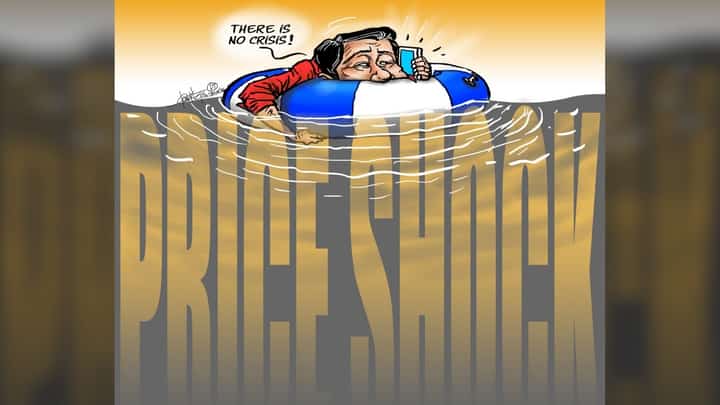
The token measures outlined under the so-called national energy emergency imposed by Ferdinand Marcos Jr. for one year appear largely performative and fail to convey any real sense of urgency, with the most notable provision being the creation of a committee to address the crisis.
Economists have observed that the Marcos administration seems to be shying away from prioritizing the broader global predicament.
Ibon Foundation executive director Sonny Africa said Executive Order 110, which declared the emergency, is largely performative, as it fails to address the nation’s biggest problem: the soaring prices of commodities.
Inflation is expected to double or even triple in the coming months, but the presidential directive prioritizes protecting corporate profits.
“Relief is a trickle; it self-limits to inadequate budgets, while suggestions to raise revenues from the rich were ignored,” Africa said.
The message of the Marcos administration is clear: the burden of adjusting is on poor and ordinary Filipinos.
Instead of providing the public with a clear path to navigate through the series of price shocks, the edict only added to the confusion.
Economist and former Asian Institute of Management professor Noel Leyco said the half-baked declaration appeared intended to move away from declaring a full-blown national state of emergency to avoid a “number of things that are required in a crisis state.”
Also avoided in the declaration was price control or putting a cap on price increases.
“I was watching the press conference of the President, and he refused to respond to the question concerning price caps, which is very concerning,” said Leyco.
While he made a declaration, the President failed to address the most important issue: the rising fuel prices. Gasoline is up by 12 pesos per liter, and diesel is up by 17 pesos per liter.
As it is, the high cost of fuel is slowing economic activity, and marginal households and small businesses are feeling the worst impact. Sales are dropping as many fringe gasoline stations close.
“Nobody should take advantage of this crisis to make more money,” Leyco said.
He suggested that the priority should be implementing the Oil Deregulation Law provision that allows the government to intervene whenever the industry’s stability or security is threatened.
Moreover, the lack of urgency is reflected in the law’s signing, which grants Marcos emergency powers to suspend the excise tax, but it is effective only, as he said, when “certain conditions are met.”
The fuel tax should have been suspended much earlier, given its impact on public spending, the cornerstone of the economy.
People are bearing the heavy burden of higher prices and the President hesitates to use the powers available to him.
“I’m not sure what else they are looking for to say that there is a crisis. You know that is really bothersome. In the beginning, the government has always been saying that there is no crisis,” Leyco said.
What economic experts and the public are looking for is a clear determination from the Palace to protect the greater good.
It would require strong political will, something the leadership has repeatedly shown it lacks.