
A beautiful soul
#ProjectLarawan. Profiles of the Filipino. One portrait at a time. Project Larawan is an initiative of Gabriel “Gabby” Malvar, a documentary filmmaker, writer and photographer, whose narratives are nuanced with unique, inventive perspectives to provoke an inquisitive look at his favorite subject, the Philippines. Become a part of Filipino identity every other Saturday on the DAILY TRIBUNE.
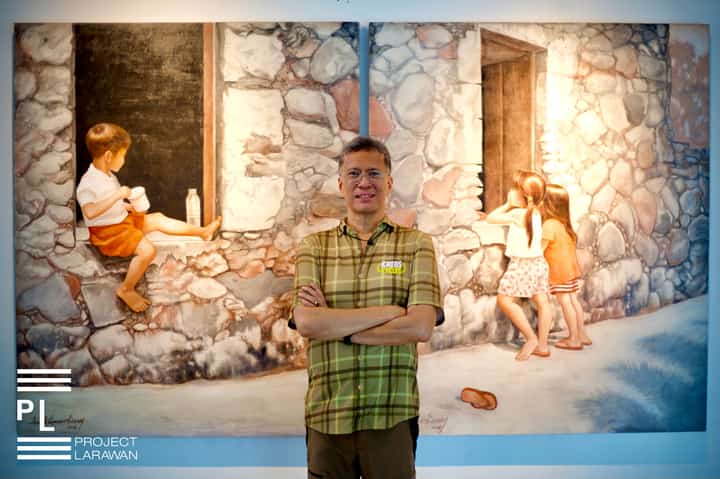
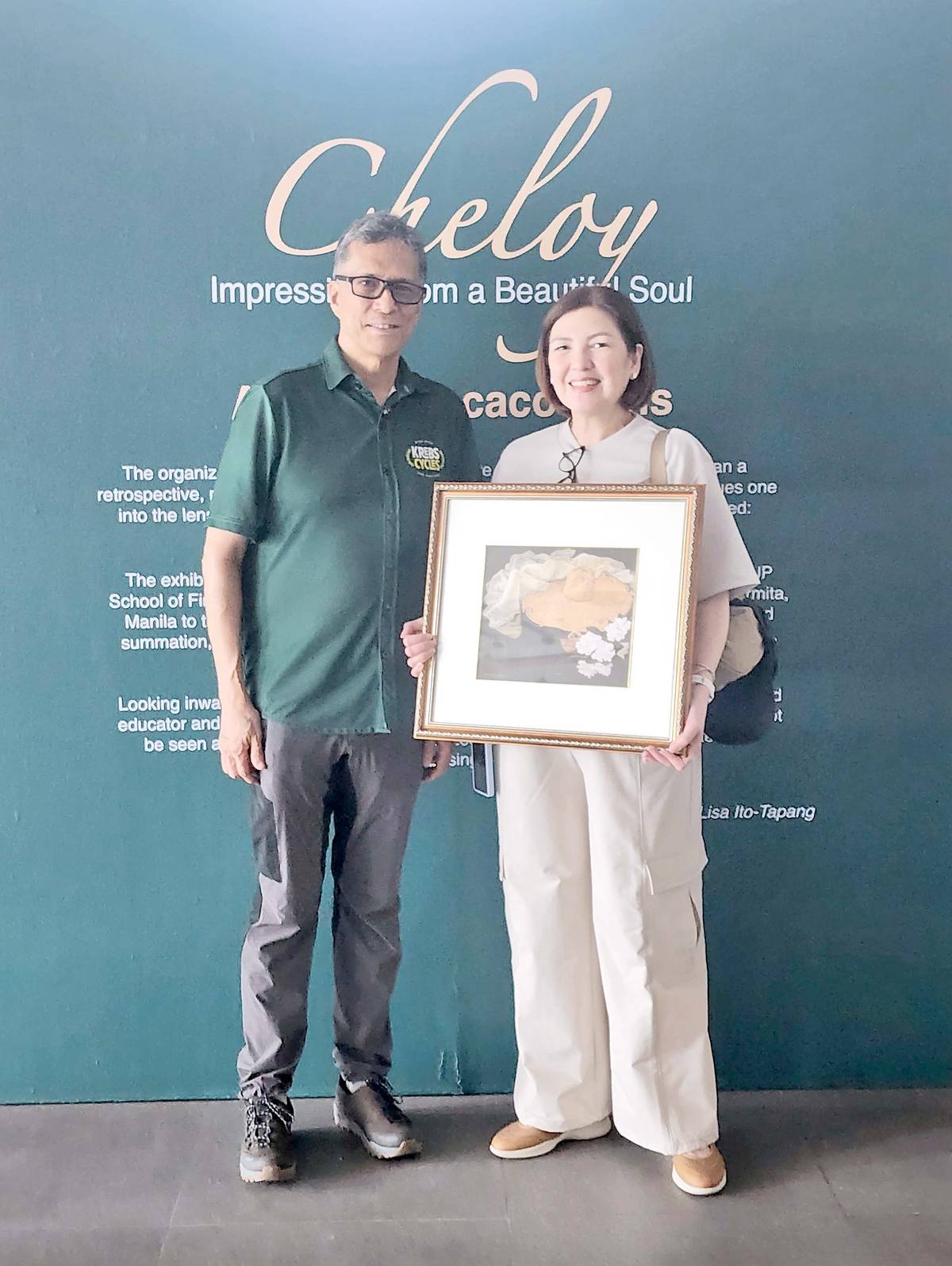
TONY Dans stands in front of a diptych of his mother, Araceli Limcaco-Dans. The painting is part of the legacy exhibition of painter and art educator Araceli Limcaco-Dans, titled Cheloy: Impressions from a Beautiful Soul, which will run at the UP Fine Arts Gallery until 31 March.
From the entrance to the second gallery, the painting was still rather far away, yet it caught my eye immediately. It was framed by many layers of panels that partitioned the gallery into smaller sections, drawing your attention to it from a distance. Due to the unique way it was presented, the artwork was obviously one of the exhibit’s centerpieces.
The painting is the Sombrero ni Inay, one of Araceli Limcaco-Dans’ detailed and intricate still lifes currently on display at the UP Fine Arts Gallery. It shows a woven straw hat, partially draped by the contrasting delicate detail of the laced and embroidered garment and a tangle of immaculate blooms, showing signs of wear.
This is an artist at her peak and with full command of her powers. Sombrero ni Inay is a masterclass in texture, lighting, contrasts, composition and technique. Cheloy’s attention to detail is clear in the sombrero’s strands and unraveling, the burda’s see-through qualities, the garment’s folds, the weave’s symmetry and the base’s reflections. One can feel the softness of the lace and the texture of the piña.
The calado is Araceli Dans in her element. The calado is her signature.
Tony Dans, the fifth of Araceli Dans’ 10 children, is the owner of the artwork. When he got married, his mother gave him the picture and a few other pieces of art. It is his wife Inday’s favorite.
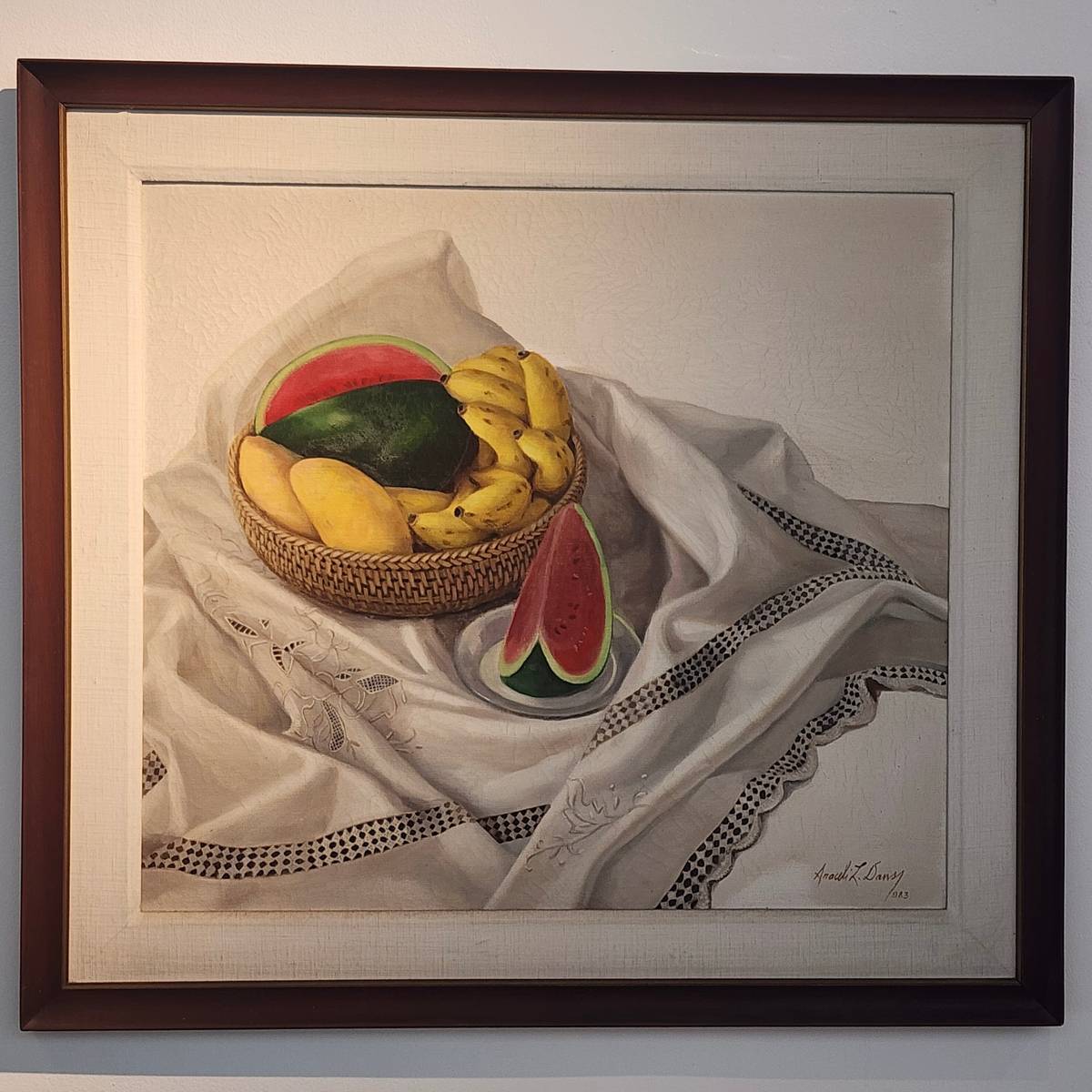
'ANG Dakilang Rambutan II,' acrylic on canvas, 2018, 92 x 76 cm.
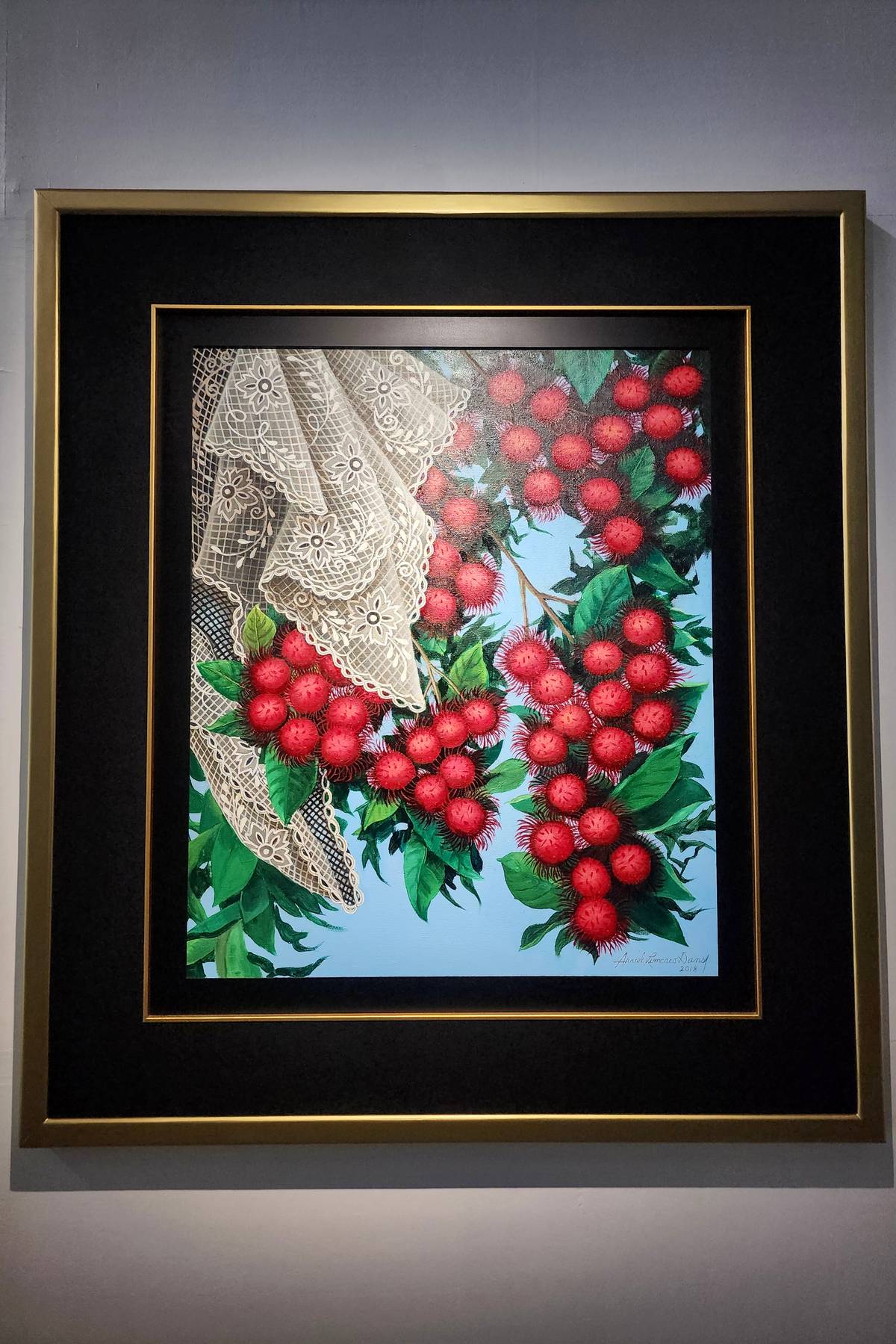
'ANG Dakilang Rambutan II,' acrylic on canvas, 2018, 92 x 76 cm.
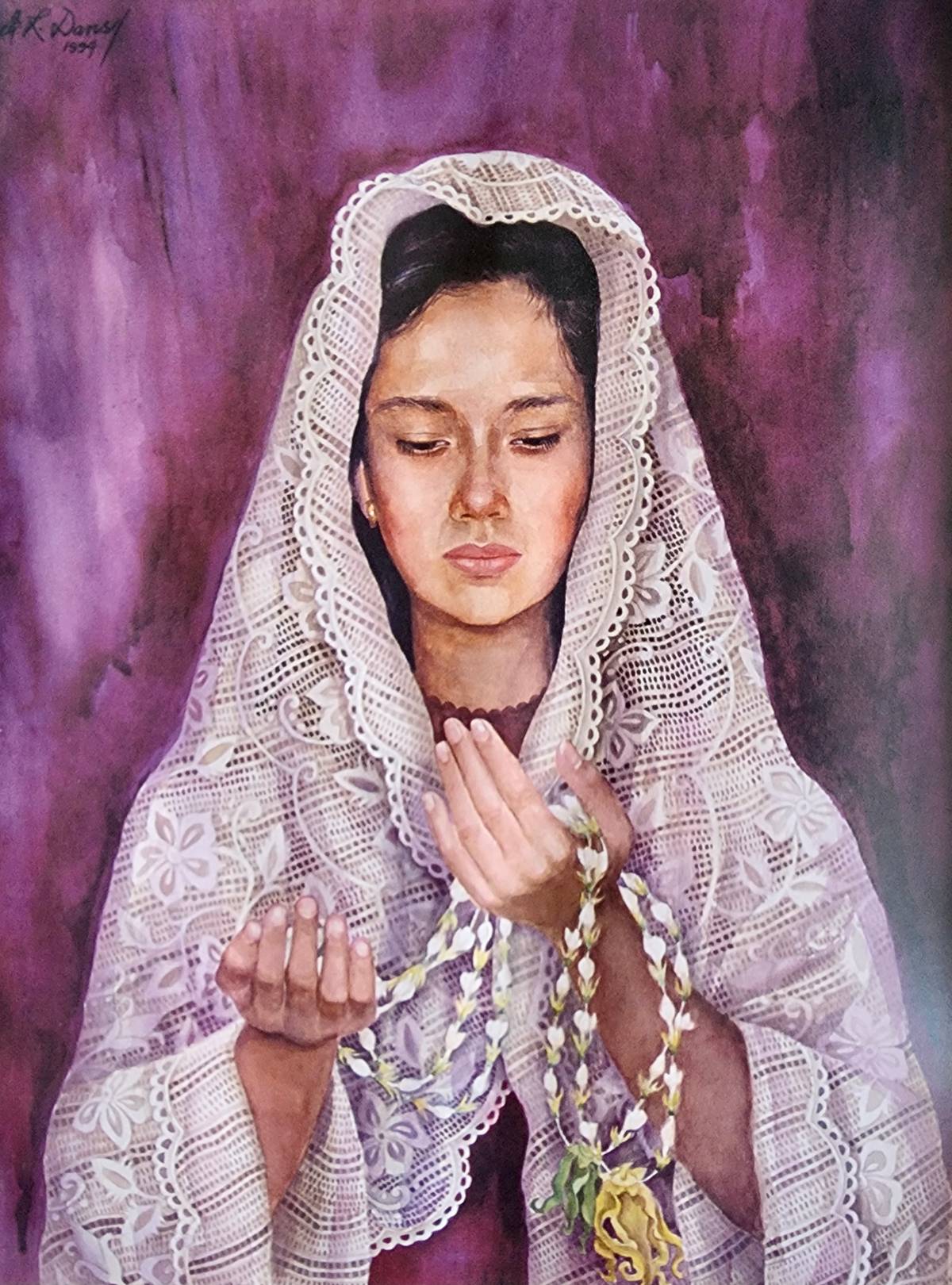
‘SAMPAGUITA,’ watercolor, 1994, 30” x 22”.
What is noteworthy about Cheloy: Impressions from a Beautiful Soul, the current Araceli Dans exhibit at the UP Fine Arts Gallery, is that the majority of the artwork on show is either owned by her children or comes from private files that were only discovered in envelopes after her death and have never been viewed by the public.
The exhibit encompasses her life’s work from very early on until her death. The calados are given their usual recognition. But other works not typically showcased yet essential to forming a more complete understanding of her overall makeup and persona, are also highlighted.
The collection features a number of studies and experiments, works in progress under development prior to their eventual completion and release as final masterpieces.
The show is about the journey. The process. The grind. As much as it is about the final outcome. Past exhibits revolved around themes, her finest portraits or the Flowers and Lace series on water color. In Cheloy: Impressions from a Beautiful Soul, the entire range of her catalogue is on display, revealing a wholistic evolution of the artist and the person.
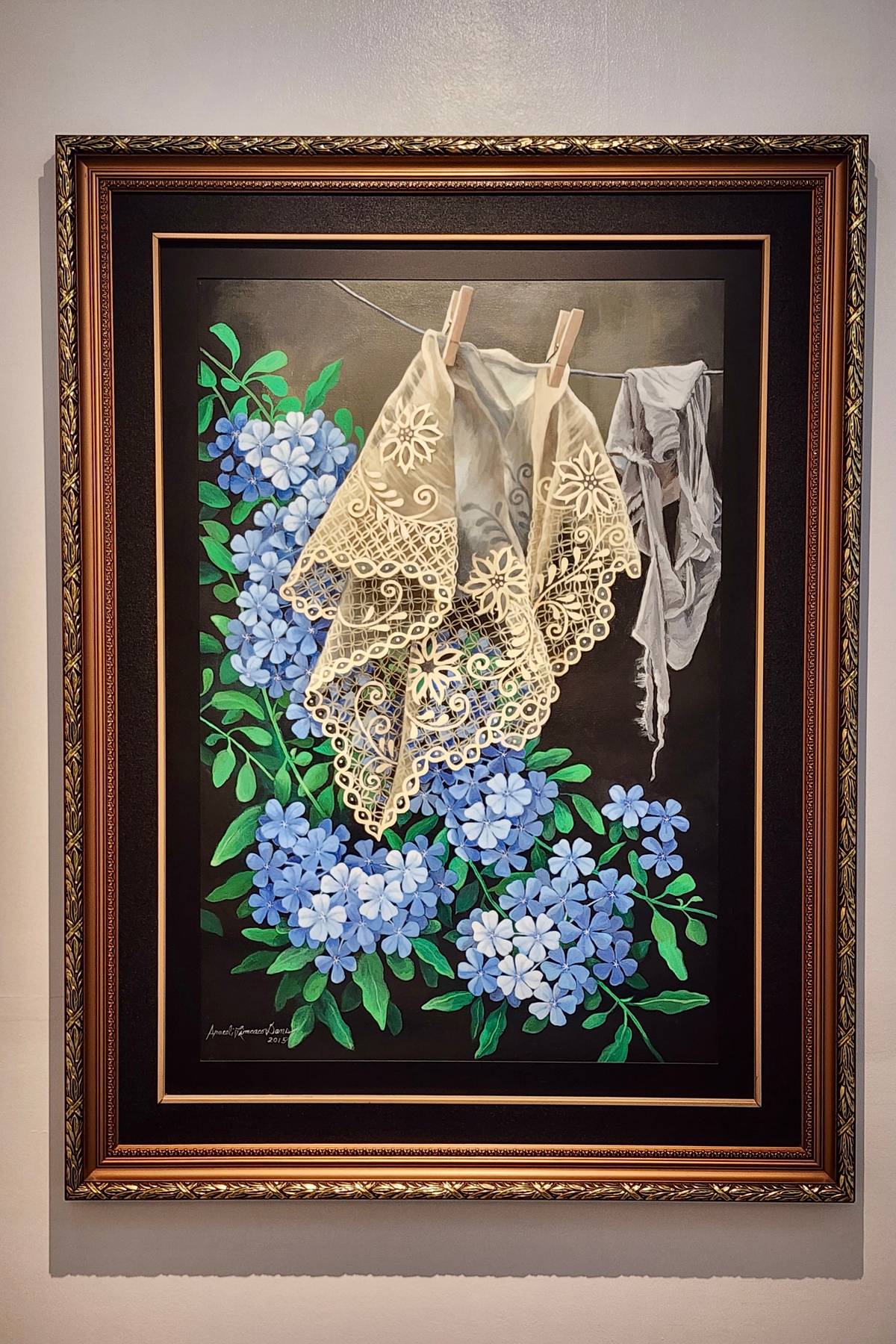
‘BLUE Melody (Tanim ni Ama),’ acrylic on canvas, 2015, 91 x 61 cm.
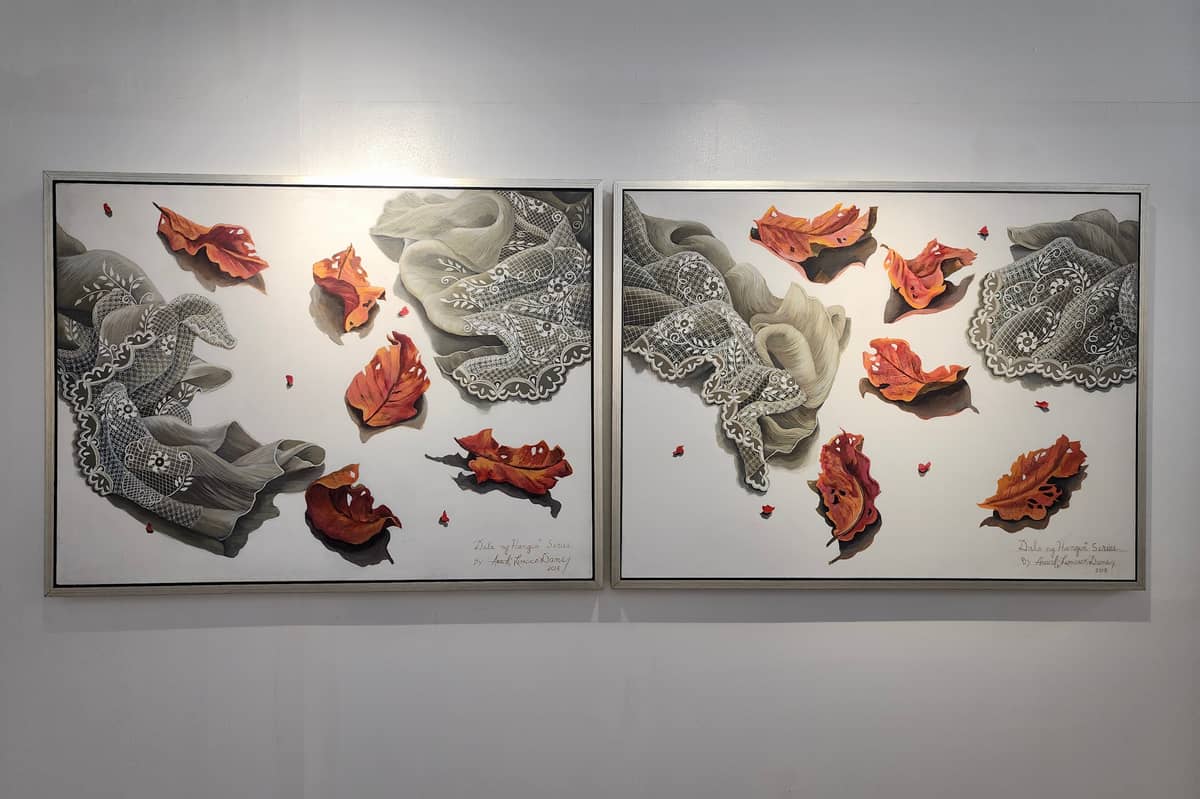
‘DALA ng Hangin Series 1’ and ‘Dala ng Hanging Series II,’ acrylic on canvas, 2018, 122 x 91 cm.
“You can’t create masterpieces all the time. You create a lot of work. You make work that you don’t like which you learn from.”
Each piece is an image that reveals not just artistic qualities and styles, but also, her whole worldview, philosophical and moral inclinations, tendencies and temperament. It is her long and eventful journey, through life and art, inseparable and interrelated.
Her body of work is devoid of large-scale, grand paintings. Her work was simple; inspirations, found locally. Her subjects were tales from everyday life, of falling leaves, arranged flowers, folded garments, domestic clutter and broken ladders.
She was quite capable of using different mediums — pencils, pen and ink, charcoal, pastel, oil, acrylic and watercolor. She consistently challenged herself and elevated her standards. She experimented, combining charcoal and pastel. In depicting the intricate calados, she moved from acrylic and oil to watercolor, displaying her command of the less forgiving medium. Embroideries were tedious enough to portray in oil, but expressed in watercolor, she was flexing her muscles. As she grew older, she shifted from oil to acrylic to reduce exposure to the toxic fumes.
Her parents separated when she was young. Araceli was compelled to become the family’s provider after her father disappeared. Art became a livelihood, a means to shoulder responsibility, more than just a way to express oneself. A creative industry, if you will.
She was known as a portrait artist initially in her teens and twenties. Her portraiture work consisted of commissions from American GIs who mailed their likenesses to family back home in the United States and referrals passed on to her by Amorsolo, her mentor. She conducted interviews with her subjects to bring out their personalities. In time, she became frustrated, eventually turning to still life since her affluent clients would insist on having their depictions altered to suit their vanity.
By 1986, she had shifted to still life. But it is still life on her terms, that which captures Filipino essence and culture. She took inspiration from 19th-century Filipino artists who were painting local folk in Filipiniana and translated the costume into still life. She took on the challenging task of capturing the transparent and elaborately embroidered piña costumes on her canvas. After discovering her niche and beginning her lifelong love-affair with calado, she continued to explore new approaches to still life.
The delicate lacework would no longer remain on top of a table amongst blooms or shells. But hung in a sampayan beside dilapidated rags, against stone walls or decaying wood panels. The tension within the frame from contrasting ideas is palpable.
The term “still life” is misleading. Her vibrant art is everything but static.
Teaching and mentoring were in her DNA. Cheloy taught art at the Ateneo where her educational television show was broadcast for the duration of her stint. When she realized that public school teachers who taught art in their homeroom had no training in art education, she organized PAEA, an initiative to enable art teachers.
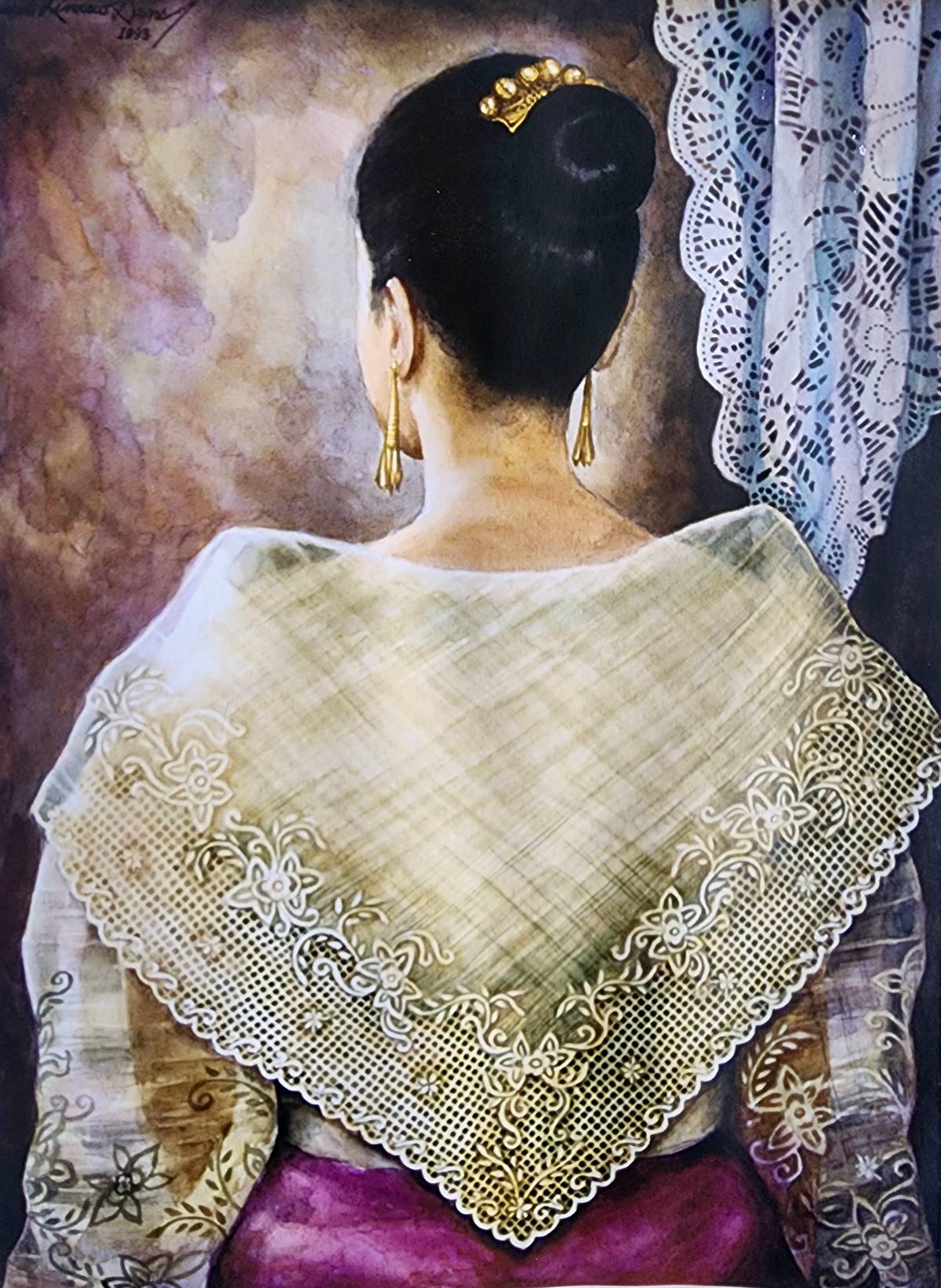
‘GRANDMOTHER’s Heirloom,’ 1993, 30” x 22”.
EVER the teacher and mentor, Cheloy Dans has inspired young artists with her personal involvement in art education. When she was 10 years old, Ginggay Hontiveros-Malvar won an on-the-spot art competition (back in 1978), which was judged by Araceli Dans, Jose Joya, and Manny Duldulao. Since then, Ginggay became an admirer of Cheloy Dans.
Scenes of the north figure prominently, ranging from pastel renditions of the Ifugao to Ivatan children playing amidst the backdrop of Rakuh stone houses. Baguio used to be home for Cheloy’s family, as her father worked in several mines in the Cordillera. The Abads would also invite her to Batanes, where she would stay for an extended period.
Cheloy’s personal archives contained studies for the Santacruzan mural that Imelda Marcos commissioned. They included layout sketches in pencil and ink, and color studies, variations of the elemental components before they were transformed into the final masterpiece on exhibit at the Coconut Palace. This makes one consider the potential of the unfinished studies. Without a doubt, they would have been glorious.
That the accomplished Cheloy was constantly experimenting and playing around with concepts for a more complex output down the road underscores the importance of constant growth and becoming. We are never the finished versions of ourselves, even if much has already been attained or realized. There is always room improvement towards perfection.
“Huwag kang magulo (Don’t be disorderly). I am practising.” Tony recalls her mother berating him fondly. “Malikot ang utak. Practice ng practice parati (A restless mind. Always practicing)”
She just wanted to paint. And she did so until her final days.
Not only did Cheloy: Impressions from a Beautiful Soul provide me a peek of who she was, it also made me lament not having met her in person. Indeed, she was beautiful.
Chel, whose siblings had passed on, placed a high value on family, and she would plan large family get-togethers for her and her husband’s immediate children and grandchildren around December. The trips would last three or four days, and the family eagerly anticipated them.
She would begin painting far in advance of December in order to raise funds as she would close resorts to accommodate 80 to 100 family members. “Magpipinta na ako ulit para meron na tayong pang outing (I will now paint so we can all go on an outing).” She would pay for everything. Grandchildren remember their generous lola with fondness. She would bond with each and everyone.
Tony recalls her mother’s most important message.
“I don’t want you to inherit wealth. I want you to inherit the memories of our family. No one can steal your memories.”
“We taught you creativity and discipline and that’s what you will value more than generational wealth.”
And what a fortune that was passed on. That was Cheloy’s legacy.