
China says ‘door open’ to resume Manila-Beijing oil talks amid supply disruptions
China has indicated willingness to call a truce with the Philippines to revive joint oil and gas exploration in the South China Sea, notwithstanding their territorial dispute in the area, amid the ongoing global oil crisis.
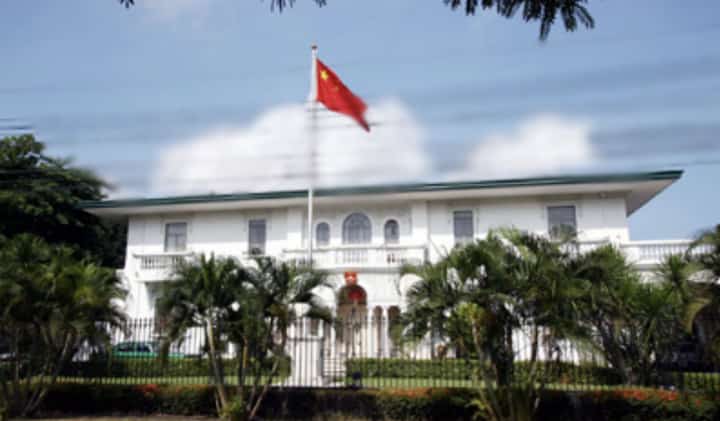
The Chinese embassy in Manila assured that Beijing will remain open for dialogue and cooperation “as long as the Philippine side demonstrates sincerity.”
“Setting aside differences and pursuing joint development is the right path to uphold peace and stability in the South China Sea and deliver benefits to countries in the region and their peoples,” the Embassy said late Wednesday.
This follows President Marcos Jr.’s interview with Bloomberg, in which he said that the United States-Israel conflict with Iran could provide “impetus” for Manila and Beijing to revive stalled talks on joint energy exploration in the disputed waters of the SCS as part of efforts to maintain fuel supply stability amid the threat of shortages in the coming months.
The Chinese embassy said that Manila and Beijing have conducted “in-depth discussions” on joint oil and gas development in the past and have made “positive progress.”
This supported Foreign Affairs Secretary Maria Theresa Lazaro’s statement that the arrangement was not new, having long been on the table, though Marcos lamented that the maritime dispute with China in the West Philippine Sea is a key factor in the hampered efforts.
Senator JV Ejercito on Wednesday expressed reservations about the efforts to revive the stalled agreement, asserting that even if a joint exploration agreement with China pushes through, it would not provide an immediate solution to the country’s fuel concerns, noting that oil extraction would take three to five years.
The President’s pronouncement signaled the Philippines’ desire to ease bilateral tensions with China, which soured when Marcos assumed office in 2022.
The recent word war between Philippine senators and Chinese officials further fueled frictions between the two nations.
Despite strained relations, Marcos expressed openness to revisiting oil talks with China, notwithstanding a 2023 Supreme Court ruling that declared the gas exploration “unconstitutional.”
The decision stemmed from a 2005 tripartite agreement among the Philippines, China, and Vietnam, known as the Joint Marine Seismic Undertaking (JMSU). The pact was designed to explore potential oil and gas resources in parts of the SCS.
The agreement covered some 142,886 square kilometers, much of which lies within the Philippines’ 200-nautical-mile exclusive economic zone, raising concerns over compromised sovereignty.
However, the SC said the JMSU was unconstitutional for allowing wholly foreign-owned corporations to participate in the exploration of the country’s natural resources, in violation of Section 2, Article XII of the Constitution, which mandates that such resources remain under full state control and supervision.
The high court ruled in favor of the petitioners, led by former progressive lawmakers, finding that the arrangement effectively allowed foreign entities to undertake large-scale exploration of Philippine petroleum resources, in violation of the Constitution.
Nevertheless, Lazaro said there has been no instruction yet from the President to restart discussions with China, though she noted that “it may be forthcoming.”