
Worst-case scenario
The most sobering point of the Secretary of Energy’s remarks is the asymmetry she noted, that is, high fuel prices are painful but manageable, but no fuel at all would inflict an entirely different, unimaginable pain.

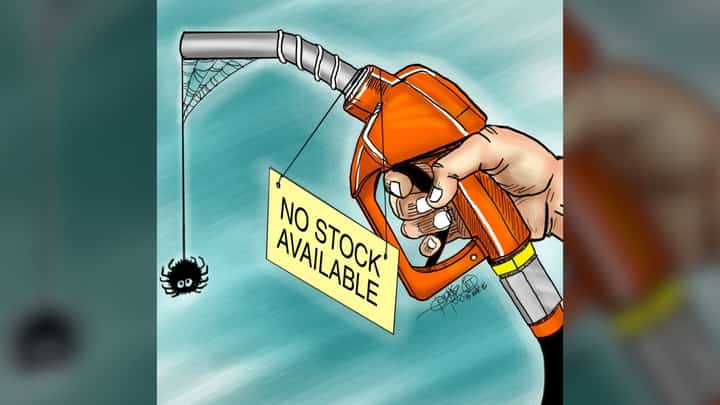
In an interview on ANC last Saturday, Energy Secretary Sharon Garin said a shortfall in the fuel supply would pose more problems for the country than elevated pump prices as the Middle East crisis rages on. She worried that if we can’t find enough oil before supplies run out, things would grind to a halt in this country. Indeed.
Imagine a Monday morning without diesel in Metro Manila. No jeepneys clogging streets, no buses lurching through EDSA, tricycles sitting silent at the curb. Elsewhere, ferries that churned between Batangas and Caticlan sitting idle, their engines cold. Now imagine that this is not a strike or a holiday — it is simply Tuesday. And Wednesday. And every day for the foreseeable future.
This is the worst-case scenario Secretary Garin was talking about when she said, “The worst case really is we won’t have enough, or we won’t have any.”
This is not a fantasy dreamed up by catastrophists. It is the logical endpoint of a chain of events already in motion: escalating tensions in the Middle East, constraints on shipping through the Strait of Hormuz, and a country that imports nearly all of its petroleum.
Could this actually happen? Analysts say total depletion is unlikely, but a severe and prolonged shortfall is not. The Philippines stores roughly 50 to 60 days of strategic petroleum reserves at any given time. This buffer exists precisely for disruptions. However, those reserves were designed to absorb shocks of weeks, not months.
A sustained closure of the Strait of Hormuz — through which approximately 20 percent of the world’s oil passes — combined with the rerouting of tankers around the Cape of Good Hope and a global scramble for alternative supplies could lower that window considerably.
The government’s outreach to alternative suppliers — countries outside the traditional Gulf corridor — will buy time but not unlimited time.
Without adequate fuel, the first indications of a breakdown would be in terms of logistics.
Trucking companies, operating on slim margins, would begin prioritizing routes. Supermarket shelves — dependent on fuel-hungry cold-chain logistics would thin out before they empty.
Generators at hospitals and data centers would begin drawing from their own diesel tanks. Fuel station queues would stretch around the block and then simply stop forming as supplies dry up.
Public transportation would stall. The EDSA Carousel buses, the PITX terminals, the provincial routes connecting farmers to markets — all these run on diesel. Without it, the urban poor, who depend entirely on public transit, would face a forced stillness.
Work, school, hospitals — all will be inaccessible to anyone without a private car and private cars would themselves be scarce within days.
Electricity would follow. The Philippines generates a significant portion of its power through oil-fired plants and backup diesel generators. While coal and renewables provide a base, the grid’s stability depends on oil-fired peaking plants to handle demand surges.
A sustained supply collapse would trigger rolling blackouts, then extended ones. Air travel would be suspended. Inter-island shipping would cease. Rice and vegetable harvests, even if abundant, would rot in fields because the trucks to collect them and the mills to process them would be power-less.
The economic contraction would be violent. The Philippines is integrated into global supply chains for electronics and manufacturing. A fuel crisis would simultaneously spike inflation, collapse logistics, and drain foreign exchange reserves through emergency oil procurement at premium prices.
A complete, total depletion? Still improbable. Global oil markets are resilient, and countries do not run fully dry without a long warning period that would trigger emergency imports, rationing, and international assistance long before the last barrel is consumed.
But a severe shortage lasting several months, with fuel available only for essential services and at prices hardly afforded by the majority? That is well within the range of possibility. Warnings about a possible shortage of fuel is not alarmist, but prudence, an urging to take seriously what could happen if the country is unable to find fuel before its stock is depleted.
The Philippines is an archipelago whose islands are stitched together by fuel. Cold-chain logistics, inter-island shipping, the urban poor’s dependence on public transit, grid-stability peaking plants, all these run on diesel and bunker fuel that the country does not produce.
A supply shock doesn’t cause one crisis; it causes many simultaneously.
The most sobering point of the Secretary of Energy’s remarks is the asymmetry she noted, that is, high fuel prices are painful but manageable, but no fuel at all would inflict an entirely different, unimaginable pain.