
Palace: Repatriation flights for Filipinos in ME continue

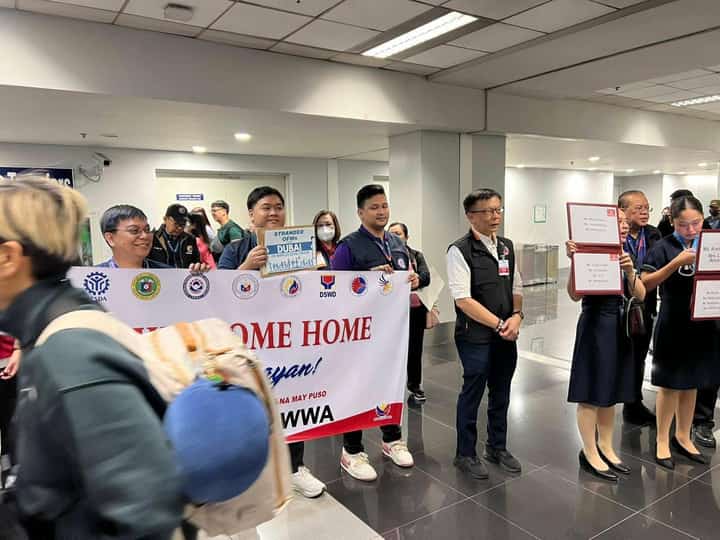
The Philippine government will continue its repatriation flights for Filipinos affected by conflicts in the Middle East, following a directive from Ferdinand R. Marcos Jr. to sustain humanitarian airlift operations.
Executive Secretary Ralph Recto on Wednesday said the President’s order was unequivocal: to keep bringing home overseas Filipinos from war-impacted areas.
He added that the “Air DMW” program led by the Department of Migrant Workers will continue its operations.
So far, nearly 1,100 Filipinos have been repatriated through government-arranged flights. Recto noted that these missions also double as medical evacuations, citing cases where ill Filipinos—including a stroke patient—were assisted and transported back to the country.
The most recent “mercy flight” brought home 343 Filipino workers and their dependents from Riyadh and Al Khobar in Saudi Arabia, as well as from Bahrain, on March 15. Another chartered flight is now being prepared to repatriate more overseas Filipino workers (OFWs) before the end of the month.
Ongoing evacuation efforts remain focused on areas with heightened tensions, including Israel, Kuwait, and Bahrain, with operations designed to prioritize the safety of Filipinos.
Funding for the continued evacuations comes from the P2 billion AKSYON fund under the Department of Migrant Workers, which is allocated to assist overseas Filipinos in distress. Despite the high cost of chartered flights, Recto assured that resources remain sufficient to sustain the effort.
Beyond transportation, the government is also providing comprehensive assistance to returning Filipinos, including food, transportation support, temporary shelter, psychosocial counseling, and medical services.
Authorities are likewise strengthening reintegration programs to help returning OFWs transition into domestic employment.
Recto emphasized that many overseas workers possess globally competitive skills that can help address workforce gaps in both industry and government.
To support this, several agencies are opening employment pathways for repatriates.
Among these is a newly signed agreement between the Department of Migrant Workers and the Department of Education, which aims to deploy qualified returning Filipino teachers into public schools.