
Marcos: Philippines still dangerous for journalists
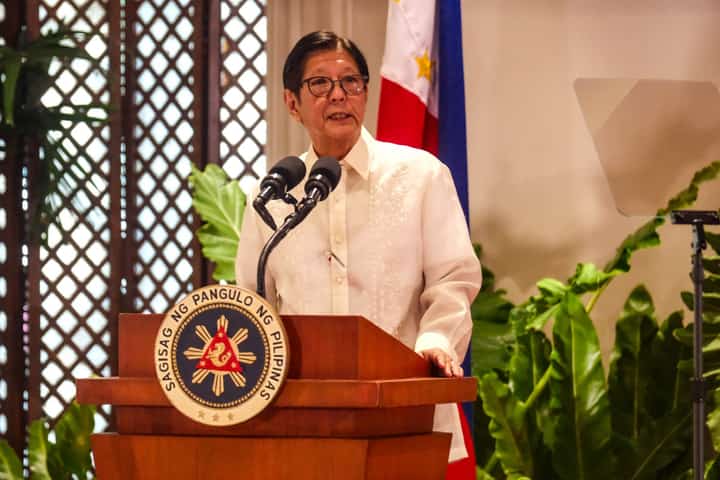
President Ferdinand R. Marcos Jr. on Wednesday acknowledged that the Philippines remains one of the most dangerous countries for journalists, as he reaffirmed his administration’s commitment to protecting media workers.
Speaking at the oathtaking ceremony of the Kapisanan ng mga Brodkaster ng Pilipinas (KBP), Marcos cited the persistent risks faced by media practitioners.
“The Philippines remains one of the most dangerous places for journalists,” the President said.
Data from the International Federation of Journalists showed that two journalists were killed in the Philippines in 2025, with threats largely affecting provincial radio broadcasters.
Marcos underscored the role of the media in promoting truth, responsible reporting, and public service, while recognizing the challenges journalists face in carrying out their duties.
“It is not easy to ask questions, report, and relay the truth, especially when it is accompanied by intimidation and threat,” he said. “This Administration has made it clear that the safety and welfare of our journalists must be protected at all times.”
To strengthen protection efforts, the Presidential Task Force on Media Security recently partnered with the National Bureau of Investigation to intensify action against threats to journalists, and with the Public Attorney’s Office to provide legal assistance.
“We are ensuring that in every threat to journalists, there is a government that is ready to defend them,” Marcos said.
The President also called on media organizations to help combat misinformation and disinformation, particularly on social media platforms.
“In this view, we are encouraging media groups to help our fellowmen to identify real news from fake news,” he said.
The government is working with the Department of Information and Communications Technology to enhance content safeguards through partnerships with technology companies, including Google and Meta.
Meanwhile, the Presidential Communications Office has launched “Oplan Kontra Fake News,” a rapid-response system aimed at curbing the spread of false information.
Marcos also emphasized transparency initiatives, including the use of digital platforms, satellites, and drones to monitor government projects.
He urged KBP’s new leadership to uphold standards of independence, responsibility, and innovation in broadcasting, in coordination with the National Telecommunications Commission.
“Please continue to uphold the values that have guided you for more than five decades: the values of independence, responsibility, innovation, and, of course, service to our people,” he said.
Marcos added that cooperation between the government and the media is essential to strengthening democratic institutions and ensuring journalists can work safely.