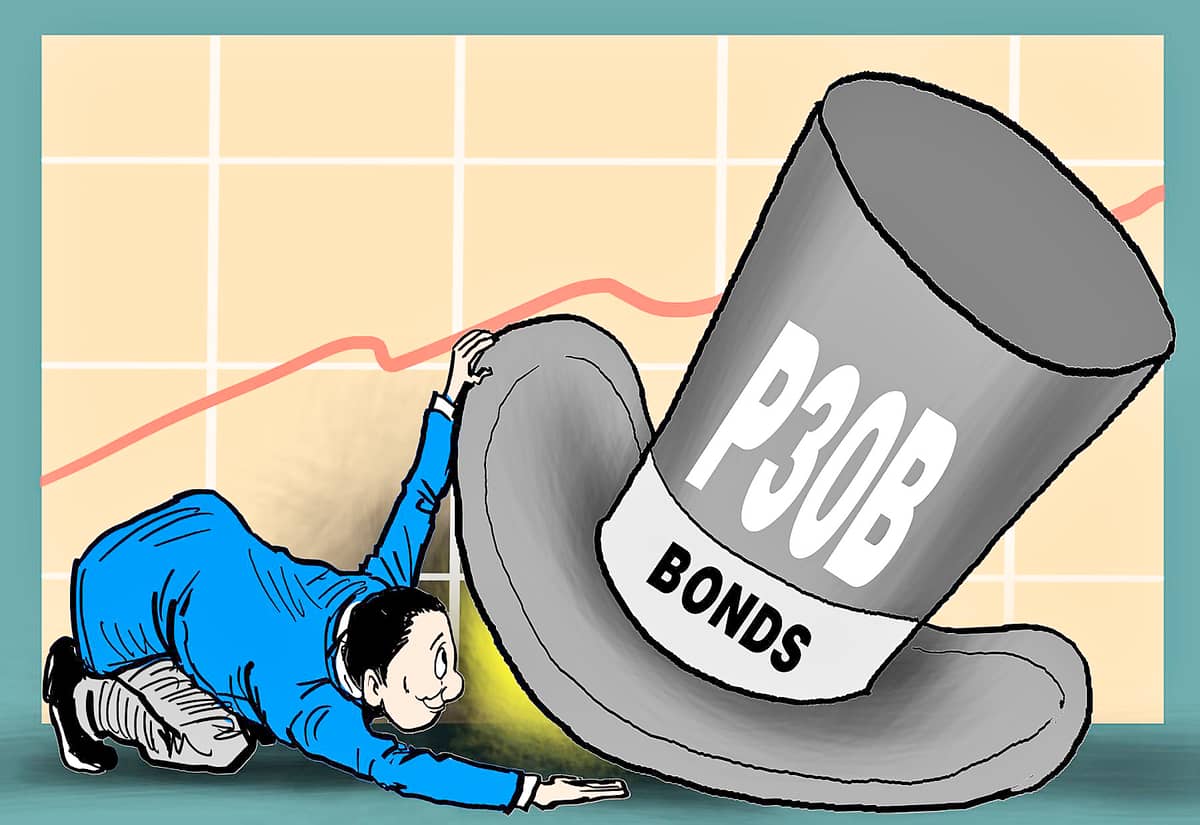
High leverage, elevated risk


The power unit of one of the country’s biggest conglomerates is quietly tapping the bond market for up to P30 billion — even as its debt burden continues to balloon, stock traders intimated to Nosy Tarsee.
In its 17 March en banc meeting, the regulator gave the green light to the registration statement covering P20 billion in fixed-rate bonds, plus an oversubscription option of up to P10 billion (subject to a few last-minute compliance items).
The offering breaks into three series: 5.25-year bonds due 2031, seven-year bonds due 2033, and 10-year bonds due 2036, all sold at face value.
Should the oversubscription be fully exercised, the unit could pocket up to P29.64 billion in net proceeds.
Those funds? Straight to refinancing the mounting debt pile and only partially bankrolling some renewable energy projects.
When your debt keeps growing, sometimes the only way out is to borrow more.
Company figures showed the conglomerate has by far the largest absolute debt burden among its peers, reflecting a high-stakes gamble into energy, infrastructure, fuel and other capital-intensive sectors.
As of the latest available data, interest-bearing debt was about P1.58 trillion, including loans payable and long-term debt and liabilities totaling P1.97 trillion, compared to total assets of P2.7 trillion.