
February among hottest ever as Europe faces flooding
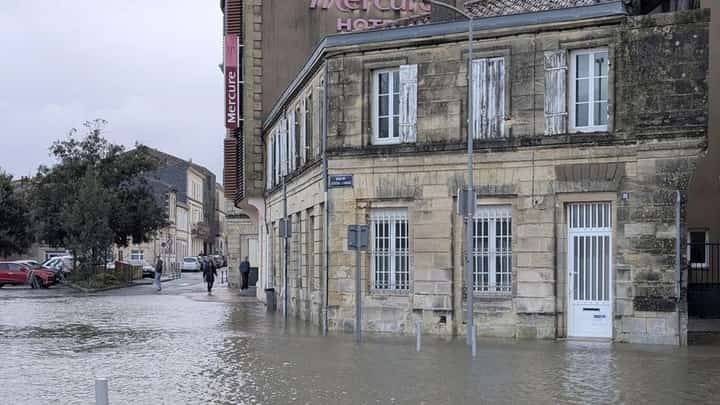
February was the fifth hottest on record globally, with western Europe hit by extreme rainfall and widespread flooding, the European Union’s climate monitor said Tuesday.
Global temperatures last month were 1.49°C above preindustrial levels, defined as 1850–1900, before large-scale fossil fuel use.
Europe saw wide variations: average temperatures were among the three coldest in 14 years at –0.07°C, but western, southern, and southeast Europe were warmer than average. Colder conditions were reported in northwest Russia, the Baltics, Finland, and Scandinavia, the Copernicus Climate Change Service said.
“Wet and dry conditions across the continent showed a pronounced contrast: much of western and southern Europe was wetter than average, whereas the rest of the continent... was mostly drier than average,” the report said.
The US, northeast Canada, the Middle East, Central Asia, and east Antarctica also saw warmer-than-average temperatures.
Sea surface temperatures reached the second-highest level for February, while Arctic sea ice was at its third-lowest February level, five percent below average. Antarctic sea ice was close to the February norm, contrasting sharply with below-average levels in recent years.
“The extreme events of February 2026 highlight the growing impacts of climate change and the pressing need for global action,” said Samantha Burgess, strategic lead for climate at the European Centre for Medium-Range Weather Forecasts, which runs Copernicus.
“Europe experienced stark temperature contrasts,” she said.
“Exceptional atmospheric rivers — narrow bands of very moist air — brought record rainfall and widespread flooding to western and southern Europe,” Burgess added.
Torrential downpours killed dozens and displaced thousands across Spain, Portugal, and Morocco between January and February, intensified by human-driven climate change, according to the World Weather Attribution network of climate scientists.