
Two-thirds of Cuba hit by blackout
‘Everything you have in the fridge is going bad: meat, baby milk, everything.’
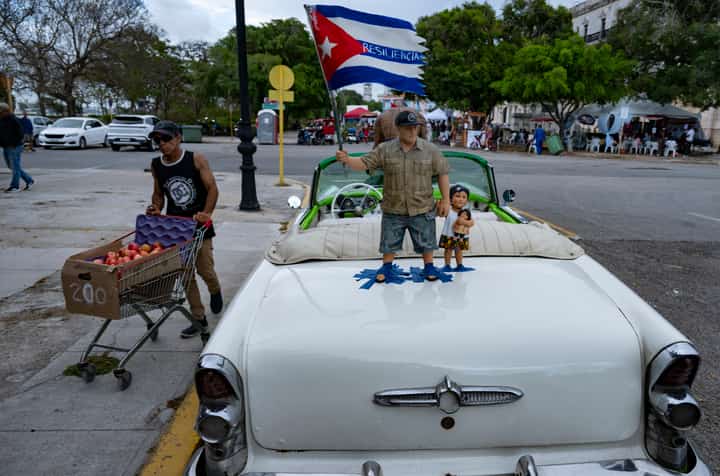
An apple seller walks past a car and a figure holding the Cuban flag with the word ‘Resilience’ after a blackout in Havana.
Photograph courtesy of Yamil Lage/Agence France-Presse
Havana (AFP) — A grid failure knocked out power Wednesday to two-thirds of Cuba including Havana, the national electric company UNE said, the latest electricity collapse for residents suffering daily impacts of US-imposed energy restrictions.
The issue stemmed from an “unexpected” breakdown beginning shortly after noon at the Antonio Guiteras power plant, one of the island’s largest, the utility said, adding that the center and west of the island were affected.
Cuba’s electricity generation system is in shambles. Daily power outages of up to 20 hours are the norm in parts of the island, which lacks the fuel needed to generate power.
The crisis in the country of 9.6 million people comes at a particularly tense time, and has become more acute since the US ouster of Cuba’s top ally, Nicolas Maduro of Venezuela, on 3 January.
Maduro’s administration supplied about half of Cuba’s fuel.
After his capture, Washington imposed an oil embargo on arch-foe Cuba but later eased it, amid warnings from other Caribbean countries that it could trigger an economic collapse and make everyday people suffer unduly.
Still, President Donald Trump has maintained his blockade of sorts, and oil shipments from Caracas to Havana are in limbo.
Cuban authorities as a result have taken drastic measures, including the suspension of diesel sales, gasoline rationing, reduction of hospital care and teleworking.
Public transport has also been sharply reduced, prompting a surge in prices for private shuttles.
For Damian Salvador, father of a six-month-old baby, Wednesday’s huge power cut marked “the final blow.”
“Everything you have in the fridge is going bad: meat, baby milk, everything,” the 51-year-old said as he went to buy candles for the night.
The Caribbean island of Cuba lies some 150 kilometers off the southern coast of the US state of Florida.
To justify Washington’s pressure policy, Trump has declared Cuban actions — including hosting intelligence facilities of “malign actors” like Russia and persecuting political opponents — as an “extraordinary threat to US national security.”