
Teeteringon edge, again
The lesson, for the Philippines, is both urgent and familiar: the country’s economic fate is tied, inescapably, to the stability of a world it does not control.

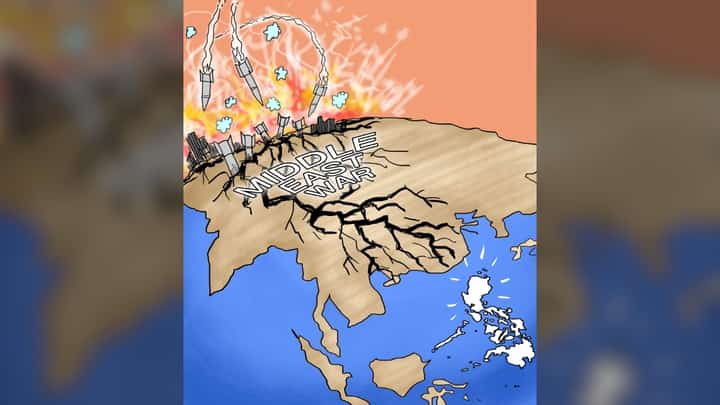
The world is once again holding its breath. The conflict in the Middle East — sharpened by the US military strike against Iran — has moved beyond the realm of geopolitical abstraction and entered the daily lives of ordinary people, including millions of Filipinos who never set foot in that troubled region. The concerns being raised by Philippine business leaders are not alarmist. They are, in fact, real measurable vulnerability assessments.
The Philippines is a net energy importer. That fact alone carries enormous weight. When crude oil prices spike — as they inevitably do when Middle East tensions escalate — the ripple effects are felt from Manila gas stations to Mindanao fishing villages; higher fuel prices translate to higher electricity rates, costlier transport fares, more expensive food.
Inflation, already a persistent burden on Filipino households, gets a fresh and unwelcome push. Manufacturers dependent on imported raw materials face longer and more expensive supply chains. Aviation, food processing, logistics and tourism — among the most vital sectors of the Philippine economy — become more fragile and costlier to operate.
The broader global picture is equally sobering. Asia, as the world’s largest energy-consuming region, is structurally exposed to Middle East instability. Japan, South Korea, India and China — all major Philippine trading partners — draw heavily from Gulf oil and gas.
A prolonged conflict disrupting the Strait of Hormuz, through which roughly 20 percent of the world’s oil supply passes, would send shockwaves through every Asian economy. Supply chains that were already strained by the Covid-19 pandemic and the Russia-Ukraine war would face yet another stress test.
The question of duration is critical. Markets are surprisingly resilient to short, sharp shocks. A brief skirmish, a swift de-escalation — these the global economy can absorb. What it cannot easily absorb is a prolonged conflict with no clear end in sight.
If the current tension between the United States and Iran persists, or worse, expands to draw in other regional and global actors, the sustained pressure on energy prices, shipping routes and investor confidence could tip several fragile economies toward recession.
Then, there are those who believe that Trump’s decision to strike Iran was motivated, at least in part, by a desire to redirect public attention from the controversy surrounding the Epstein files. When military action is taken against a sovereign nation and the public questions the motives behind it, the legitimacy of global leadership itself is under strain.
That strain matters enormously for world stability. A world in which major powers are suspected of manufacturing or exaggerating crises for domestic political purposes is a world that is harder to manage and easier to destabilize. It invites miscalculation, emboldens rogue actors and makes diplomatic off-ramps harder to construct and harder to trust.
The specter of a wider war — even the phrase “World War 3” now circulates in mainstream discourse without the sense of absurdity it once carried — reflects genuine anxiety about where escalation logic can lead. Iran, Russia, China, Israel, the Gulf states and the NATO alliance are all, to varying degrees, entangled in this web.
For the Philippines, the lesson is both urgent and familiar: the country’s economic fate is tied, inescapably, to the stability of a world it does not control.
What Philippine policymakers can do is to prepare — by building strategic fuel reserves, diversifying energy sources, accelerating renewable energy development and crafting social protection mechanisms for households that will bear the heaviest burdens if this crisis spreads.
What ordinary Filipinos can do is to stay informed, to think critically and to resist the temptation to treat a distant war as someone else’s problem. It is not. It never really was.