
La Trinidad’s quiet treasures: Exploring some of the built heritage of Benguet’s capital
La Trinidad, Benguet, may be famed for its strawberries and mountain views, but its built heritage — quiet, enduring and deeply tied to its history — deserves a place in the story as well.
For most visitors, La Trinidad — the capital town of Benguet — is synonymous with its attractive strawberry fields, a destination that draws crowds throughout the year. In the past decade, the town added, in 2016, the brightly painted StoBoSa (Stonehill, Botiwtiw and Sadjap) hillside homes and, more recently, Mount Kalugong’s scenic cliffs and recreation areas to its roster of attractions.
While La Trinidad is celebrated mainly for its natural charms, it also holds a modest but meaningful collection of built heritage, some structures tracing their origins to the American colonial period.
One of the town’s early landmarks was an old wooden church dedicated to San Jose. Built almost entirely of timber — from its walls down to its floor — it echoed the quaint Christian chapels seen in other parts of the Cordillera. Its German-cast bell hinted at its long history. Though this wooden church has since given way to a newer concrete structure with a simple façade flanked by twin belfries, it remains an important part of the town’s collective memory.
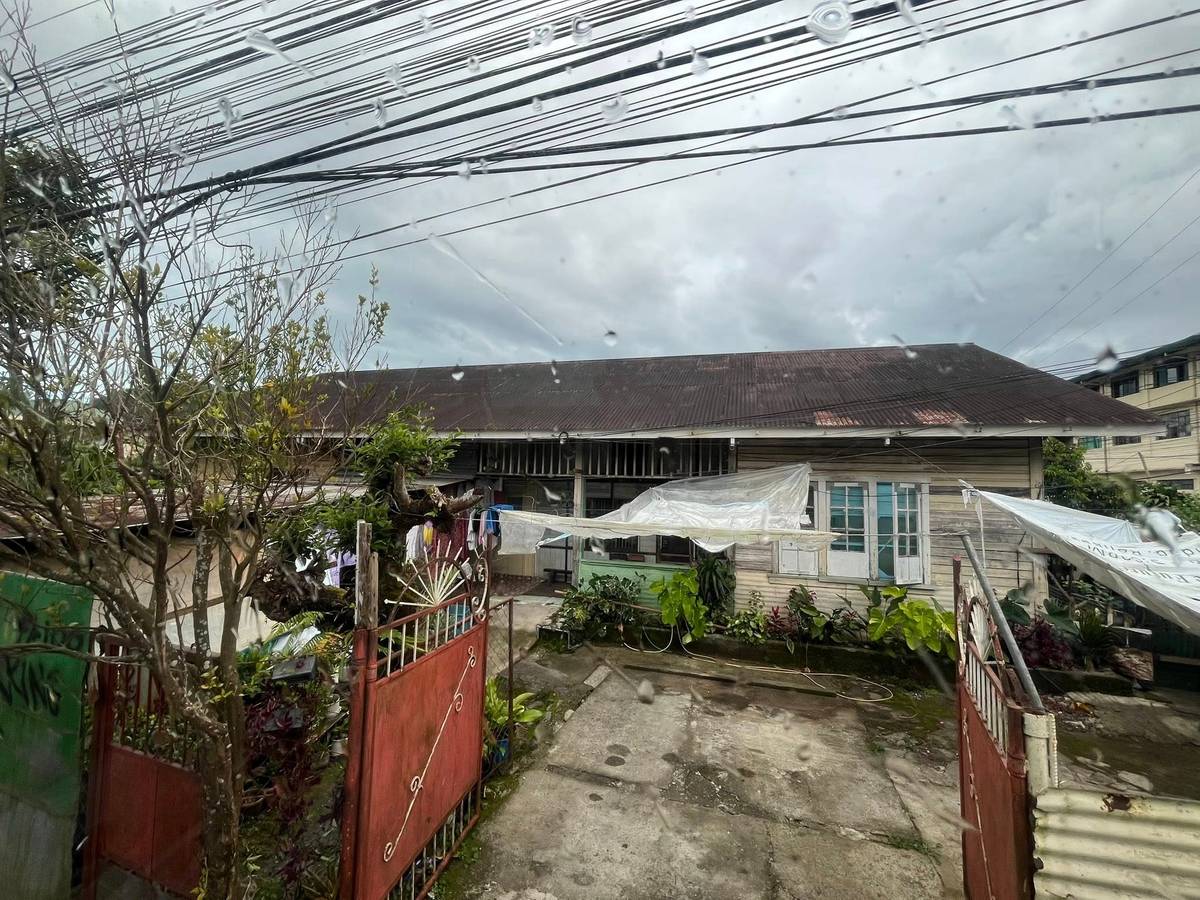
AN American-era wooden cottage still used as staff housing, preserving early 20th-century Cordillera architectural character.
A Taoist temple, popularly called the Bell Church, is considered a heritage structure, being over 50 years old, and enjoys the protection afforded to presumed Important Cultural Properties under Philippine law.
The Benguet Provincial Capitol, completed in 1973, is another fixture of the townscape. Perched on a promontory overlooking the valley, the Capitol stands as the most prominent building in La Trinidad — visible just as the Halsema Highway makes its dramatic bend toward the upland towns of Benguet and Mountain Province.
Apart from these, the campus of Benguet State University (BSU) holds perhaps the most cohesive collection of heritage buildings in the municipality, spanning the American period to the post-war years and beyond. It boasts at least five extant structures which are considered part of the local and national patrimony, the school being marked by the National Historical Commission of the Philippines in 2016.
BSU traces its roots to 1916 as a farm school before evolving into the Trinidad Agricultural School, later the Mountain State Agricultural College in 1969, and finally becoming Benguet State University in 1986.
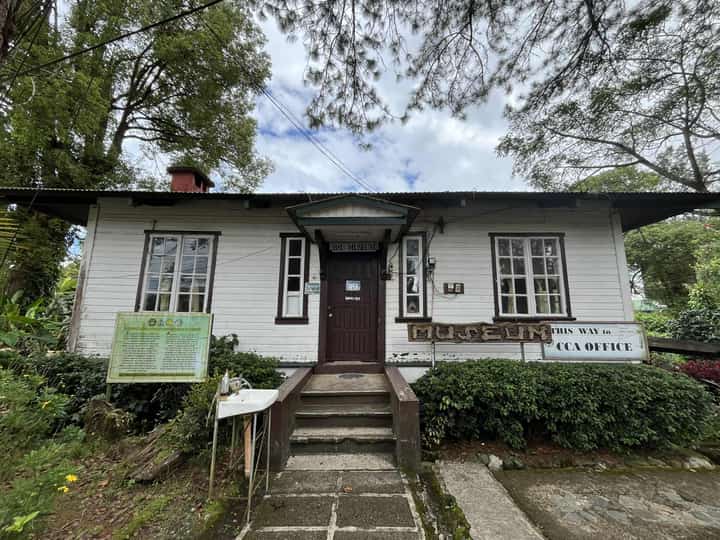
Among its oldest structures is the building now housing the BSU Museum. Built in the 1920s as the Principal’s Cottage, it later became the Superintendent’s Cottage in 1951, then the Home Economics Building from 1968 to 2010. It was converted into the campus museum in 2011, featuring mainly archival photographs that chronicle the school’s development. An authentic World War II Willy’s jeep — precursor of the Philippine jeepney — stands in front of the building.
Nearby is the Home Economics Building, constructed in 1953 through the Foreign Operations Administration (FOA) of the United States Agency for International Development (USAID). Originally a one-story structure, it was raised in the 1960s to create space for weaving classes below.
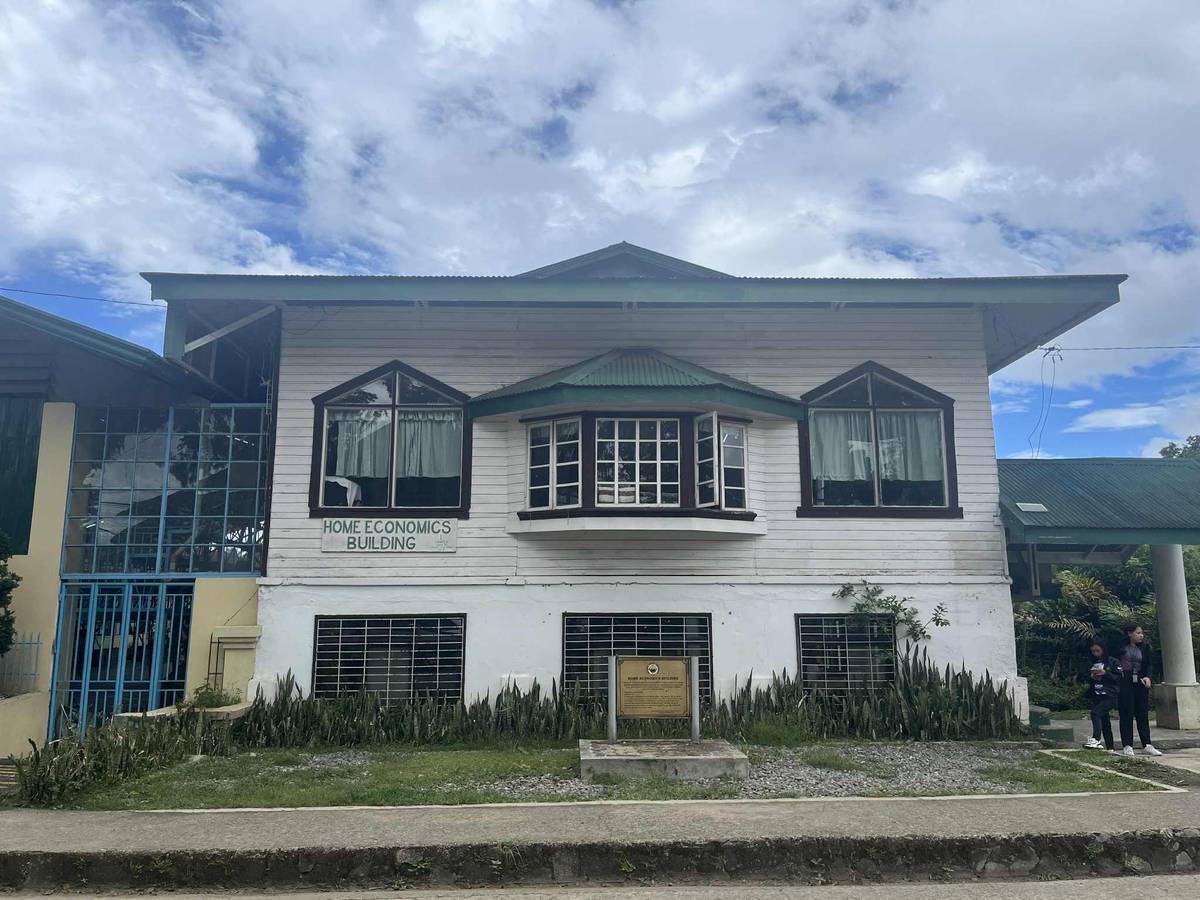
BUILT in 1953 with USAID support, the Home Economics Building later expanded to accommodate weaving classes beneath the elevated structure.
Another USAID-funded building, the Vocational Agriculture (Vo-Ag) Building, was erected in 1954. This U-shaped, single-story edifice once served as the office of the College Department and today houses industrial arts and agricultural arts classes.
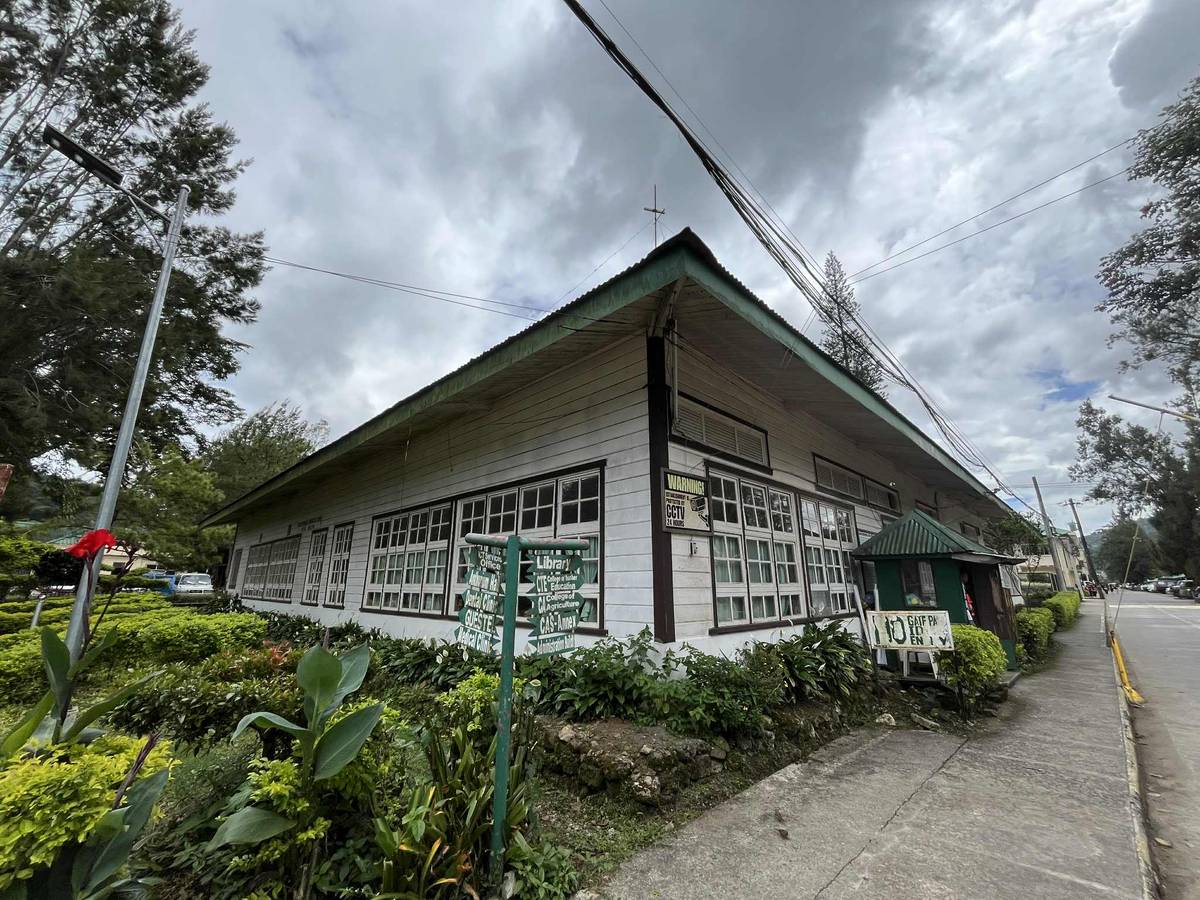
THE 1954 Vocational Agriculture Building — another USAID-funded structure —continues to host industrial and agricultural arts classes.
A wooden American-period cottage for employees, located in front of the gym, remains in active use.
All of these structures bear the imprint of the American colonial architecture prevalent in American-period Cordillera, most evidently in Baguio City.
Across this cottage stands the College of Engineering Building, distinguished by a quadrangular plan and a bas-relief façade symbolizing the engineering disciplines it represents.
Except for the employees’ cottage and the College of Engineering Building, the histories of these heritage structures were researched and documented in 2022 by the staff of the BSU Museum and the College of Teacher Education–Secondary Laboratory School. Their effort, preserved on markers placed across the campus, contributes meaningfully to public awareness and helps instill the value of heritage preservation within the community.