
Phl exporters face uncertainty amid new US tariffs

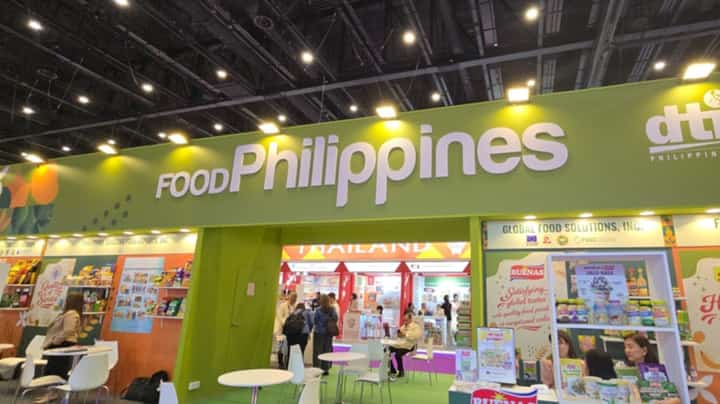
PHILIPPINE food products take centerstage at the recently concluded Gulfood 2026 in Dubai, United Arab Emirates, generating over $125 million in total export sales.
Photograph courtesy of Consulate of Dubai
Philippine exporters are grappling with uncertainty following the implementation of new 10 percent global tariffs by the United States, leaving businesses unsure of how the measure will affect shipments.
Sergio R. Ortiz-Luis Jr., president of the Philippine Exporters Confederation Inc. (PHILEXPORT), said the sudden policy shift has put exporters “insecure” and “in limbo” as they try to gauge the potential impact. The tariffs, signed into law by US president Donald Trump on 20 February, took effect on 24 February. Trump has also threatened to raise the levy to 15 percent in the coming months.
“It is unclear at the moment how the new levy will affect Philippine exports,” Ortiz-Luis said in a live interview on Tuesday.
Despite last year’s 19 percent US tariff on Philippine goods, the country managed to exceed export projections because electronics and agricultural products, which make up the bulk of shipments to the US, were excluded from the duties. Whether the new 10 percent tariff applies to the Philippines remains uncertain, he added. “We don’t really know what will happen. We are in limbo,” he said in a mix of Filipino and English.
Ortiz-Luis emphasized that the Philippines has been preparing for higher tariffs through market diversification and ongoing negotiations for trade agreements with other countries, including Canada and Middle Eastern nations. He noted that talks with the US should also continue to protect export opportunities.
Malacañang has assured that the Philippine government will maintain close cooperation with the United States to safeguard bilateral trade relations, even after the Supreme Court invalidated Trump’s broader global tariffs.
The PHILEXPORT chief also called for stronger domestic support for exporters, warning that current measures are insufficient. He pointed out that Philippine exporters face challenges in financing, trade promotion, product development, and overseas exhibition participation. Compared with Southeast Asian neighbors such as Thailand, Malaysia, and Indonesia, which send hundreds of well-supported participants to trade fairs, the Philippines sends only about 10, often covering their own expenses.
“The Philippines trails behind ASEAN peers in terms of genuine support for exporters,” Ortiz-Luis said, noting that banks in the country remain reluctant to lend to exporters due to perceived risks, leaving the sector one of the most underbanked in Asia.
As US trade policy continues to evolve, Philippine exporters are bracing for potential disruptions while seeking new markets and stronger government backing to maintain growth.