
Tropical vs. winter architecture
I was especially curious about how the house was built, since homes in the Philippines are made for a tropical climate. I quickly realized that winter makes building much more complicated.


It’s snowing in New York City right now and, when winter arrives, many people head upstate to rent a cabin, enjoy the quiet and try out winter activities in the snowy mountains. On my recent trip to northern New York, I did the same. But honestly, I found myself more interested in the cottage I stayed in than the snow outside. I was especially curious about how the house was built, since homes in the Philippines are made for a tropical climate. I quickly realized that winter makes building much more complicated. Here are three challenges I noticed and how the cottage’s design solved them.
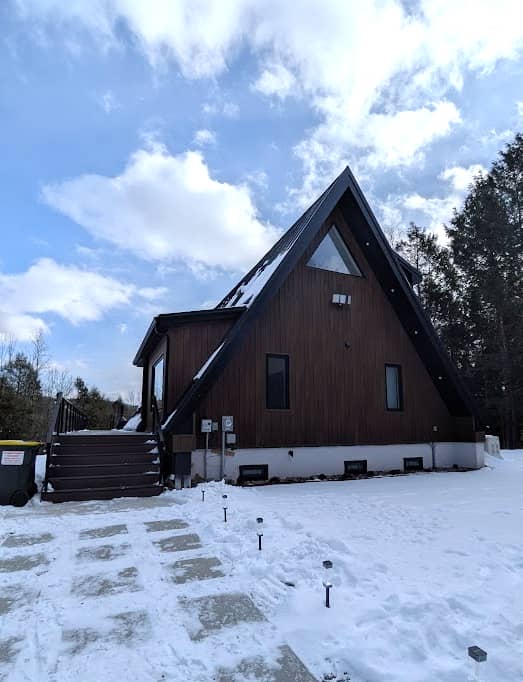
VIEW of the cottage from the driveway, showing off its A-frame construction.
Photographs courtesy of Romeo Romulo
As I left the driveway, the first thing I noticed about the cottage was its steep roof. This is very different from roofs in the Philippines and other tropical countries, where steep roofs can be risky because strong monsoon winds might blow them off. In cold places, though, a steep roof helps snow slide off quickly. If too much snow and ice build up, it adds a heavy load, called a live load, which is the extra weight from things like snow, ice, or people. Engineers calculate live loads to make sure buildings can handle them safely. If the roof can’t support the weight, it could start to sag or even collapse.
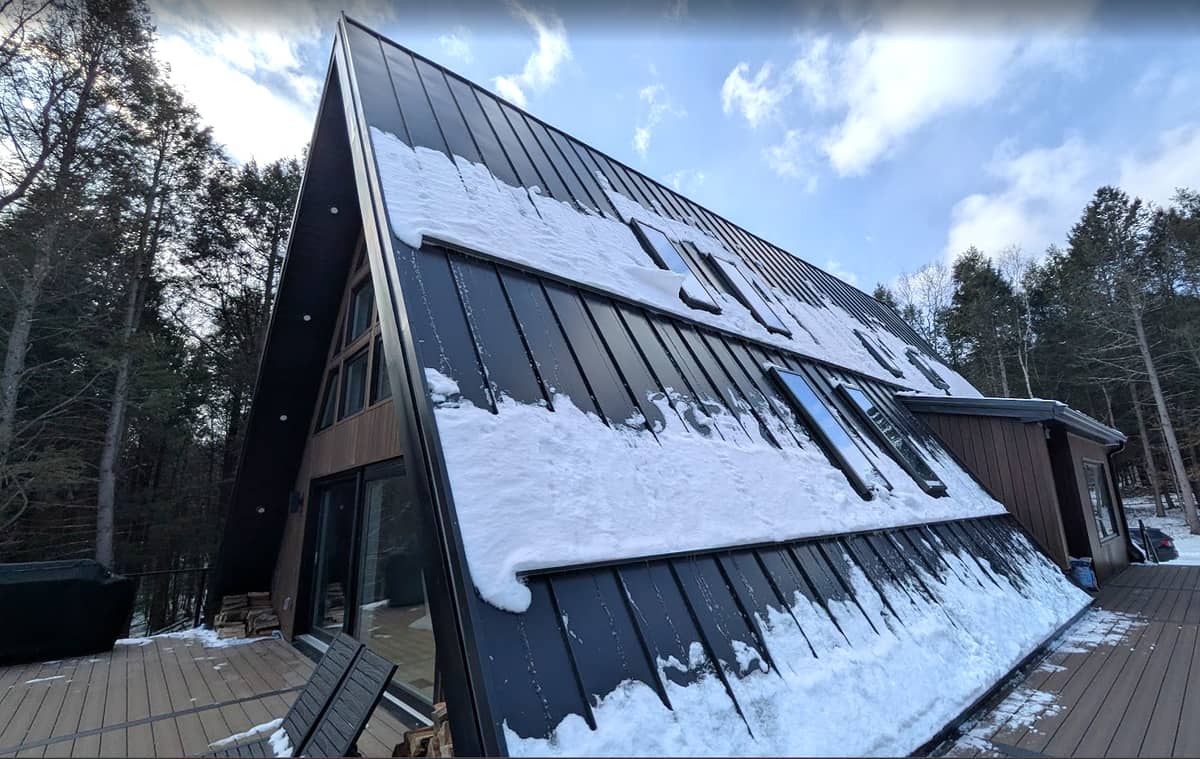
VIEW of the skylights along the roof.
The cottage is mostly made of wood, which is common in cold regions. In the Philippines, we usually use concrete blocks, but wood is better for cold weather because it keeps heat inside and helps the house stay warm. This is especially important when temperatures drop below zero. If you’ve ever wondered why there aren’t many large wooden buildings in the Philippines, this is the main reason. In tropical climates, we want to let heat out, not keep it in. Also, wood catches fire easily, which is a big risk in hot countries.
In places with long winters, the sun sets early and nights last longer, so it’s important to use as much natural light as possible. The cottage has lots of windows and skylights to let in sunlight. In the Philippines, it’s the opposite. We avoid too many windows because they let in too much heat and, in turn, will jack up the electricity bill because of our reliance on air conditioning. Even in homes with big windows, we usually keep them covered with curtains for this reason.
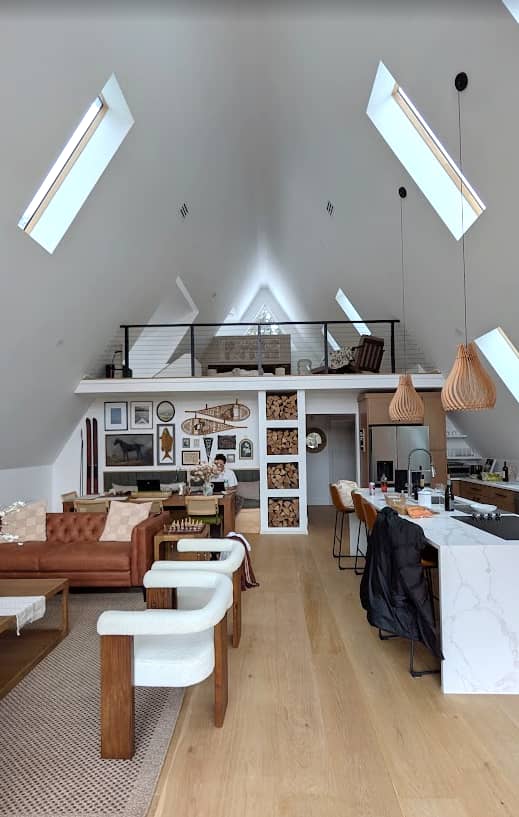
SHOWING off the wood flooring and interior wood studs and finished walls.
I always find it interesting to see new types of architecture that I didn’t grow up with in the Philippines. Whenever I visit a new place, I like to compare what we have back home to the buildings I see there. Doing this helps me grow as a person and as an architect because I learn something new or see things from a different angle. Being open to new experiences is important because that’s how we grow as people.