
Prove you’re human
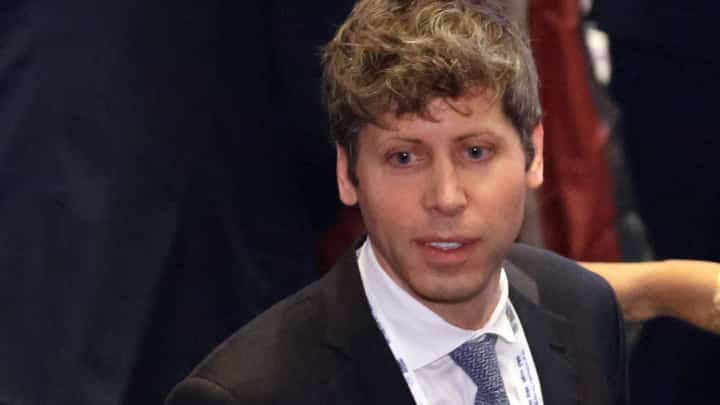
Sam Altman’s bid to prove who is human online is stepping out of tech circles and into mainstream retail and dating apps, according to a report by The Wall Street Journal.
A Gap store in downtown San Francisco has installed one of the project’s signature “Orb” devices — a metallic sphere that scans faces and irises — to help visitors obtain a World ID, the digital credential developed by Tools for Humanity, the startup Altman co-founded in 2019.
The initiative is part of a broader effort to make World ID a widely adopted “proof of human” system as artificial intelligence blurs the line between people and bots online.
In addition to the Gap installation, Tinder is testing World ID in Japan to verify users’ age and confirm they are human, a move tied to local legal requirements for dating apps. Visa is also working with the company on a planned payment card that would allow World ID holders to spend digital assets, including Worldcoin, the cryptocurrency given to many users who sign up.
Previous marketing efforts leaned heavily on tech-forward messaging, including billboards mocking captcha tests and slogans urging people, “In a world of AI, be human.” But Tools for Humanity now plans to rely more on partnerships with established brands to spread awareness.
“I think we’re right at the precipice right now of the moment where we don’t have to say anything, where our partners are going to do all the talking,” Trevor Traina, chief business officer at Tools for Humanity, told The Wall Street Journal.
The company says its Orb devices convert scans of a person’s face and iris into an anonymized numerical code stored on the user’s device. Tools for Humanity says it does not retain the biometric data. Revenue, according to Traina, could eventually come from charging apps a fee to confirm a user’s humanity via World ID.
Nearly 18 million people have received a World ID, including 1.1 million in North America, the company says. Outside the US, independent Orb operators are sometimes paid in Worldcoin for each new ID issued.
Still, the project has faced regulatory scrutiny and criticism, particularly over its reliance on biometric data and cryptocurrency. Some countries have temporarily banned or restricted operations. In the US, Worldcoin remains unavailable in New York state pending regulatory licensing, according to people familiar with the matter cited by The Wall Street Journal.
“It’s a constant dance with regulators who, with so many innovations, you know, have to work really hard to stay current on new technologies, and I think it’ll always be that way,” Traina said.
Digital rights advocates have also raised concerns about potential misuse. Rory Mir of the Electronic Frontier Foundation warned that if World IDs become widely adopted, they could become attractive targets for fraud.
“In the worst-case scenario, potentially fraudulent operators could, you know, full-on take the ID or resell it,” Mir said. “You can’t change your iris if someone does manage to get ahold of that information.”