
Kaufman says prosecution failed to link Rody’s words to drug war killings at ICC
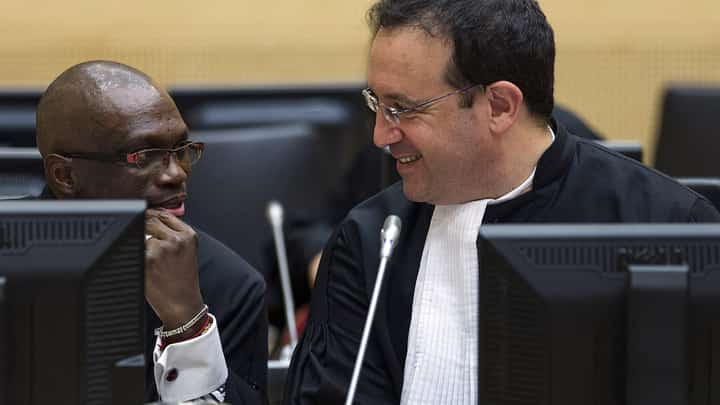
Defense counsel Nicholas Kaufman argued before the International Criminal Court (ICC) that prosecutors failed to establish a direct link between former President Rodrigo Duterte and the drug war killings cited in the charges against him.
During the presentation of the defense’s arguments, Kaufman said the prosecution was unable to show a “causal nexus” between Duterte’s statements and the 49 incidents included in the case. He maintained that there was no evidence that Duterte gave a direct order to kill any specific individual.
“What the prosecution cannot show you is the connecting line between Duterte at the top and the next level down comprising the so-called co-perpetrators,” Kaufman told the court.
He stressed that none of the witnesses connected to the incidents would testify that they received a direct instruction from Duterte to carry out a killing.
“Not one witness relevant to any of the 49 incidents with which Mr. Rodrigo Duterte is charged will testify that he received a direct order from the former president to go out and kill someone,” Kaufman said.
The defense also challenged the weight of witness testimonies cited by prosecutors, particularly statements that witnesses believed killings were expected of them based on Duterte’s pronouncements. Kaufman described such accounts as subjective interpretations rather than proof of an explicit directive.
He further argued that the prosecution’s claim that Duterte publicly encouraged killings lacked evidentiary support tying those remarks to specific acts.
According to Kaufman, prosecutors failed to demonstrate how any particular speech, statement, or command led directly to a specific killing.
Kaufman also said Duterte’s public statements about killing drug suspects should be viewed in the context of lawful self-defense, asserting that the former president had told police officers not to kill unless their lives were in danger.
In addressing Duterte’s public speaking style, Kaufman said the former president was known for departing from prepared speeches and delivering remarks in “colorful and crusty language.”
He rejected the prosecution’s suggestion that Duterte’s statements were coded instructions, calling that interpretation speculative.
The defense maintained that the absence of a direct order and the lack of a demonstrable chain of command linking Duterte to the killings undermine the prosecution’s case.