
Interpol-listed Korean fugitive recaptured in Parañaque

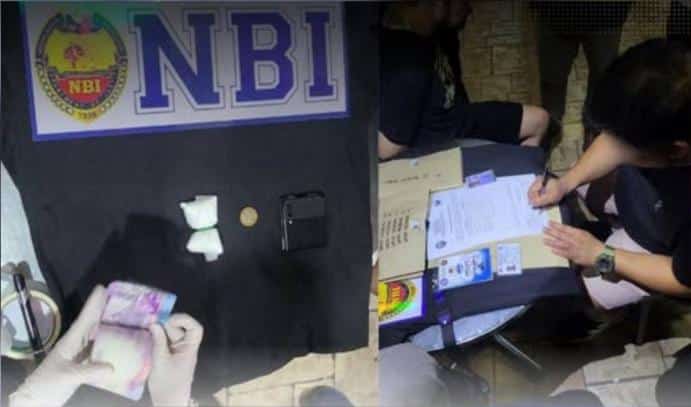
Two South Korean nationals, including a fugitive subject of an Interpol Red Notice, were presented to the media Friday following their arrest in a joint operation by the National Bureau of Investigation (NBI) and the Bureau of Immigration (BI).
The suspects were presented during a press briefing at the NBI headquarters in Pasay City, led by NBI Director Melvin Matibag and BI Commissioner Joel Anthony Viado.
Authorities identified the primary suspect as Lee Jingyu, who is wanted in South Korea for alleged drug smuggling and has a prior conviction for aggravated assault.
Lee is the subject of an Interpol Red Notice, an international alert requesting law enforcement agencies to locate and provisionally arrest a person pending extradition. His companion was identified as In Jaesang.
According to the NBI, Lee escaped from the BI Warden’s Facility in Muntinlupa City on 1 January 2026, prompting a manhunt and coordination with foreign law enforcement agencies.
Through intelligence monitoring and joint surveillance, authorities tracked Lee to Parañaque City, where he was arrested on 26 Feb.
Scrutiny
Recovered during the operation were a small plastic sachet containing suspected ketamine, alleged drug proceeds and a mobile phone, authorities said. Both suspects were taken to the NBI headquarters for booking and documentation.
Authorities said charges related to the illegal drugs would be filed, while coordination with South Korean authorities is ongoing regarding Lee’s pending cases.
The arrest comes amid renewed scrutiny over the use of Interpol Red Notices in the Philippines.
Authorities had cited a supposed Red Notice in the arrest of former President Rodrigo Duterte, who was subsequently transferred to face crimes against humanity charges before the International Criminal Court.
Although the Philippines withdrew from the ICC in 2019, the court has asserted jurisdiction over alleged crimes committed while the country was still a member.
Interpol has since clarified that Red Notices do not carry automatic arrest authority and must be enforced in accordance with domestic law and judicial processes, underscoring long-standing concerns over their misuse in politically sensitive cases