
Call for a Global Fund on artificiaI intelligence
Done right, AI can advance Sustainable Development Goals.

Last year, the UN General Assembly took two decisive steps:
First, creating an Independent International Scientific Panel on AI (artificial intelligence).
And I am happy to announce that the Panel has now been appointed.
These 40 leading experts from across regions and disciplines embody a clear message:
AI must belong to everyone.
We must replace hype and fear with shared evidence — and close knowledge gaps.
I urge Member States, industry and civil society to contribute to the Panel’s work.
Second, launching a Global Dialogue on AI Governance — within the United Nations, where all countries, together with the private sector, academia and civil society can have a voice.
We need guardrails that preserve human agency, human oversight — and human accountability.
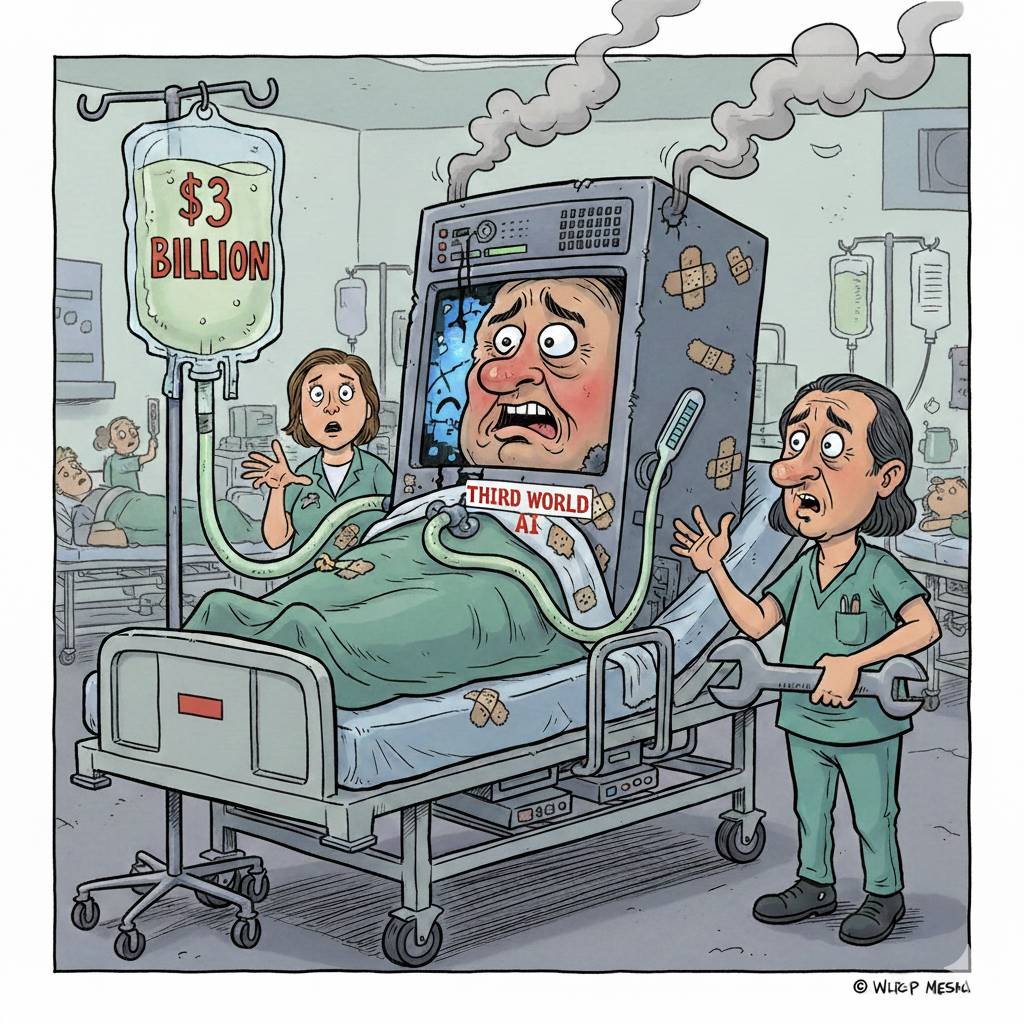
A GLOBAL Fund on AI aims to raise $3 billion for building basic capacity in developing countries.
Illustration courtesy of Gemini
The first session of the dialogue in Geneva in July will give every country, and every stakeholder, a voice:
To align efforts, uphold human rights, prevent misuse;
And to advance on common safety measures — the foundation for interoperability.
That builds trust across borders — for regulators and businesses — and turns compatibility into opportunity. Your discussions here will culminate in the Global Dialogue.
But without investment, many countries will be logged out of the AI age. AI must be accessible to everyone. That’s why, encouraged by the General Assembly of the United Nations, I am calling for a Global Fund on AI — to build basic capacity in developing countries:
Skills, data, affordable computing power, and inclusive ecosystems.
Our target is 3 billion US dollars. That’s less than one percent of the annual revenue of a single tech company. A small price for AI diffusion that benefits all — including the businesses building AI.
I am pleased that Member States have responded to my call to form a Global Network for Exchange and Cooperation on AI Capacity Building in the developing world.
AI must benefit everyone. Done right, AI can advance Sustainable Development Goals. Accelerate breakthroughs in medicine;
Expand learning opportunities;
Strengthen food security;
Bolster climate action and disaster preparedness;
And improve access to vital public services.
But it can also deepen inequality, amplify bias, and fuel harm. As AI’s energy and water demands soar, data centers and supply chains must switch to clean power — [not] shift costs to vulnerable communities.
We must invest in workers so AI augments human potential — not replaces it.
And AI must be safe for everyone. We must protect people from exploitation, manipulation and abuse. No child should be a test subject for unregulated AI.
Real impact means technology that improves lives and protects the planet.
So let’s build AI for everyone — with dignity as the default setting.
θ θ θ
The 40 members of the new Independent International Scientific Panel on AI, established within the United Nations, have been appointed by the General Assembly of the United Nations for a three-year term. They will serve in their personal capacity.
The members were selected from more than 2,600 candidates, after independent review by the International Telecommunication Union, the UN Office for Digital and Emerging Technologies and UNESCO.
We now have a multidisciplinary group of leading AI experts from across the globe, geographically diverse and gender-balanced, who will provide independent and impartial assessments of AI’s opportunities, risks and impacts — including to the new Global Dialogue on AI Governance.
In a world where AI is racing ahead, this Panel will provide what’s been missing — rigorous, independent scientific insight that enables all Member States, regardless of their technological capacity, to engage on an equal footing. I am confident their work will inform collective dialogue on AI, and support decisions based on evidence and solidarity. Its first report will inform the Global Dialogue on AI Governance in July.
(Excerpts of United Nations Secretary-General António Guterres’ remarks at the AI Impact Summit Opening Ceremony in New Delhi, India on 18 February 2026, and to the appointment of the members of the Independent International Scientific Panel on Artificial Intelligence by the General Assembly in New York, on 12 February 2026.)