
Lost in time and place

Life can get a little, or a lot, busy, on most days. Even chaotic on some. So it is always a treat when a chance to reset and recalibrate, say in the form of a trip, comes along.
So when a friend suggested a Europe-shaped break was in the works, I gave up and just said, “So when?” Besides, the itinerary she had put together — Madrid, Malaga, Prague, Vienna, Budapest and some smaller cities in between — was too good to resist.
Our first stop was in Spain, eating our way through Madrid, Avila and Segovia before hopping on a train to the coastal city of Malaga. It was semana santa (Holy Week) by then and the streets were bustling with processions; the bars brimming with tourists and tinto de veranos (cocktails). By Easter Sunday, we were back in Madrid for the start of our Eastern European sojourn.
Cathedrals, castles and bridges
Eastern Europe has such a storied existence that dates back centuries, but they have only come into their own in the last hundred years. Standing mightily all around are a myriad of cathedrals, castles and bridges — built and rebuilt many times over — that are a testament to the resilience of the region and its people. Surviving wars. Outliving monarchies. Witnessing political and societal change. And living to tell about it.
St. Vitus Cathedral, within Prague’s Castle grounds, set the tone for the gothic architecture that is typical of Eastern Europe’s historical buildings. Budapest’s St. Stephen’s Bazilika, Buda Castle and Vienna’s Hofburg Palace were constructed in a similar style. Later improvements incorporated Rococo, Baroque and Neo-classical designs, alongside massive reliefs, frescoes and stained glass windows.
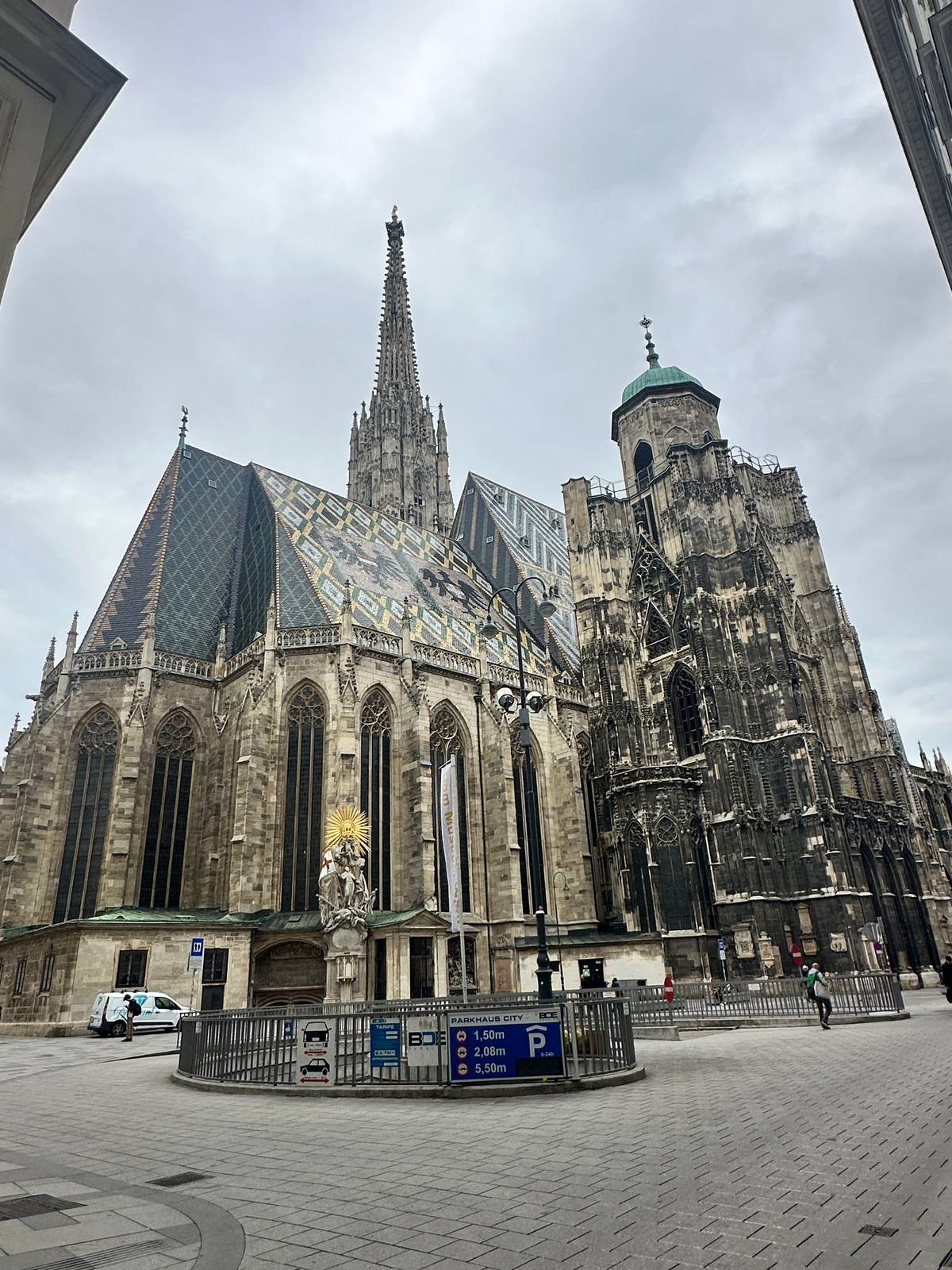
ST. Stephen’s Cathedral with the tiled roof in Vienna.
Vienna’s St. Stephen’s Cathedral, known by locals as The Steffl, stood out through one design feature — an intricate tiled roof featuring the royal and imperial double-headed eagle, and Vienna’s coat of arms. All created sans the design technology we know today! The Steffl is said to have inspired the design of Budapest’s Matthias Church. I loved seeing the cathedral’s tiled roof from my bedroom window, but having the church bells as a six a.m. alarm clock? Not so much.
Alongside the cathedrals and castles are the equally majestic bridges. I’ve always loved what they represent — bridging the gap, pun intended, in both a poetic and literal sense, between places, people, ideologies and alliances.
One of the most beautiful ones is the Charles Bridge in Prague, built in 1357 during the rule of King Charles IV of Bohemia. The oldest bridge in Europe, it connects Old Town to Prague Castle across the Vitava River. Thirty Baroque statues line the bridge from end to end, but it is the statue of St. John of Nepomuk that has enamored tourists and locals alike.
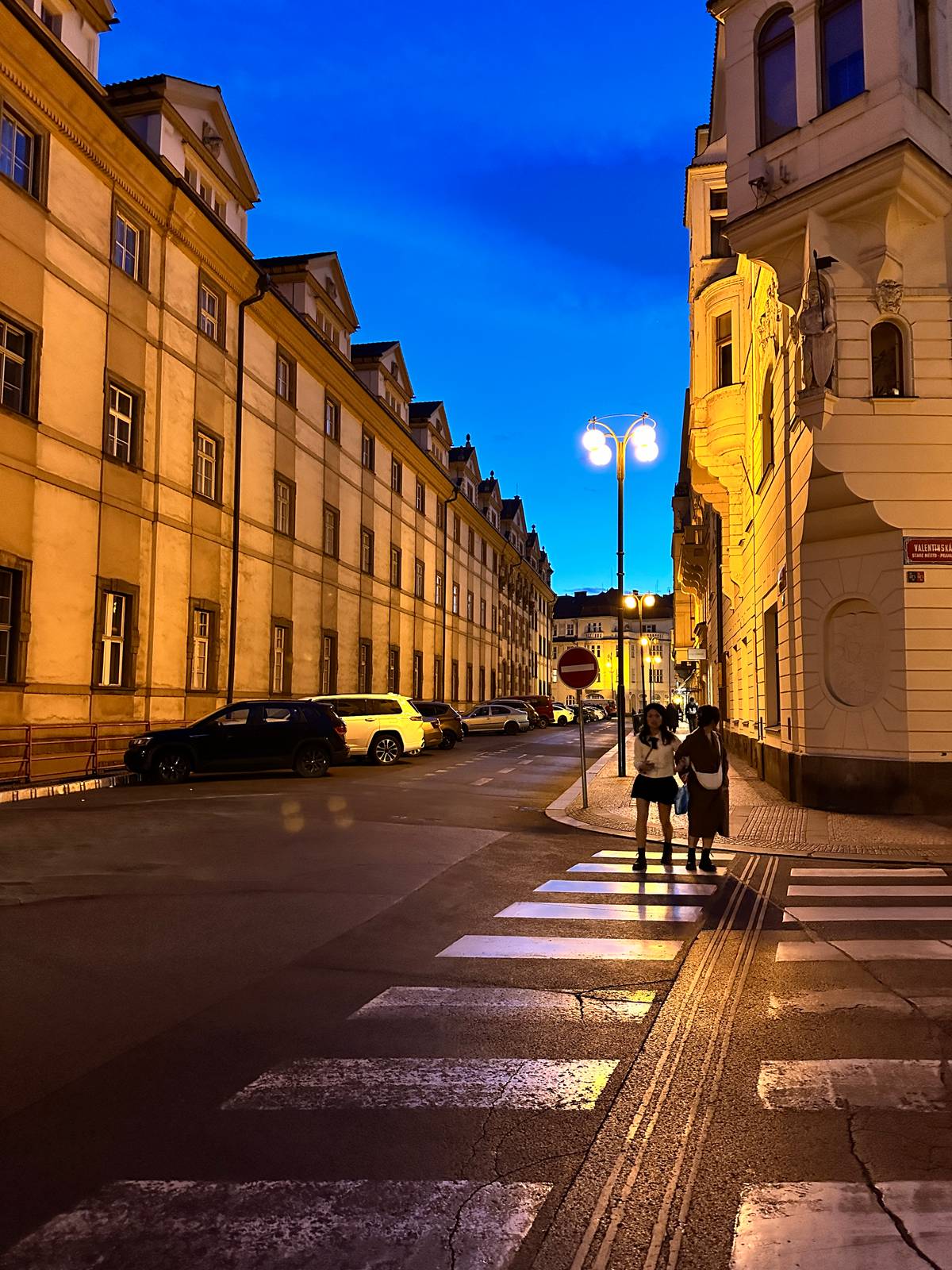
AFTER 10 p.m., the streets below our Prague apartment were quiet, as though time has stopped.
At its foot is a relief of a knight petting his loyal dog. Locals believe that petting the dog brings both good luck and more wishes granted. Years of this tradition has given the dog a golden patina, amid the oxidized bronze around it. So we all followed suit, hoping some of that luck will rub off on us, too.
In Budapest, the Chain Bridge links Buda and Pest across the Danube River. Its construction eventually lead to the merger of the two cities in 1873. Take scenic route (a.k.a the stairs) down from Buda Castle to the bridgeway, while listening to “Blue Danube” on your phone’s music app, and take in a panoramic view of the bridge and its towers from up top.
If you have an evening to spare while in Budapest, get on a night river cruise. Touristy, yes, but seeing the Chain Bridge, Buda Castle and the larger-than-life Parliament Building all lit up in golden lights? Pure magic, and so worth it.
Little towns and magical libraries
A couple of hours drive from Prague is the little town of Czechy Krumlov. Looking like it was plucked straight out of a fairytale, you can almost imagine Belle singing by the fountain, reading her favorite book! And could that be Beast living in the castle atop the hill? At the town plaza, I was waiting for the baker and his friends to gather at the market as Gaston sauntered in. Each corner looked like your favorite Disney movie brought to life, complete with a very haunted hotel.
The magic carpet ride then delivered us to Austria, to a place where my heart skipped 10 beats as I walked in — the State Hall of Austria’s National Library in the Hofburg Palace. Described as the world’s most beautiful historical library, it is said to be the inspiration of the library Beast lovingly offers as a gift to Belle in Beauty And The Beast. It is covered floor to ceiling in books — 200,000 of them — with tall ladders climbing to the topmost shelves. Ensconced in between are doors and stairs leading up to hidden rooms, while giant globes plotted courses to unknown places. The cupola above is the canvas for artist Daniel Gran’s giant fresco depicting the deification of Emperor Charles VI, set against allegorical images of the Hapsburg empire.
Coffee and champagne
All that sightseeing meant a lot of steps. Or a proper excuse to stop at a cute café for coffee, a pastry, or even a midday Aperol Spritz! When in Europe, right?
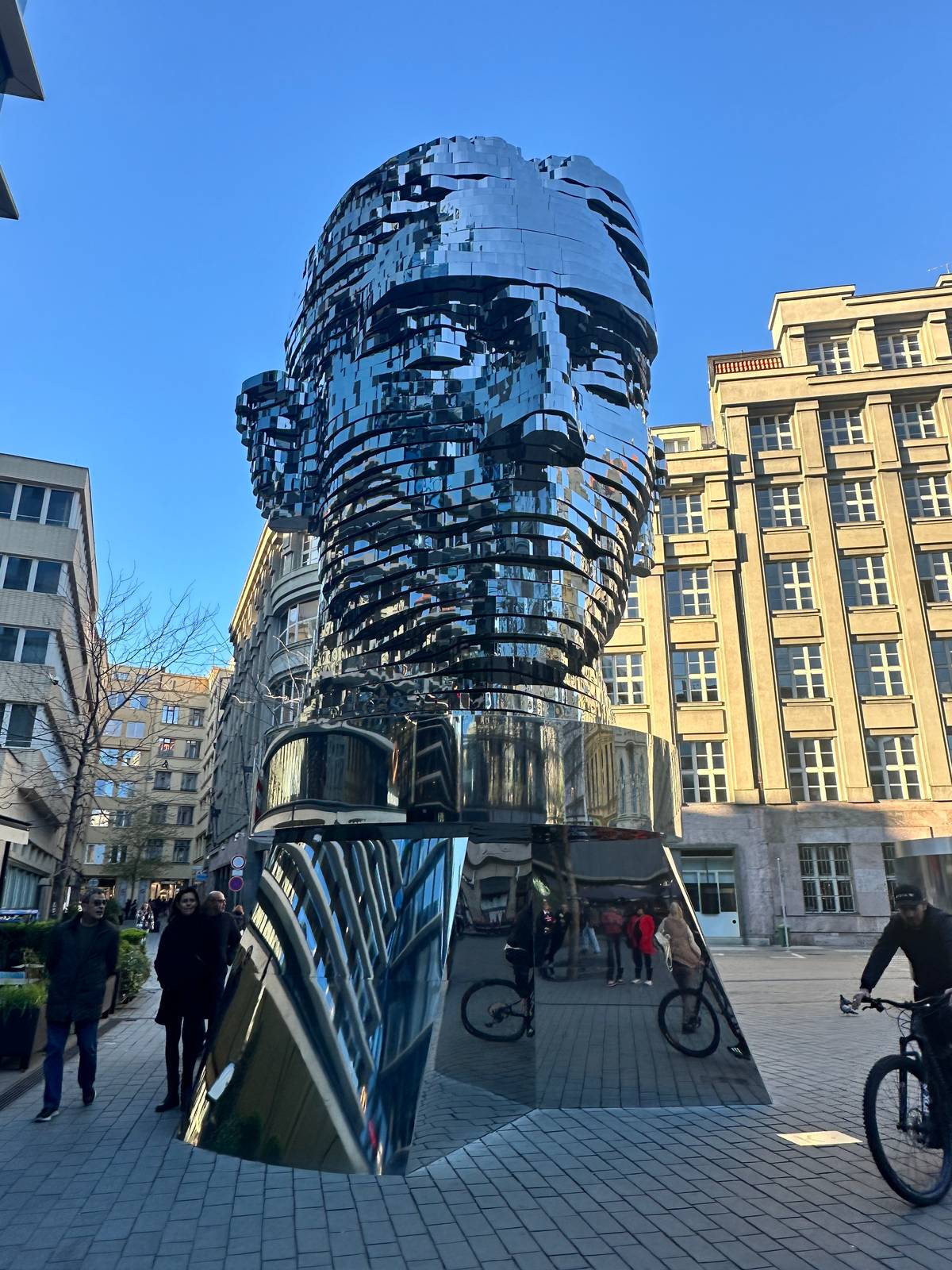
FRANK Kafka — Rotating head by David Cerny in Prague.
The 100-year-old Café Louvre in Prague, located on Ferdinand Avenue, is a famous spot with a great backstory. The café was witness to Albert Einstein and author Franz Kafka volleying ideas with fellow luminaries over cups of coffee (or even something stronger). We had a tasty brunch of Eastern European fare — Goulash, Confit of Pork Knuckle and Braised Beef with bread dumplings. The day’s “Kafka-esque” vibe continued, stumbling upon David Cerny’s famed Franz Kafka — Rotating Head sculpture en route to Old Town Square.
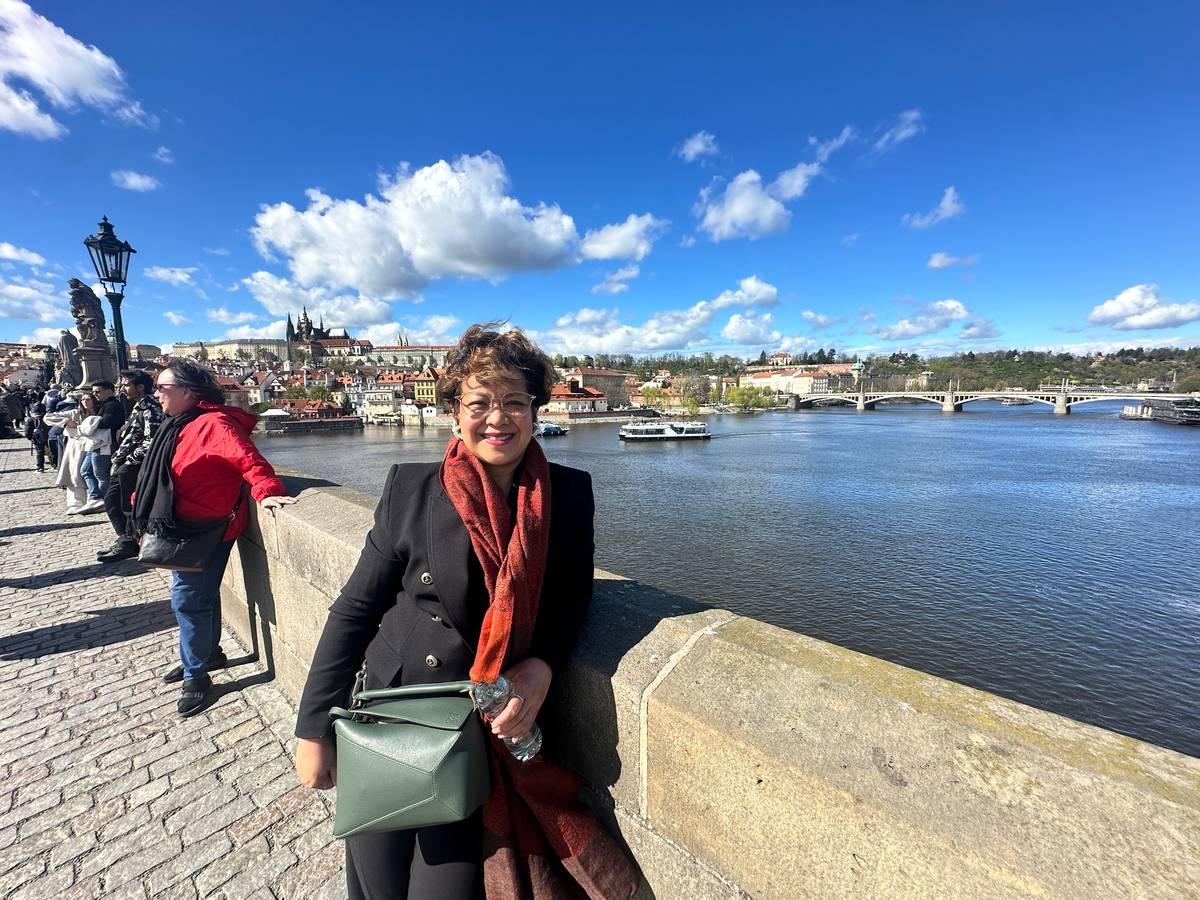
THE author at the Charles Bridge in Prague.
Vienna is also home to Hotel Sacher and the original Sacher Torte. The dining room is reminiscent of those grandiose royal parlors — the perfect spot for tea and cake. There was a bit of a queue, but butlers serving up tiny Sacher Tortes for everyone in line made up for the wait.
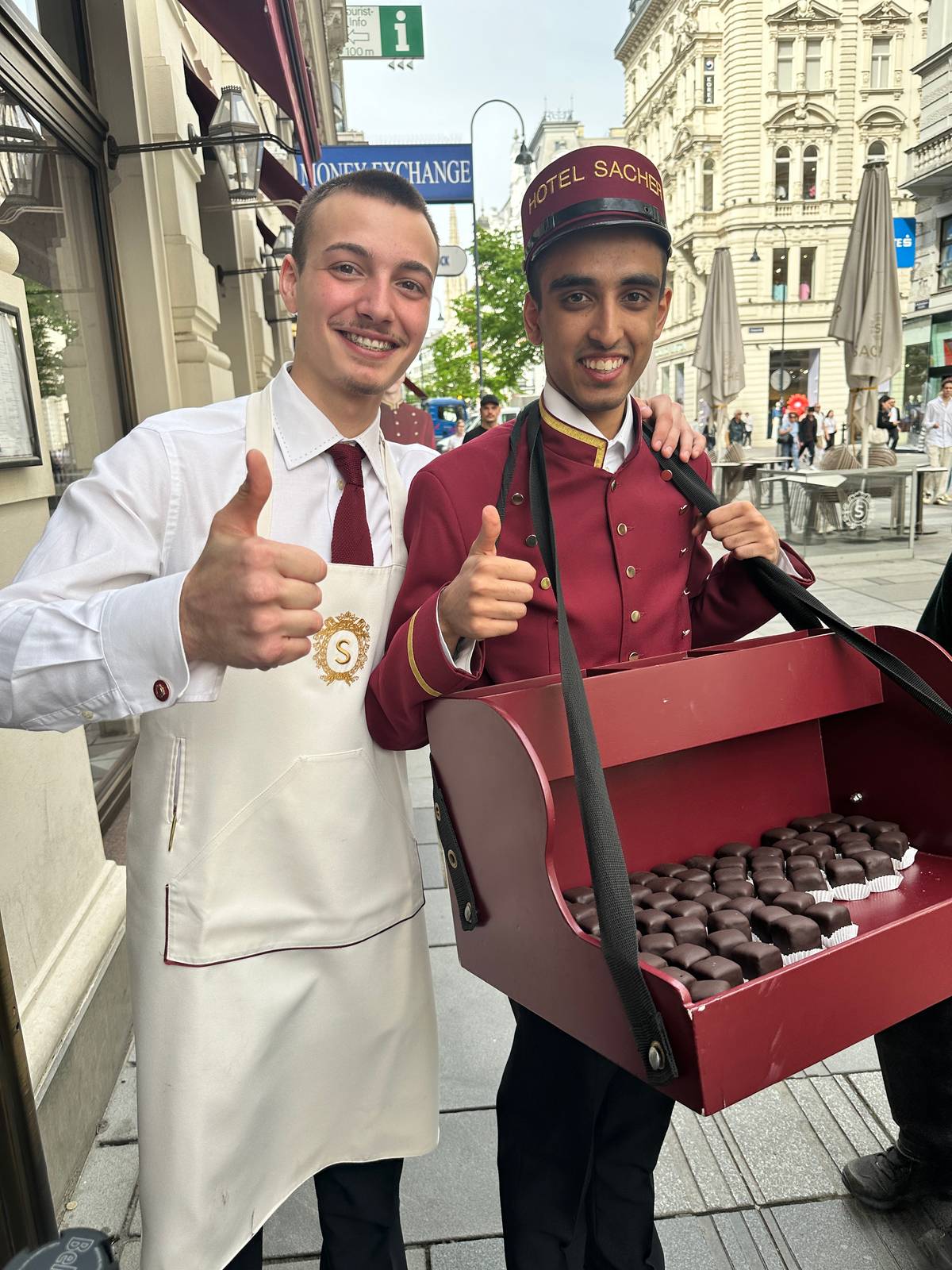
SERVERS handing out sacher torte squares outside Hotel Sacher.
When we got to Budapest, we made our way to The New York Café, which has been called “the most beautiful café in the world;” it says just that on their window. To say that the Victorian-inspired interiors are opulent is an understatement, with every pillar, banister and wall bedecked like a queen’s royal salon. With a violin playing in the background and gentle sunlight streaming in, it was the perfect excuse to a glass of bubbly and fancy chocolate cake. A little treat after a full day of exploring the city on foot.
A little night music
As we all know, Eastern Europe is home to some of classical music’s greatest composers, the likes of Mozart and Vivaldi. Their musical legacy is heard in little concert venues and church halls across Prague and Vienna.
We stumbled upon a concerto of Vivaldi’s “Four Seasons” at the Cathedral of St. Clement on our last night in Prague. As the string quartet played, the soloist’s crystal clear voice soared through the air, filling the space with beautiful music.
Sala Terrana, on the ground floor of our Viennese hotel, was host to Konzerte Im MozartHaus. A little trivia — Mozart used to live, compose and perform on that very building. So to listen to his music played in that space, alongside works by Lizst, Chopin and Bach, was emotional and exuberant!
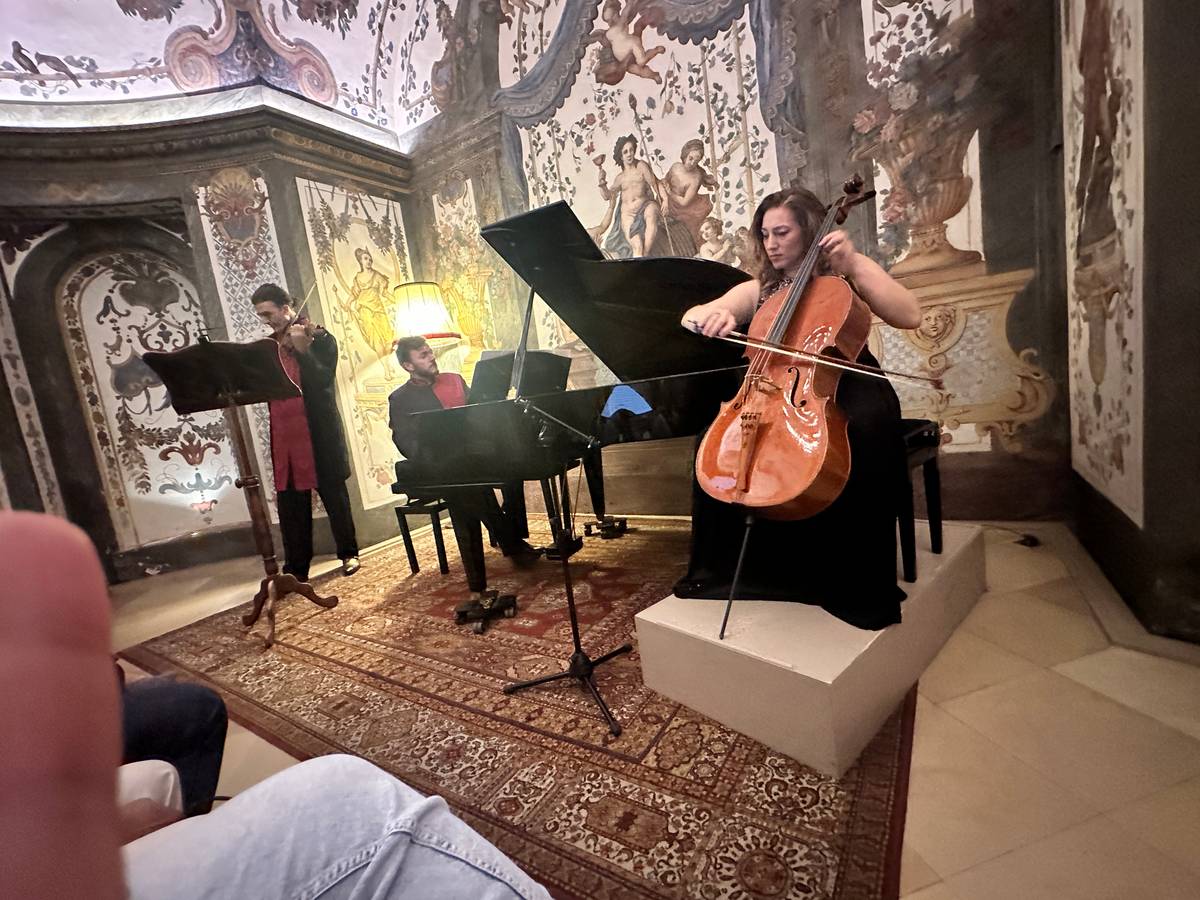
MUSICIANS at the Konzerte Im MozartHaus.
As we boarded our flight back to Madrid, I couldn’t help but think of all the beauty we saw in this part of Eastern Europe. One shaped by a history that has faced its share of dark days. The scars it left behind lay the foundation for a glorious renaissance, without forgetting the lessons of its past. It was a beauty that refused to be ignored, and I was grateful to have walked its storied streets. To have lost myself in time