
Economics of credibility
‘The bottom line then was restoring confidence without sacrificing growth. It sounds familiar to today’s experience.’
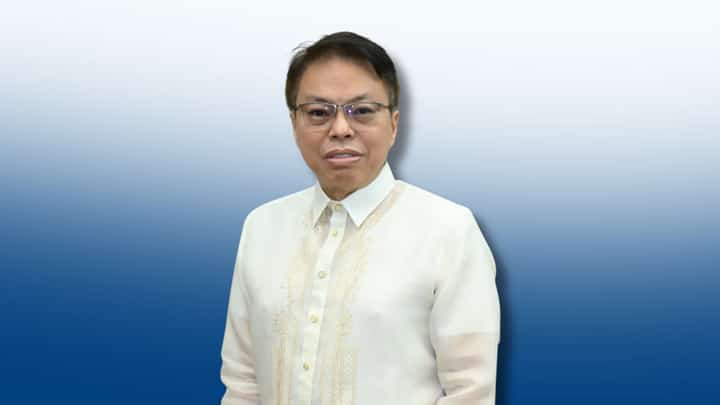
The economic downturn of 2025 has placed the government’s role in inclusive growth under a microscope.
Political scandals have marred one of the Association of Southeast Asian Nations’ (ASEAN) fastest-growing economies, a feat previously achieved despite domestic controversies, particularly the ongoing flood control corruption scandal.
National debt has also soared to a record P17.71 trillion, reflecting heavier reliance on external obligations amid economic shocks.
With the foreign exchange market likewise posing challenges for the peso, and Filipinos seeing little relief from below-target headline inflation, the current administration faces mounting questions.
For former Finance Undersecretary Joel Valdes, public fiscal policy is not merely a technical exercise but a question of national character.
“Public finance is not just about numbers — it’s about credibility,” Valdes said in an upcoming interview on the DAILY TRIBUNE program Straight Talk.
For Valdes, the country’s economic struggles today mirror the fragile environment he encountered in the aftermath of the 1986 People Power Revolution, when restoring fiscal stability required more than balancing ledgers — it required rebuilding trust.
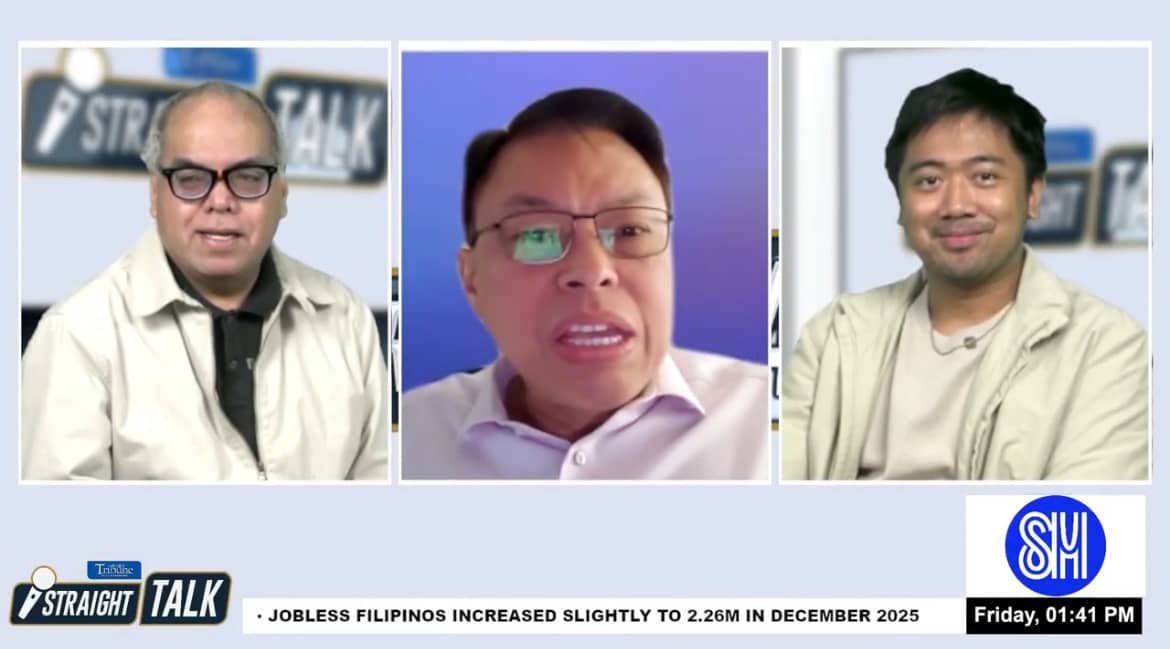
THE country now faces a far more complex global environment than during the early years of his stint in government due to geopolitical tensions, artificial intelligence and climate change, Valdes (center) relates to Straight Talk hosts Chito Lozada (left) and Toby Magsaysay.
Screengrab from Straight Talk video
Public fiscal policy is not merely a technical exercise but a question of national character.
Discipline as guidepost
Valdes did not set out to become one of the country’s most seasoned fiscal technocrats. His journey, he admits, “was less about titles and entitlements and more about discipline.”
He began his career in the private sector at Citibank, where he worked on complex financing and securities placements across debt and equity markets.
The exposure to international capital flows sharpened his understanding of how investor confidence can determine a country’s economic trajectory.
That experience eventually brought him into government, where he served as undersecretary at the Department of Finance (DoF) during a period when the Philippines was struggling to regain fiscal footing.
“We came in at a time when fiscal consolidation was the order of the day,” he recalled. “The bottom line then was restoring confidence without sacrificing growth. It sounds familiar to today’s experience.”
Valdes, who served as Cabinet member of former President Gloria Macapagal-Arroyo, believes the country’s economic challenge is not simply managing its P17-trillion debt but managing how that debt is perceived and deployed.
“The national debt remains central — if not the critical hinge — that allows us to move forward with growth,” he said.
He warned that debt mismanagement, including excessive human intervention, carries far greater costs than balance-sheet strain.
“If there is runaway inflation resulting from poor use of debt, inflation becomes the cruelest tax — because it hurts low-income groups the most.”
Valdes has long argued that borrowing itself is not the enemy. The real danger lies in using borrowed funds inefficiently or politically, calling external obligations “a necessary source of cash for funding well-thought-out, strategically planned uses.”
Valdes also pointed out that weak gross domestic product (GDP) growth — 4.4 percent for full-year 2025 and a dismal 3.0 percent for the fourth quarter — cannot simply be blamed on liquidity constraints, which remain manageable, according to the central bank.
“The Philippines does not have a growth problem,” he said. “What we have is a credibility leakage problem.”
For Valdes, investor hesitation today is closely tied to unresolved corruption issues and governance uncertainty.
“As we speak, international and domestic investors are waiting for the results of investigations into corruption cases,” he noted. “So long as those remain unresolved, the next 12 to 18 months will not be favorable.”
The problem, he said, extends beyond individual scandals and into structural governance vulnerabilities.
“Corruption is not only about the sins of the past,” he said. “It’s about the sensitivity of the existing system to human intervention.”
Valdes’ extensive exposure to global finance has convinced him that investors are far more pragmatic than policymakers often assume.
“Investors are not expecting a perfect government,” he said. “They are expecting a predictable government.”
That predictability, he explained, must be both political and regulatory. Political instability — including impeachment noise and leadership transitions — can paralyze investment decisions, while excessive bureaucracy discourages long-term capital commitments.
“Investors hate unpredictability,” he said. “Consumer confidence also weakens when uncertainty dominates. People stop spending on capital goods because they cannot ascertain what the near future holds.”
One of Valdes’ most enduring policy contributions was promoting new financing models for local government units and infrastructure development. He remains a strong advocate of public-private partnerships (PPPs), citing successful infrastructure projects that transformed economic corridors through shared risk between government and private investors.
“PPP works when risk-sharing is well thought out and rules are predictable,” he said. “The investor can think long-term rather than simply navigating changing political environments.”
Valdes also highlighted agricultural modernization as a missed opportunity in Philippine economic policy. Despite legislative reforms such as agri-financing mandates, he believes structural inefficiencies persist.
“Some financing mechanisms became leakages,” he said, pointing out how funds intended for agriculture sometimes fail to reach productivity-enhancing investments.
He attributes much of the sector’s stagnation to scale limitations among farmers and policy gaps that discourage large-scale technological investments.
Beyond macroeconomic analysis, Valdes places unusual emphasis on ethics as a measurable economic variable.
“Without ethics, finance becomes extraction — not nation-building,” he said. “Ethics lowers borrowing costs. Governance attracts capital. Credibility beats incentives every time.”
While Valdes acknowledges the limits of short-term political reform, he sees hope in rising civic engagement among younger Filipinos.
“I am delighted to see millennials exercising their right to demand change,” he said. “An enlightened and action-oriented youth is critical to shaping 2028 and beyond.”
Valdes cautioned that the Philippines now faces a far more complex global environment than the one he encountered during his early government career. Geopolitical tensions, artificial intelligence, and climate change, he said, will add new layers of economic risk.
“Time is not our friend,” he warned. “Our neighbors are leading the pack.”
Yet his outlook remains grounded in the belief that the country’s economic fundamentals remain strong — if governance reforms keep pace.
“If we get credibility right,” he said, “growth will be predictable and beneficial to the highest number of Filipinos.”