
DA invests P300M for climate-smart vegetable farming

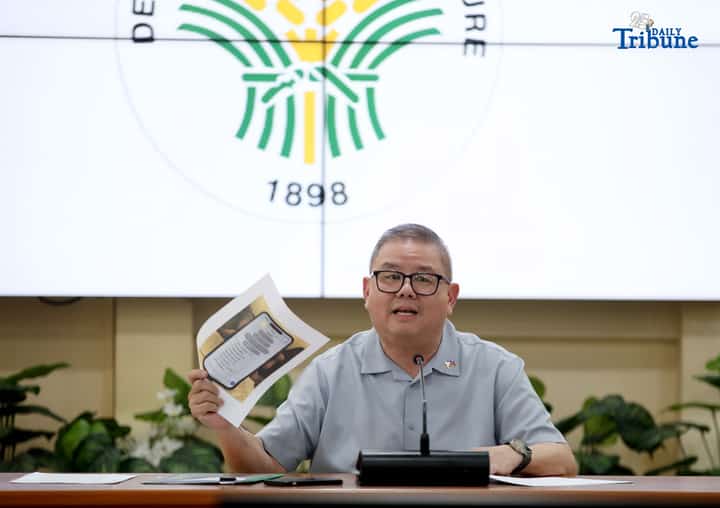
The Department of Agriculture (DA) allocated roughly P300 million this year to enhance climate-smart farming for high-value vegetables such as tomatoes, chili, and bell peppers. Agriculture Secretary Francisco P. Tiu Laurel Jr. said, this move aims to reduce recurring price spikes caused by extreme weather conditions.
“These crops face sharp price swings almost every year,” Tiu Laurel explained. “Sometimes chili peppers are very expensive, sometimes there is no supply at all; the same goes for bell peppers and tomatoes. What we want is continuous production, year-round, whether it’s dry or rainy.”
The funding will support basic greenhouses, rainshelters, drip irrigation, and water-impounding systems, helping farmers manage crops more efficiently while reducing exposure to unpredictable weather. Rather than investing in expensive high-tech facilities, the DA will focus on simpler structures that are easier to replicate across farming communities.
The program, internally called the White Revolution, takes inspiration from South Korea and Cambodia’s protected cultivation systems. It emphasizes working with cooperatives and farmer associations instead of individual growers.
Local seed and seedling production will be organized at the community level, with training for women and youth to ensure planting materials are readily available in a coordinated, decentralized way.
By generating stable volumes, the initiative aims to reliably supply urban markets while reducing the boom-and-bust cycles that hurt both farmers and consumers.
Rainshelters and greenhouses, combined with irrigation systems, will be set up near but outside major consumption centers such as Metro Manila, Metro Cebu, and Metro Davao to shorten delivery times and minimize post-harvest losses. For Metro Manila, target provinces include Bulacan, Pampanga, Tarlac, Laguna, Rizal, and Quezon.
To protect farmers during the initial rollout, Food Terminal Inc. (FTI) will purchase the harvest at pre-agreed prices. “If we ask a community to plant chili or bell pepper, whatever they produce will be bought at a fair price,” Tiu Laurel said, noting the government will handle distribution to public markets.
The program highlights the country’s limited use of protected agriculture. The Philippines currently has about 500 hectares of greenhouse-covered farms, compared with roughly 52,000 hectares in South Korea. Tiu Laurel said expanding to 5,000 hectares by 2027 would already be a significant achievement.
Sustainability, he added, will depend on profitability. “If this proves successful and farmers earn from it, they will push for its continuation and scale up the system even under the next administration,” he said.
The DA is also developing cold storage networks and small-scale vegetable processing facilities to extend shelf life, reduce food loss, and provide additional income for farmers.