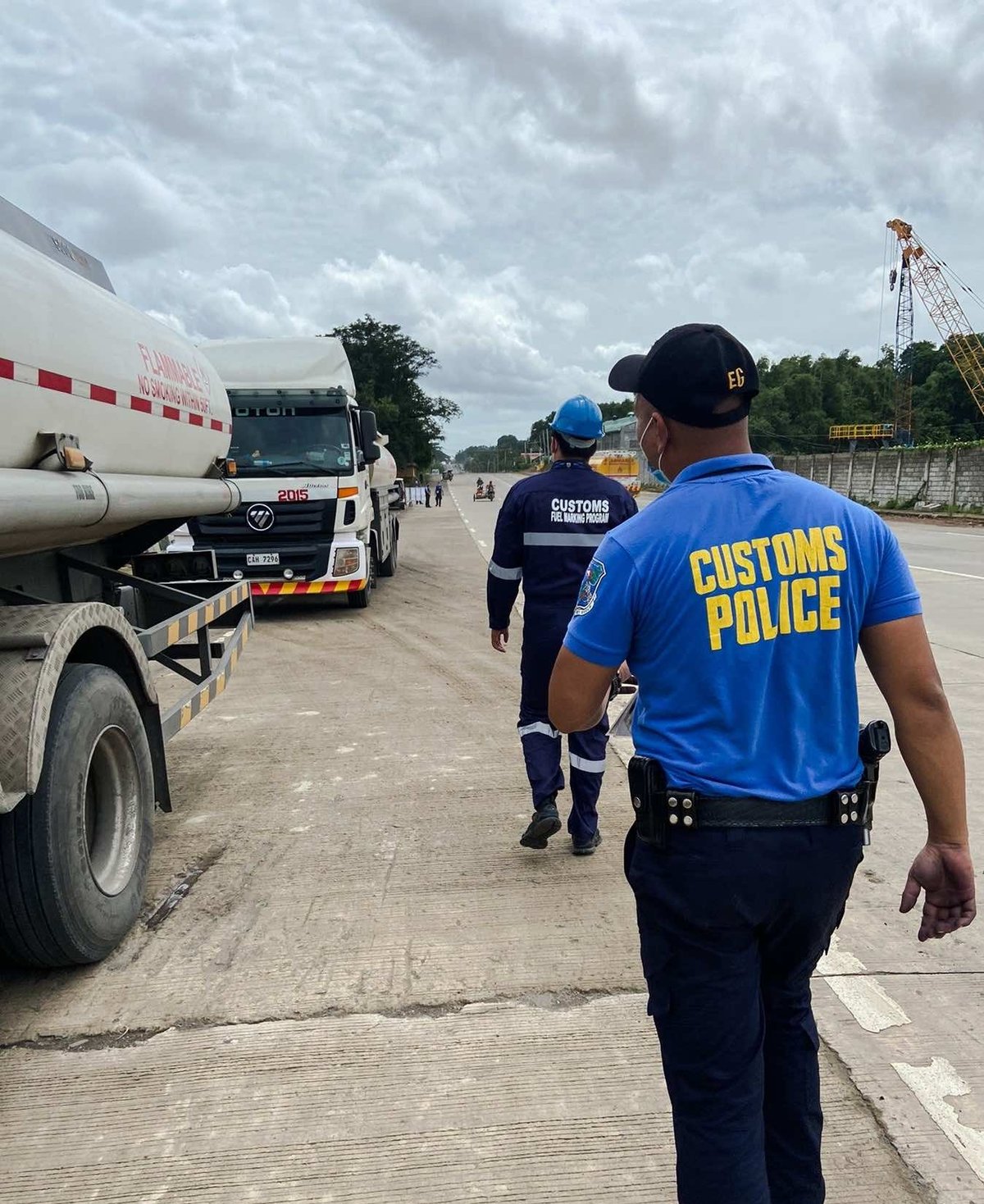
The Bureau of Customs (BoC) attributed the increase in its 2025 tax revenues to the sustained implementation of the Fuel Marking Program (FMP), as collections from fuel duties and taxes amounted to P247.12 billion, reflecting a 1.9 percent rise compared to the P242.36 billion collected in 2024.
The FMP, introduced under the Tax Reform for Acceleration and Inclusion (TRAIN) Law, aims to curb oil smuggling, protect government revenue, and maintain fair competition in the petroleum sector.
The program places invisible, unreplaceable chemical markers on imported and locally refined fuels, including gasoline, diesel, and kerosene, after duties are paid.
Fuel lacking proper markers or found to be diluted faces penalties, additional duties, and potential criminal charges.
The BoC and the Bureau of Internal Revenue, both under the Department of Finance, conduct random inspections across warehouses, gas stations, storage tanks, and transport vehicles to verify compliance.
“Our gains in 2025 demonstrate what decisive leadership and collective accountability can achieve. The fuel marking program remains a key measure in detecting fuel smuggling, ensuring transparency in fuel distribution, and promoting fair competition in the oil industry,” Customs Commissioner Ariel Nepomuceno said.
In 2025, over 21 billion liters of fuel passed through the BoC’s monitoring system, slightly up from 19.9 billion liters in 2024.
Field testing under the FMP, which began in April 2021, has been instrumental in detecting irregularities across the supply chain.
Despite these gains, the BoC fell short of its P958.7 billion revenue targets for 2025, collecting P934.4 billion, due in part to weaker imports, the rice import ban, and global price fluctuations.
Revenue is projected to grow over the next three years, with collections estimated at P1.01 trillion in 2026, P1.07 trillion in 2027, and P1.14 trillion in 2028.