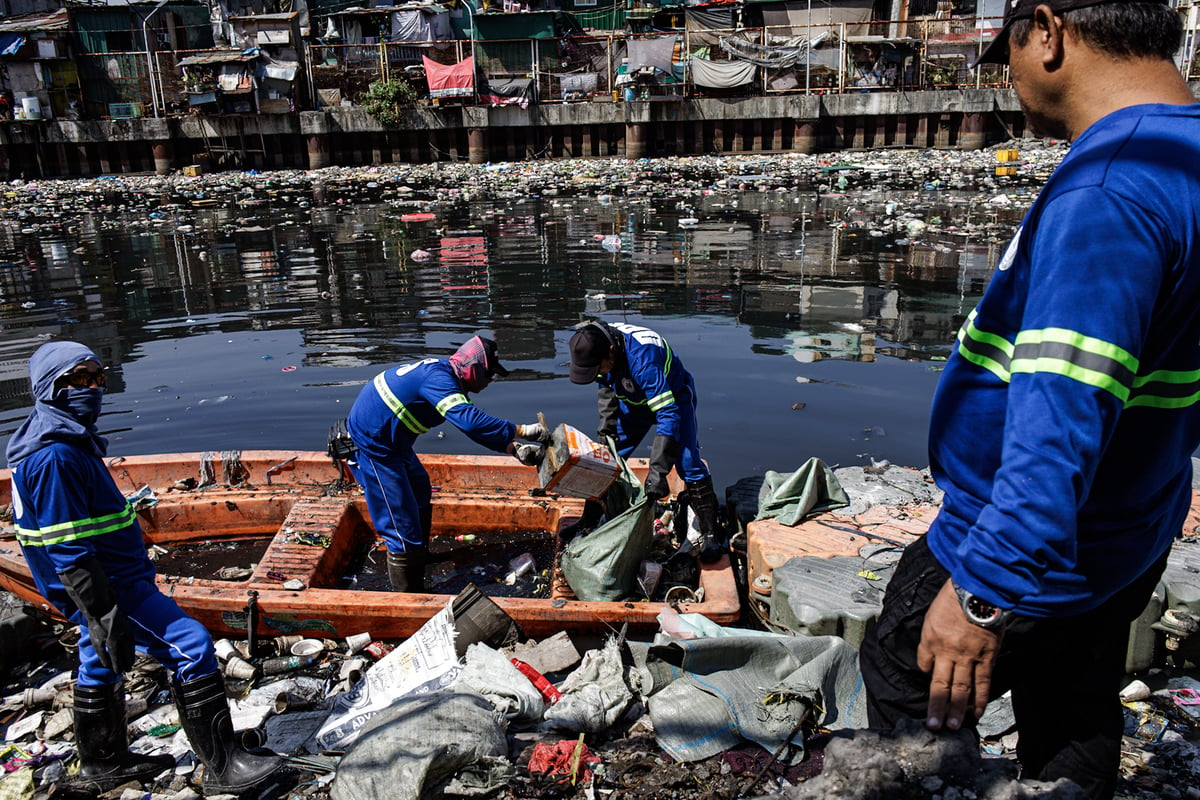
Residents near Estero de Vitas in Tondo are grappling with an overpowering stench and thick layers of waste that local officials say are the result of malfunctioning infrastructure under the control of the national government.
Norberto Manalad Jr., chairman of Barangay 151, said Monday that the primary cause of the clogging is a series of nonoperational booster pumps. The pumps, which are part of a flood-control project by the Department of Public Works and Highways (DPWH), are designed to flush stagnant water and debris toward Manila Bay.
Manalad explained that while pumps in neighboring areas push garbage toward Estero de Vitas during low tide, the pumps behind his barangay hall remain idle. This creates a bottleneck that traps tons of waste in the tributary.
“Open the booster pump,” Manalad said, citing that neither the village nor the city government has the authority to operate the machinery. He added that while he has attempted to coordinate with the DPWH North Manila District Engineering Office, it has been a long time since the agency provided a substantial response.
The scale of the problem is significant. In a single cleanup operation in May 2025, workers removed approximately 400 sacks of mixed waste — an estimated five tons — from the estero. Currently, the city government conducts weekly cleanups every Saturday, but officials describe these as mere stopgap measures that cannot keep pace with the daily accumulation.
The situation has been exacerbated by the removal of “estero rangers” previously assigned by the Department of Environment and Natural Resources. Manalad said these rangers used to clean the area daily, but his jurisdiction no longer has any assigned personnel.
Barangay officials and residents maintain that while community discipline is a factor, the crisis is largely a failure of infrastructure. They warned that until the DPWH makes the booster pumps fully operational, the sludge and the resulting health concerns for Tondo residents will continue to compound.