
Heritage discoveries in Calapan
Said to be founded in the 17th century and gained cityhood status in 1998, Calapan is not just an ordinary port town but has an intrinsic character and identity.

Though often regarded as just a transit point for travelers going to a number of Visayan provinces via the ro-ro system, Oriental Mindoro’s capital city deserves a second look, a visit of its own.
Calapan, said to be founded in the 17th century and gained cityhood status in 1998, is not just an ordinary port town but has an intrinsic character and identity.
Its name might have come from the Tagalog word calapang which means “a part of anything” referring possibly to a geographic area, particularly the peninsula where the Calapan sea port and airport are now located. Its poblacion or town center used to be located a little bit inland in what is called today as Lumangbayan, meaning “old town.” Due most likely to pirate raids, it later moved to its present site, on the coast of Calapan Bay, in the place called Ibaba.
At Ibaba, the Augustinian Recollects built a church fortified with walls and watchtowers to protect the town from marauders from the south. While the church has been rebuilt in concrete about six decades ago, remnants of the fortification remain to this day.
Lumangbayan
Speaking of Lumangbayan, it seems many towns in the island of Mindoro had to move their town centers in the past due to pirate raids, a scenario also common in other parts of the country. But what sets Mindoro apart is that aside from Calapan, many towns have place names called Lumangbayan.
In Oriental Mindoro, this can be found in the towns of San Teodoro, Baco and Pinamalayan, while in Occidental Mindoro, Lumangbayan exists in Paluan, Abra de Ilog, Sta. Cruz and Sablayan.
Ruins of churches are also found in Naujan and Bongabong in Oriental Mindoro and in Occidental Mindoro, in Pinagbayanan in Paluan, which was the church of what used to be the town of Calavite and in Mapaya, San Jose.
There are also extant watchtowers in the towns of Sablayan and in Mangarin, San Jose.
Calapan
Going back to Calapan, sources on its history and that of its church are scarce but a marker by the National Historical Commission of the Philippines installed in 1952 at what is now the Santo Niño Cathedral notes that the church was founded in 1679 by Augustinian Recollect priest Diego de la Madre. The church is a fortified one with a kuta or fortification built at least on its gospel side.
The kuta, made from rubble work which interestingly include coral pieces, had two watchtowers, one of which remains to this day.
A late 19th to early 20th century image of the Calapan church featured a simple facade topped by a triangular pediment. Flanking the main portal are two small niches for saints while an arched window punctured the central portion. It had a stout four-sided belfry connected to the walls of the fortification.
In the first half of the 19th century, the size of the central window on the facade was reduced while the belfry was likewise altered. In the early 1960s, this old church gave way to a new one, made of concrete and modernist in style. Its extant concrete convent was built during the American period. It has elements of the Art Deco style.
The invaluable treasures found inside the church is an ivory image of the Child Jesus, its patron and the more than 50-year-old pipe organ.
The church of Calapan is just one of a number of fortified churches in the southern Luzon area. Other examples include that of Batangas City and Balayan in Batangas and Boac in Marinduque.
Heritage museum
As with the nearby kuta, its remaining tower and wall fronting Calapan Bay has been reused since 2022 as the Oriental Mindoro Heritage Museum which showcases the rich and unique heritages of the province as well as personalities who helped shape the province to what it is today.
Among others, these include the culture of the Hanunuo Mangyan, one of eight prominent ethnic groups in Mindoro, which are collectively called Mangyan, the rare endemic tamaraw, Surat Mangyan, ethnographic materials such as bags and textiles, and the ammonites of Mansalay.
Also extolled at the museum are National Artist for Llterature Nestor Vicente Madali Gonzalez of Mansalay; Manlilikha ng Bayan Ginaw Bilog, also of Mansalay; Dutch anthropologist Antoon Postma who was a scholar on the Hanunuo; and Bishop William Finneman, SVD, the first prefect of what is today’s Apostolic Vicariate of Calapan and World War II martyr.
Likewise given prominence is Calapan native Macario Adriatico, a journalist, lawmaker, and the first Filipino Director of the National Library and Museum, a position he held from 1917 to 1919.
Adriatico authored the Charter of the City of Manila during his term as a lawmaker. A street in Manila is named after him and a monument of him stands at the plaza of Calapan.
Calapan Kuta
Now called “Cal-Kuta,” which refers to the Calapan Kuta, this historic structure is made from rough stones in a construction style also called as kuta.
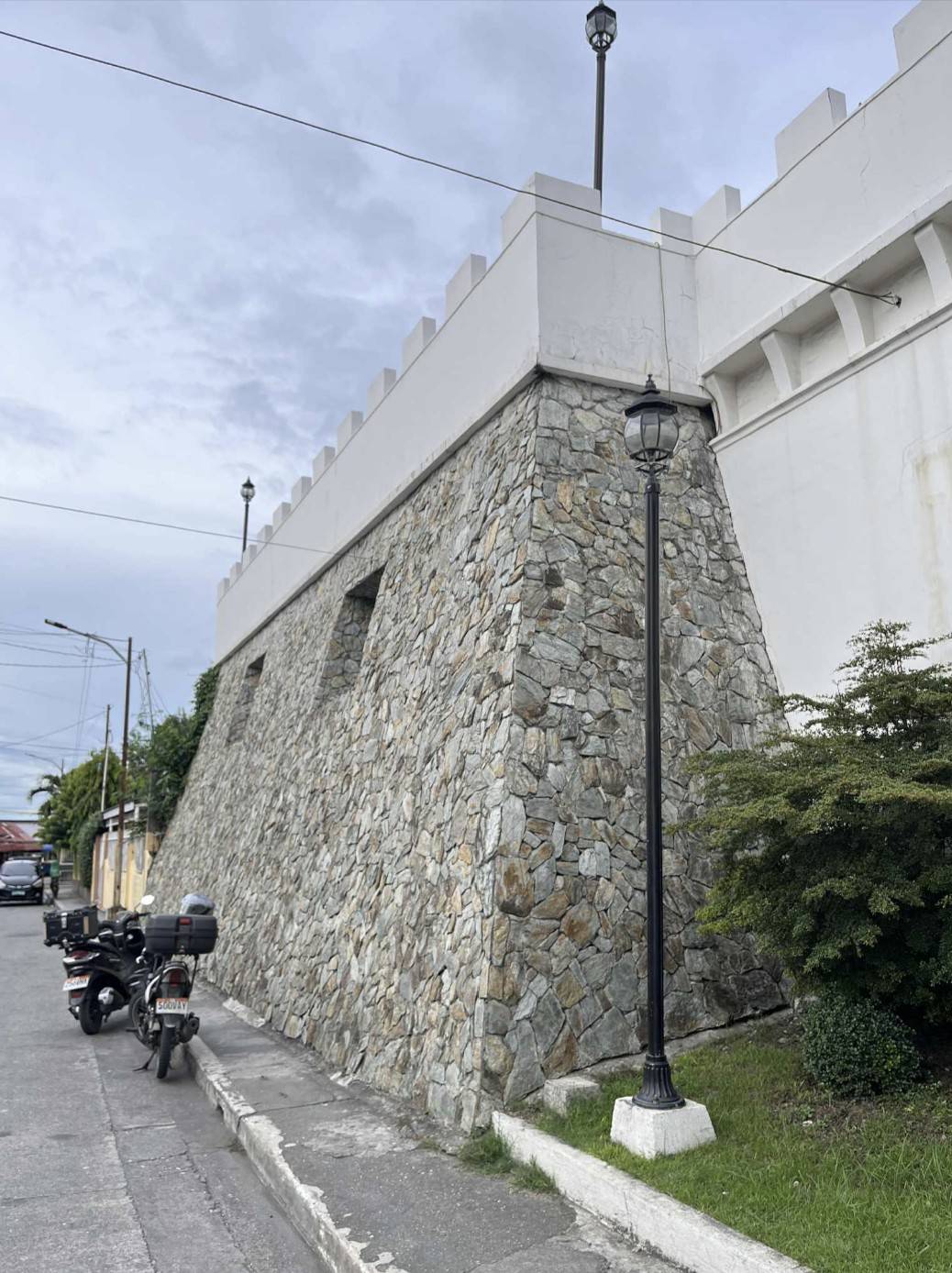
PORTION of kuta cladded in stone.
Photographs by Edgar Allan Sembrano for DAILY TRIBUNE
Apart from being a defensive structure, kuta also refers to a riprap form of construction wherein rough stones are stacked methodologically together to build a structure during the Spanish colonial period.
This type of construction method is popular in Mindoro as can be gleaned at least at the said kuta and church of Calapan and the church ruins of Naujan.
The use of actual coral pieces as construction materials, seen from the old church of Taal in San Nicolas town in Batangas, is also widespread in the entire island of Mindoro.
On apog or lime which was used to bind the stones in the Calapan structures, this was manufactured in the area near the church complex, in what is called now as the barangay of Calero or the place where cal or lime was manufactured.
Other structures
Apart from the Calapan church complex, there are other heritage structures still extant all around the city, mostly post war bahay na bato.
Prominent among these are the Valencia House located near the cathedral. First built during American period, this house was refurbished in the 1950s. What makes the house unique is the pair of Oriel windows jutting out from its front facade.
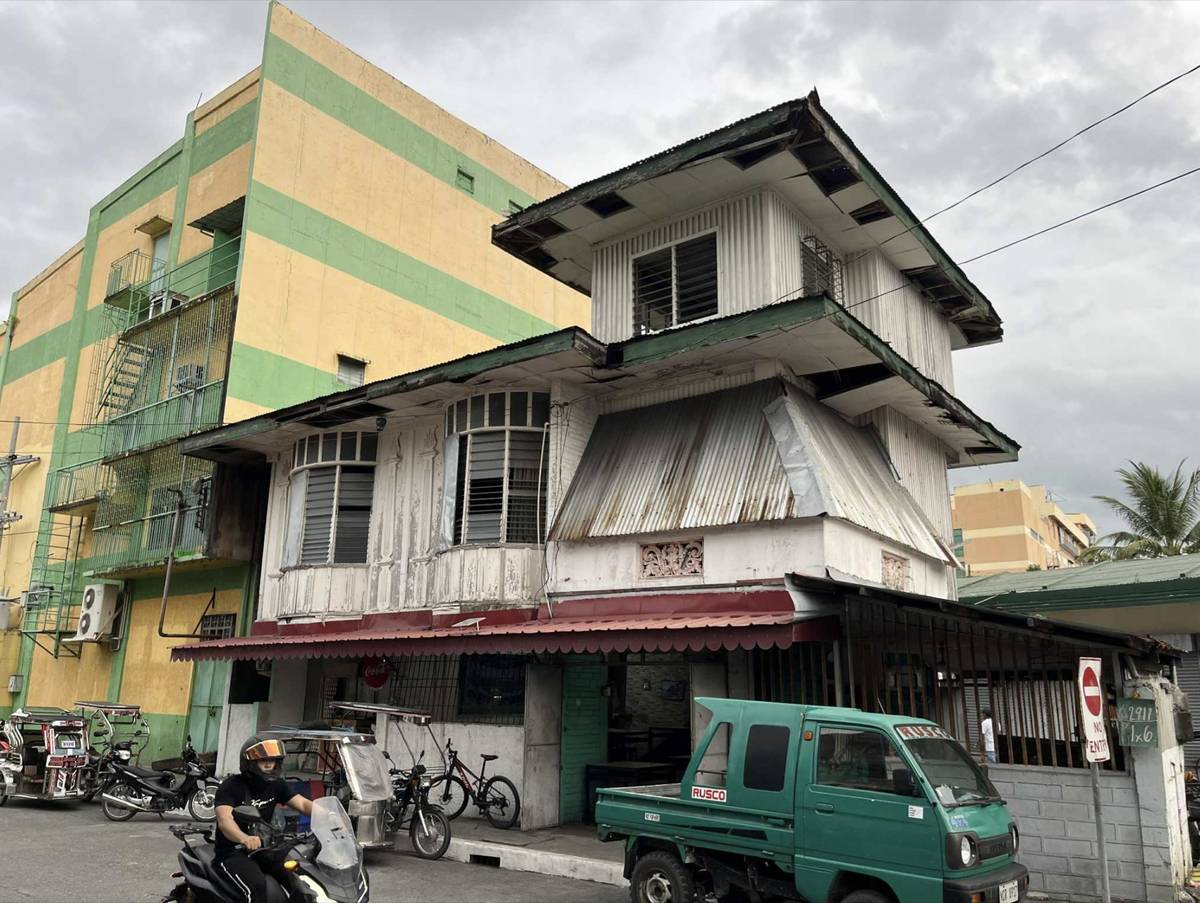
VALENCIA house
Not far from this abode is the Mangyan Heritage Center on Santo Niño Street, housed at a 1950s to 1960s house.
The center functions as an educational institution focused on the study and promotion of the Mangyan heritage, as well as a shop selling Mangyan ethnographic objects.
Another house of interest is what is now called as Casa Estela on Gov. B. Marasigan Street in the barangay of Libis. This 1950s house has now been reused as a hotel and cafe, giving new leash of life to a structure that is often disregarded in other areas due to their sheer number.
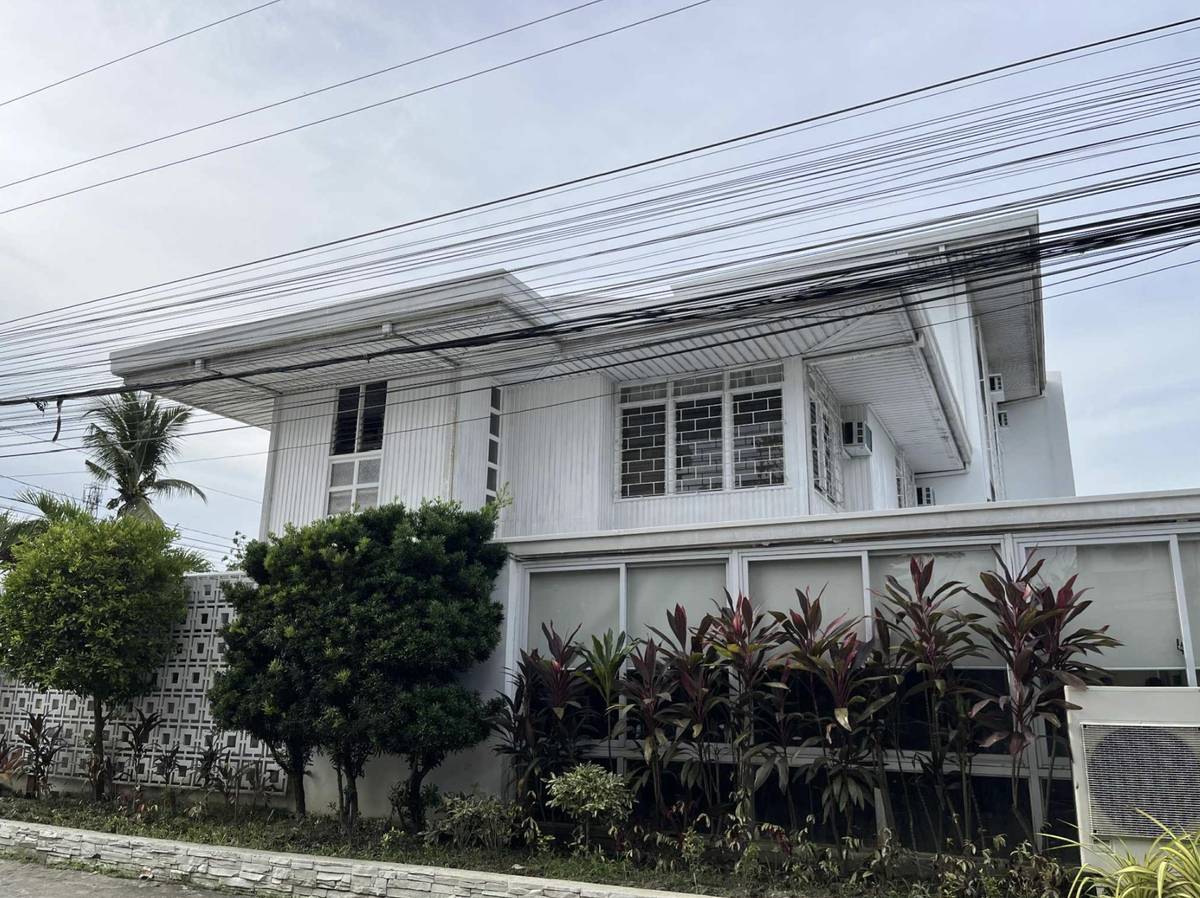
CASA Estela
Gabaldon schools
Other structures of note in Calapan are two Gabaldon school buildings located on J.P. Rizal and Leuterio streets, respectively. These are the Oriental Mindoro National High School in Barangay San Vicente East and Adriatico Memorial School in Barangay San Vicente South.
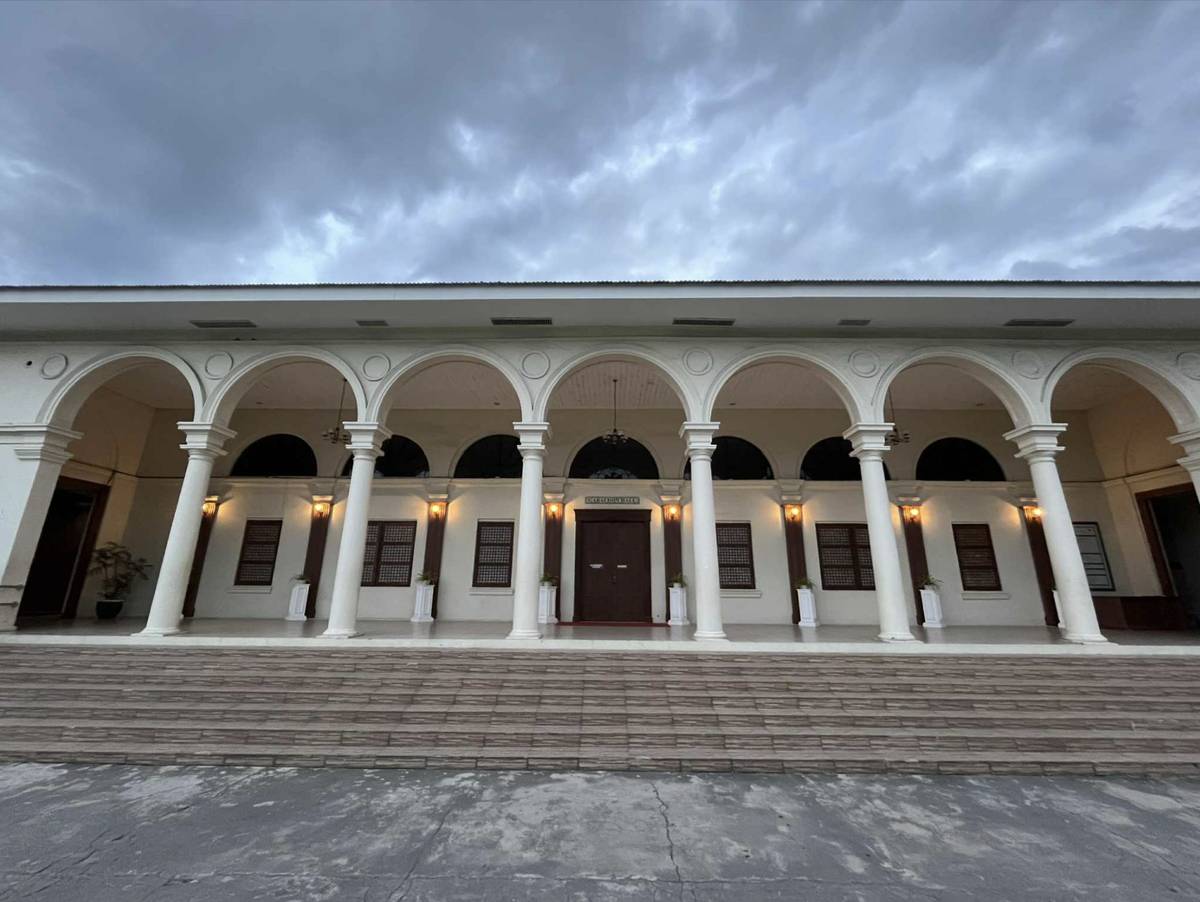
ORIENTAL Mindoro National High School.
Although of contemporary make, an interesting draw from locals and tourists alike is the Plaza del Gobernador located at the provincial government complex.
This open area features impressive dancing fountain shows every evening.
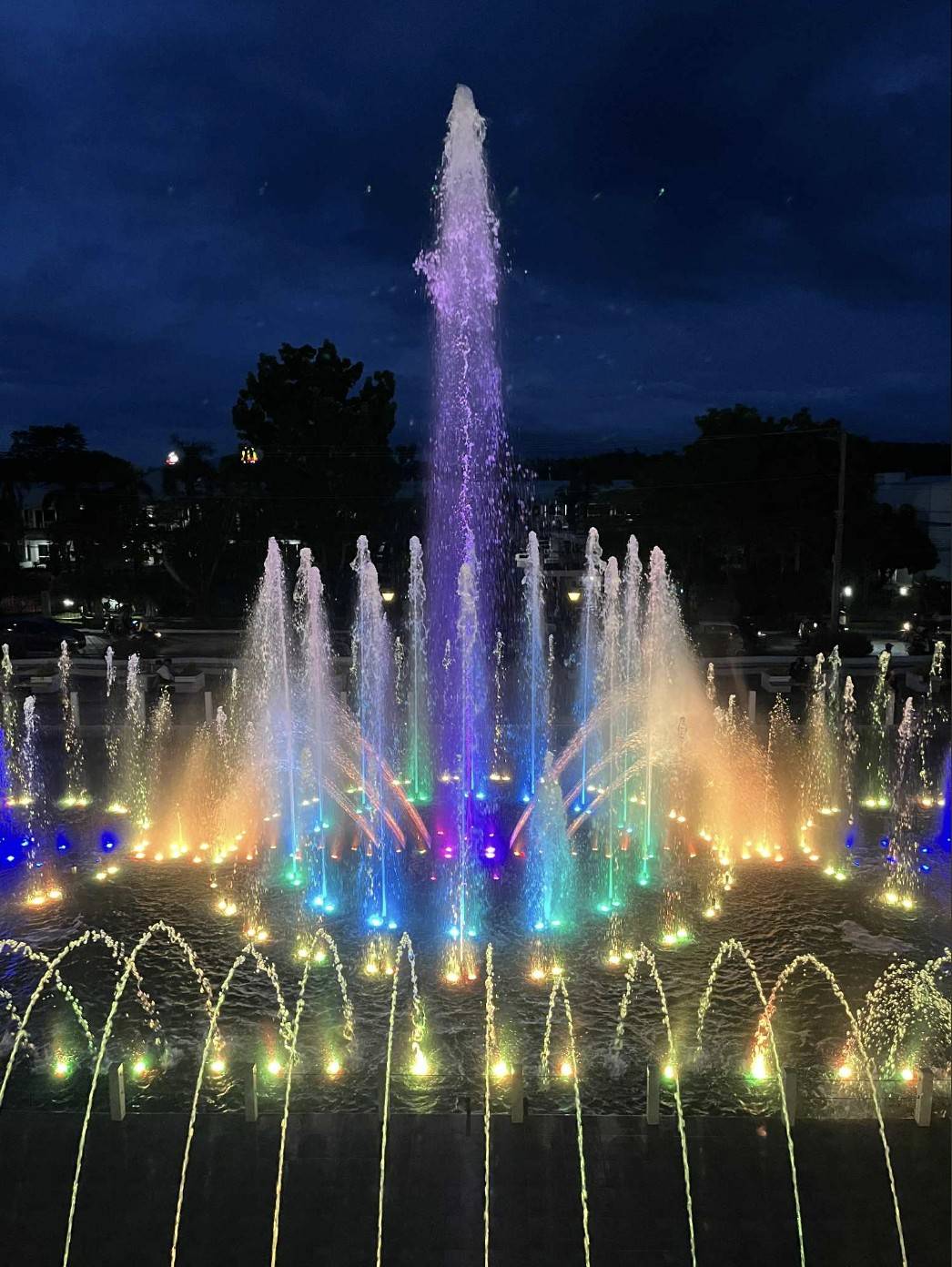
FOUNTAIN show at Plaza del Gobernador.
For food, seafood dishes are served in various karinderya and restaurants like Anahaw Restaurant while Arsenia’s is known for their wide array of dishes and meryenda such as halo-halo, pansit, and their soft and moist bibingka.