
Chilling effect
She cited instances in which payments for most infrastructure contracts, not just flood control, were frozen.

Fourth-quarter growth slowed to a dismal 3 percent, pulling full-year GDP for 2025 down to 4.4 percent, the worst annual figure since the pandemic years, a setback that could have been avoided.
Amid the ongoing outrage over substandard or ghost flood control projects, there was a clear failure of fiscal leadership.
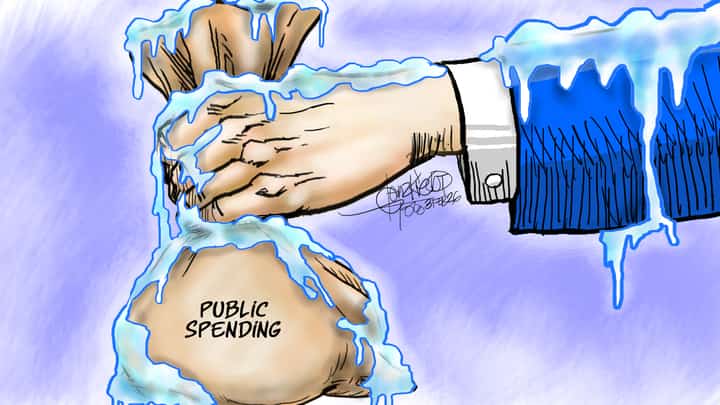
University of the Philippines School of Economics professor and former Socioeconomic Planning Secretary Winnie Monsod said public spending was trapped in suspended animation, as government officials refused to sign vouchers for projects out of fear of investigation.
That is something the government could have prevented, according to Monsod.
She said projects should not have stopped while the flood control scandal was being investigated.
“It’s not the scandal that caused the freeze in public construction funding. It was the government that froze. That may not show corruption, but that certainly shows inefficiency,” she added.
Monsod dissected the reasons given by the Department of Economy, Planning, and Development (DEPDev) Secretary and fellow UP economist Arsenio Balisacan. She said that if public construction had not declined as much, GDP last year would have increased from 4.4 percent to 5.5 percent.
She said Balisacan attributed the slowdown in the economy and the sharp contraction in public infrastructure spending to the corruption scandal, which contributed about 1.1 percentage points to the decline in the final GDP outcome.
“That’s very hard to swallow because flood control projects are a relatively small part of government spending. The major part of public infrastructure is roads, bridges, and foreign-assisted projects,” Monsod explained.
“So just because we looked at flood control projects, the economy lost 1.1 percent. That doesn’t sound right.”
The slowdown in spending, however, was the result of a general fear of releasing funds.
The former top government economist said that it was not only in infrastructure outlays that the government held back, but “I understand that in several provinces, salaries and wages could not be paid because there was a general slowdown in government performance.”
She said, “They all got scared. Is it because they are guilty? I don’t know.”
What the eminent professor meant was that while investigations on the flood control mess were necessary, the government’s reaction was “quite ineffective, and to say the worst, very dangerous for our economy.”
She cited instances in which payments for most infrastructure contracts, not just flood control, were frozen.
“There was a contractor who came to me saying that he had not been paid by the government since October last year, and he was not the only one. So that’s what stopped the construction. It was not the flood control scandal itself, it was the government’s reaction to it,” Monsod indicated.
Following the Disbursement Acceleration Program fiasco during the term of the late President Noynoy Aquino, the same slowdown or chilling effect occurred, resulting in budget underspending.
Monsod also noted Balisacan’s statement during the release of the whole-year GDP figure that the economy “needs this decline.”
She related that Balisacan considered the slowdown necessary to correct problems in the use of funds and to build people’s trust in institutions, but Monsod said the withholding of funds “has made it more difficult for Filipinos to live.”
“Has Filipinos’ trust in Congress or the Executive branch increased? I don’t think so.”
She cited the slow release of funds in the Independent Commission for Infrastructure operating budget as proof of the government’s lethargy.
The ICI was formed in September, but its budget started to be released in December.
“Was that a proper way to increase trust in government?” she asked.
What it amounted to was the downplaying of the commission.
“How many members of Congress were charged? Nothing yet,” Monsod lamented.
In sum, the economy last year was weighed down more by the inefficient response than by the unprecedented theft of public funds itself.