
Regal and dazzling: Seven standouts of the Queen Isabela 2026 Creative Attire competition
The Queen Isabela II Creative Attire competition showcased the province’s culture and heritage. The selected couture creations transformed stories, nature, and devotion into regal fashion.

FROM left: Moises de la Cruz’s design for Queen San Pablo: ‘Towers That Touch the Heavens.’, Michael Barassi’s creation worn by Queen Alicia Christine Jane Alvarado., Queen Angadanan Adassah Shen Zuela wearing Axel Que’s creation., Queen Quirino Khate Gleiza Marie Alfonso in creation by Jeric Sayno and Mark Anthony S. Pimentel’s costume inspired by the endemic Isabela oriole.
PHOTOGRAPH COURTESY OF BJ MELCHOR
The Capital Arena in the City of Ilagan, Isabela, shimmered with imagination and craftsmanship as young designers unveiled their couture creations for the Queen Isabela II Creative Attire competition on 19 January.
Inspired by the 19th-century Spanish monarch after whom the “Queen Province of the North” was named, the contest formed a major component of the Queen Isabela 2026 beauty pageant — one of the most anticipated highlights of the exuberant Bambanti Festival of the province of Isabela. Among the 25 remarkable entries, seven stood out for their artistry, symbolism and sheer visual impact.
Kennedy Jhon Gasper for Ashera Mishael Gallegos, Queen Echague
Multi-awarded costume designer Kennedy Jhon Gasper is no stranger to the international stage, having won Best in National Costume at Miss Universe 2021 for his “Mmanwa” ensemble worn by Miss Nigeria Maristella Okpala. Inspired by a traditional masquerade of southeastern Nigeria, the creation cemented his reputation for cultural storytelling through design.
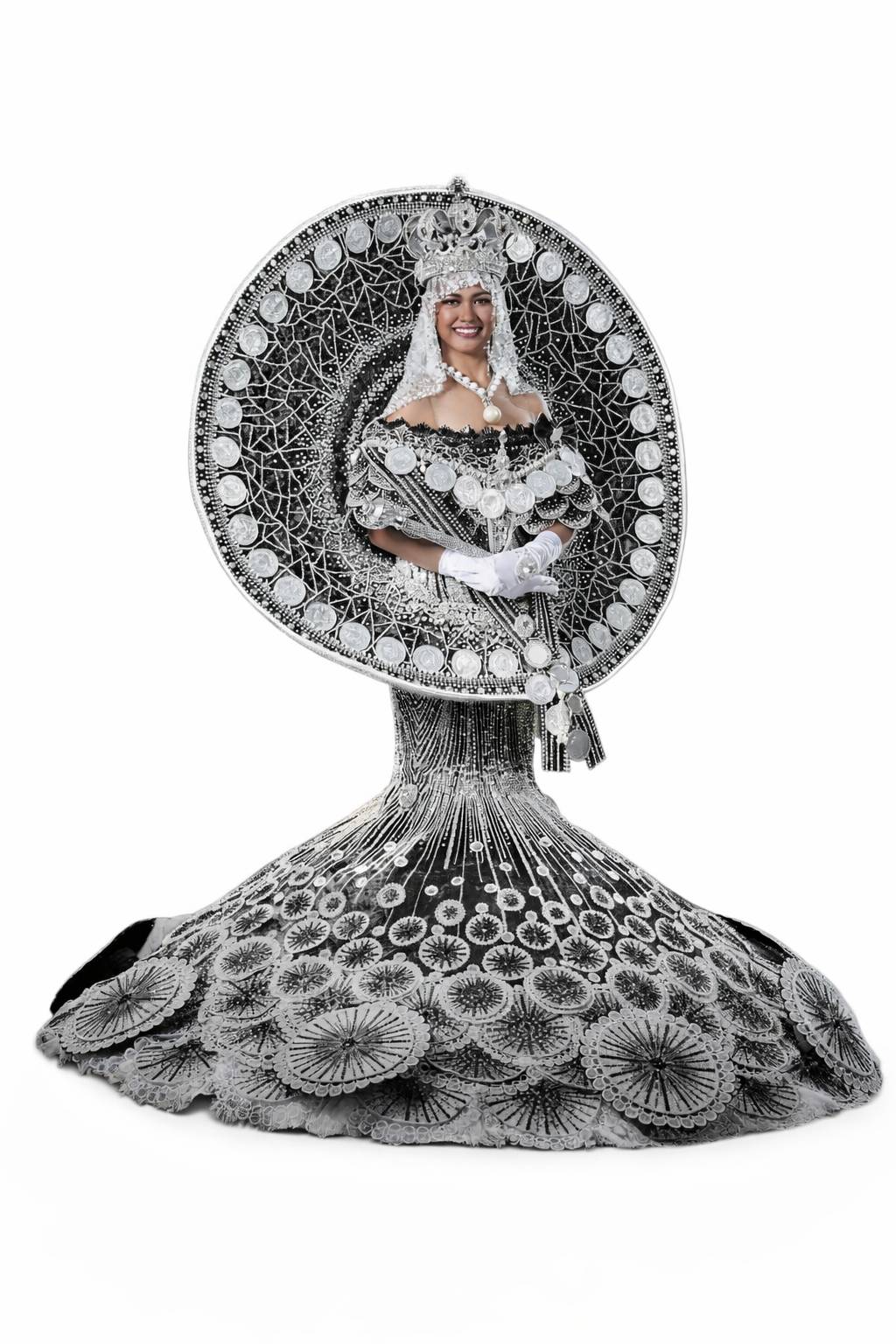
KENNEDY Jhon Gasper won the Best Designer award for his creation, ‘The Moneda de Plata de la Reina,’ for Queen Echague.
For Queen Isabela 2026, Gasper clinched the Best Designer Award and a top five placement in Creative Attire with “La Moneda de Plata de la Reina” (The Silver Coin of the Queen), worn by his muse Ashera Mishael Gallegos of Echague.
Describing the piece, Gasper said it draws from the traje de mestiza, a historic Filipina formal dress blending indigenous and Spanish influences — symbolic of the Filipina’s mestiza identity and timeless elegance. Featuring sheer fabrics, mantillas, and intricate beadwork, the ensemble evokes aristocratic refinement.
“Associated with Queen Isabela II, it represents the Philippines’ rich cultural heritage and artistry. The name references silver coins, which have played a significant role in Philippine currency history, from the Spanish era to modern commemorative coins,” he explained.
Mark Anthony S. Pimentel for Eleni Athina Domingo, Queen San Mateo
Mark Anthony S. Pimentel earned for his muse Eleni Athina Domingo of San Mateo the Best in Creative Attire Award with his “Queen Isabela: The Golden Oriole Sovereign.”
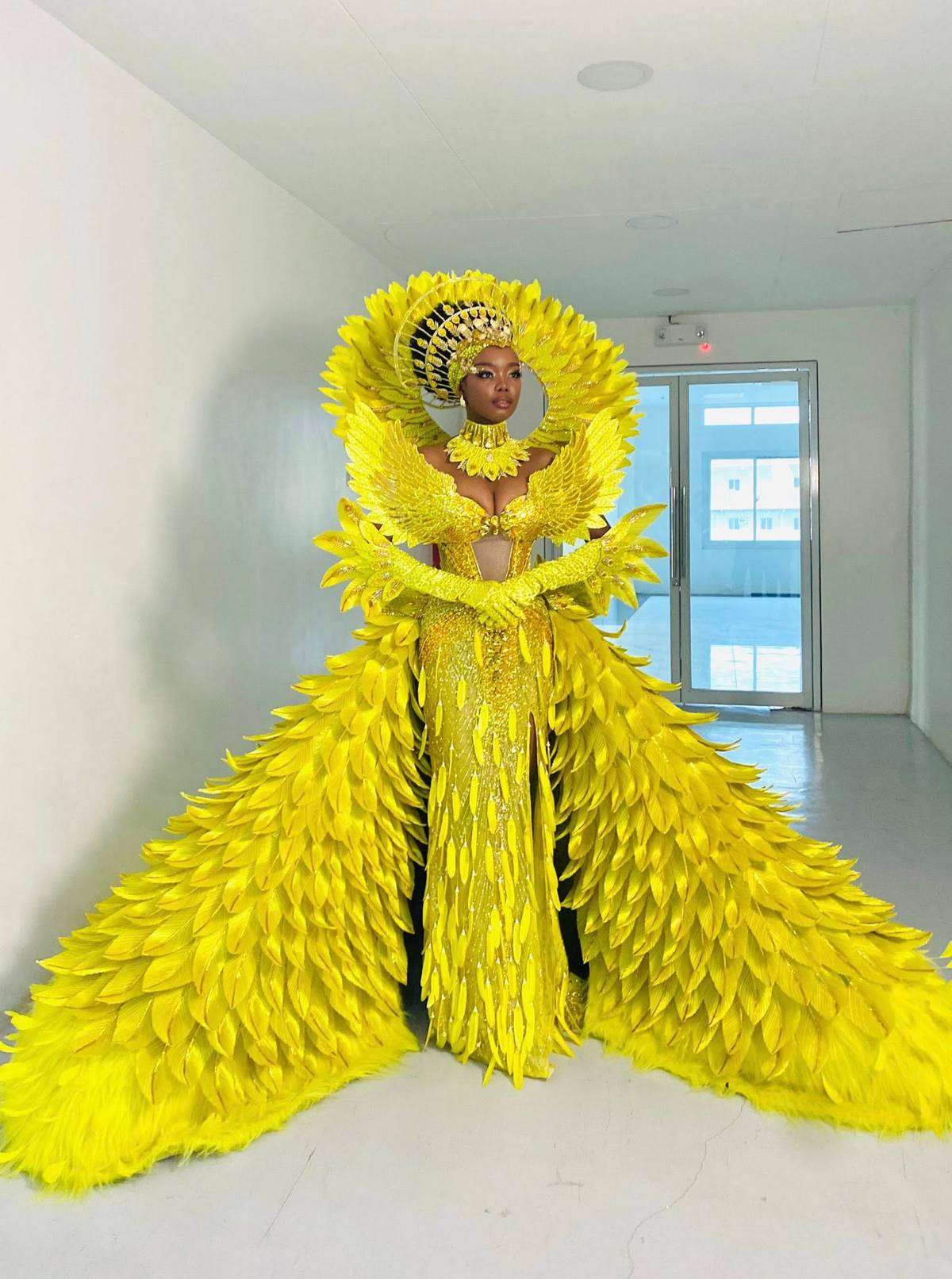
MARK Anthony S. Pimentel’s costume inspired by the endemic Isabela oriole.
Inspired by the Isabela oriole (Oriolus isabellae), a rare bird endemic to Luzon Island, the costume transformed ecological pride into regal couture. “The Isabela oriole represents uniqueness, resilience, and stewardship of nature,” Pimentel explained. “By embodying this bird, the queen becomes a living emblem of the province — celebrating biodiversity while reminding viewers of the responsibility to protect what is rare and precious.”
The creation featured painstaking fabric feather manipulation, with each piece meticulously cut, layered and sculpted to mimic natural plumage. Flowing from bodice to skirt, the feathers create movement and volume while preserving the structural grandeur befitting a queen — melding modern couture with a reverence for nature and place.
Michael Barassi for Christine Jane Alvarado, Queen Alicia
Renowned for his collaboration with Michelle Marquez Dee on the award-winning “Airplane” national costume at Miss Universe 2023, Michael Barassi returned with an ethereal design, named “Cherubim,” created for Christine Jane Alvarado of Alicia.
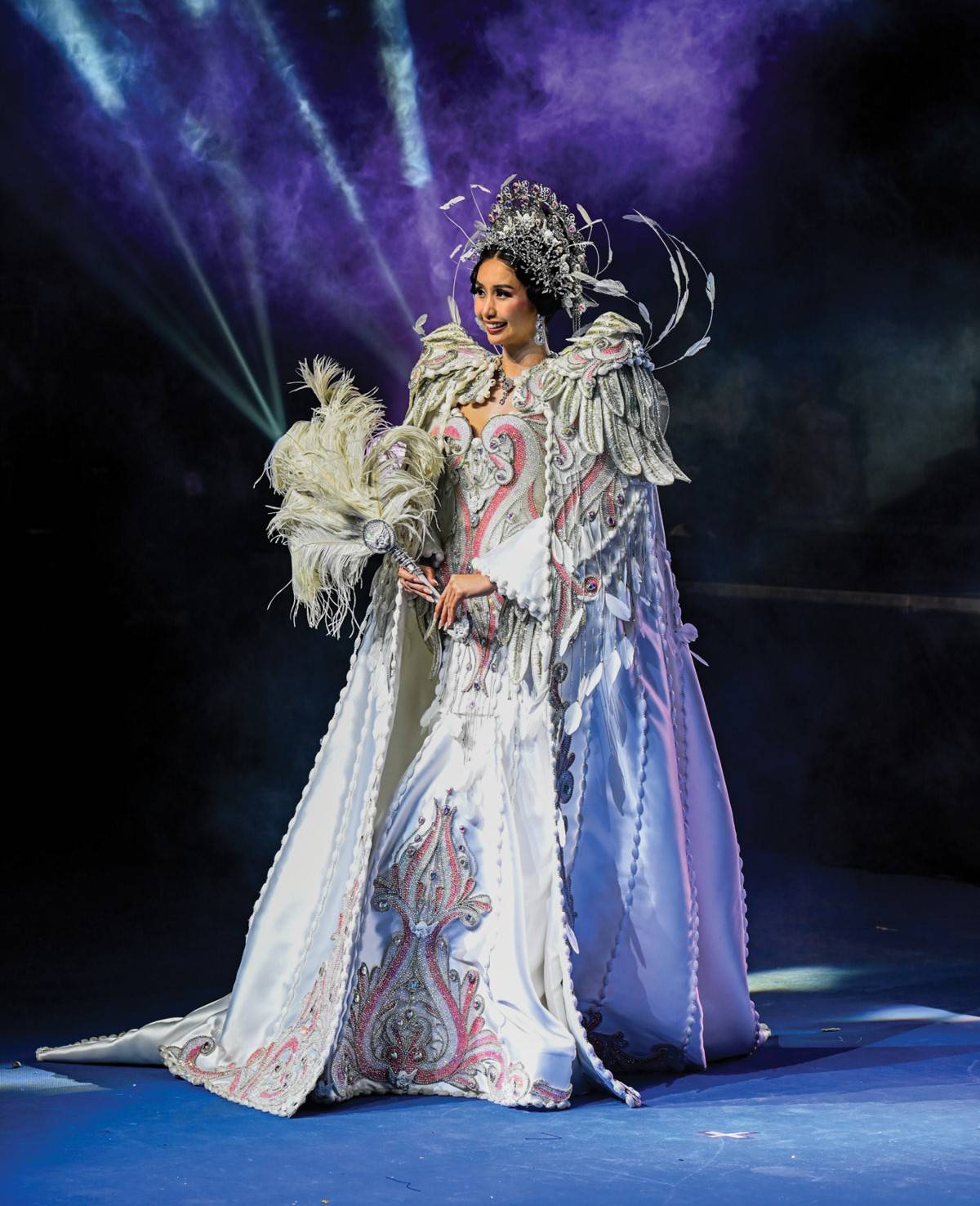
MICHAEL Barassi’s creation worn by Queen Alicia Christine Jane Alvarado.
Rendered in radiant ivory white with soft blush-pink accents, the costume drew inspiration from the cherubim — guardians of divine presence — symbolizing purity, grace and steadfast faith, Barassi explained.
“The intricately adorned bodice echoes sacred scrolls and church-inspired motifs, honoring Isabela’s enduring Catholic heritage. Subtle pink patterns symbolize compassion, hope, and prayers quietly lived out in everyday faith. The winged shoulders, inspired by the many-winged Cherubim, represent divine protection — mirroring how faith has long guided and shielded the Isabeleños through generations,” Barassi shared.
Danny Ross Trinidad for Honey Denise Cachapero, Queen Jones
Danny Ross Trinidad, who also designed the footwear for the Queen Isabela 2026 candidates, presented “The Heart of Isabela” for his muse Honey Denise Cachapero of the town of Jones.
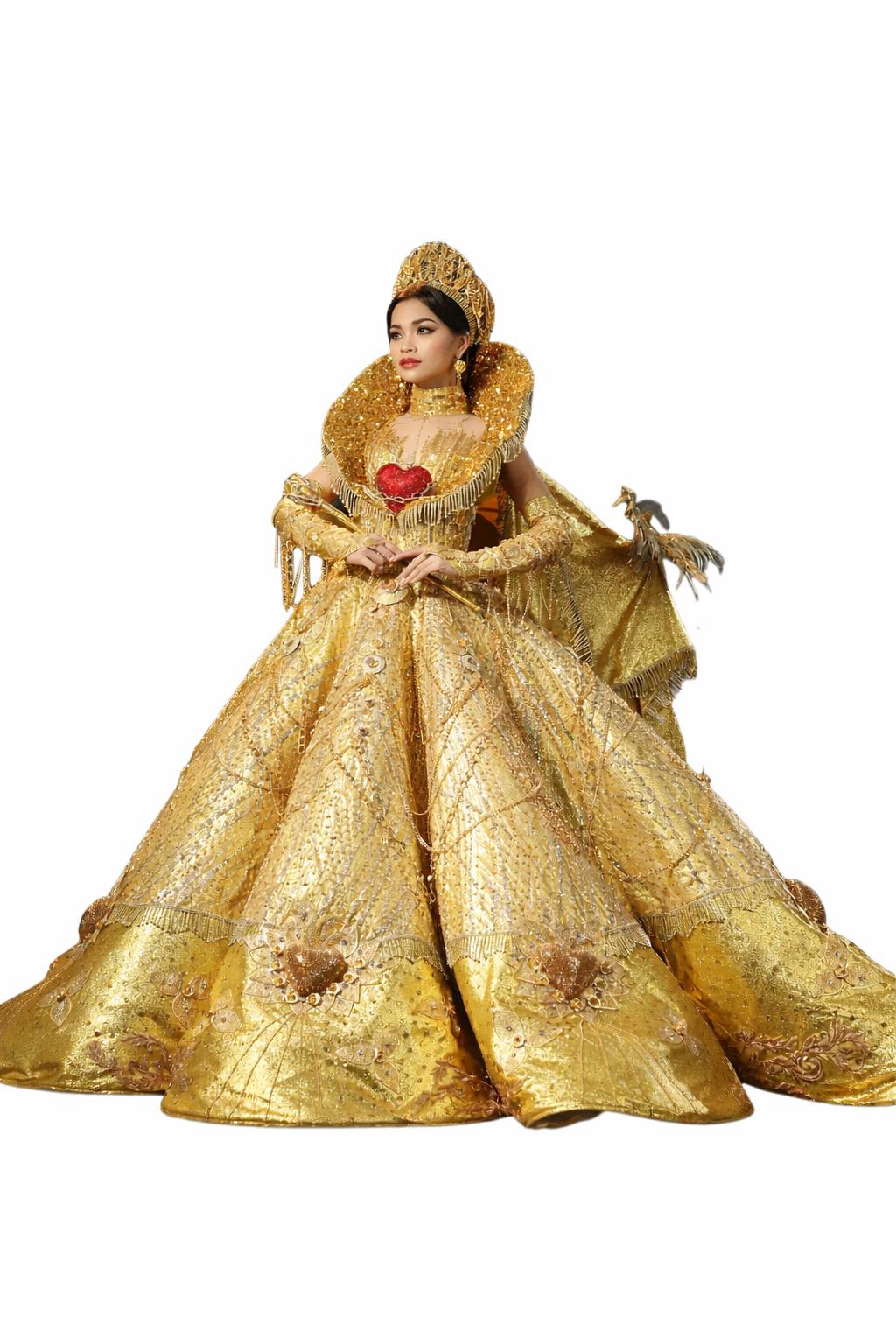
DANNY Ross Trinidad’s ‘The Heart of Isabela’ for Queen Jones.
PhotographS courtesy of Isabela Public Information Office
Described as a “living altar” by Trinidad, the costume celebrated the province’s deep-rooted faith. At its center was a vivid red heart encircled by thorns, symbolizing the spiritual core of Isabela. A majestic Mantle of Grace unfolded into a structured gold ball gown adorned with intricate chains, thousands of sequins, and gold beads — representing resilience and the province’s harvests.
At the back, a flowing queen’s cloak emerged, embellished with four royal birds, each bearing the image of the Sacred Heart of Jesus. Meticulously crafted from beads, the cloak symbolizes divine guidance and protection. “This gown is more than a costume,” Trinidad enthused. “It is a tribute to Queen Isabela’s heart — a symbol of love, faith and royalty.”
Jeric Sayno for Khate Gleiza Marie Alfonso, Queen Quirino
Hotelier Jeric Sayno from Camarines Norte presented “Isabela: Liwalás,” a term meaning “light unbound,” for Khate Gleiza Marie Alfonso of Quirino.
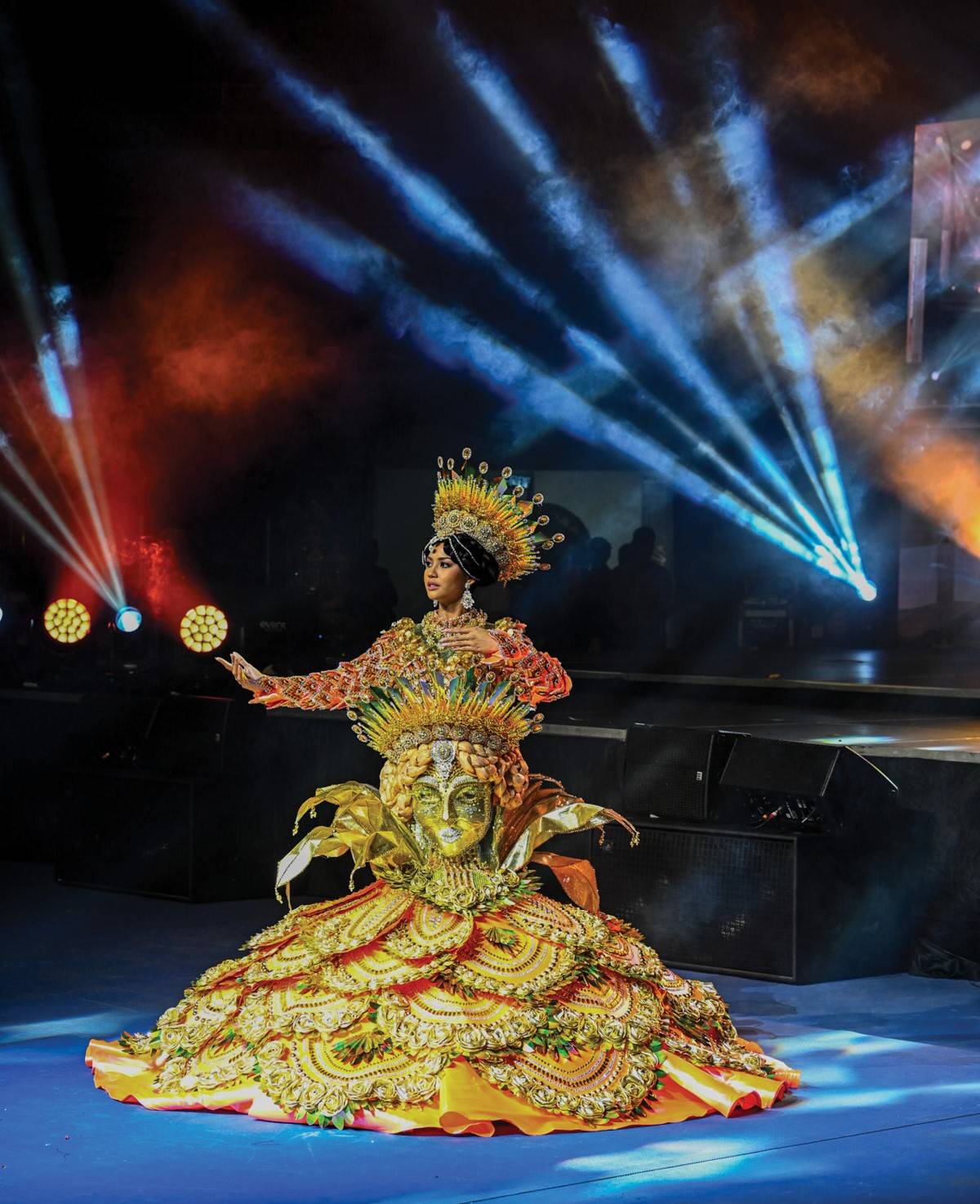
QUEEN Quirino Khate Gleiza Marie Alfonso in creation by Jeric Sayno.
According to him, the creation honored Queen Isabela as the province’s matriarch, celebrating “feminine power, grace, and collective brilliance.” At its forefront stands a golden female effigy — serene yet commanding — symbolizing womanhood as a source of life, wisdom and guidance. A radiant crown and sunburst headdress evoke hope, while thousands of hand-placed rhinestones represent the people of Isabela, individual lights forming a greater whole.
A dramatic cape fashioned from recycled can tabs and adorned with golden-bronze rhinestones transformed sustainability into a regal statement. The expansive gown, layered with metallic florals and crystal pathways inspired by fertile fields and flowing rivers, spoke of “abundance, continuity, and growth.”
“Together, every element embodies Liwalás, a vision of liberated femininity, dignified sustainability, and the united, radiant spirit of Isabela,” Sayno noted.
Moises de la Cruz for Dianna Mhae Tumaliuan, Queen San Pablo
From Bayombong, Nueva Vizcaya, Moises de la Cruz presented the monumental “Towers that Touch the Heavens,” a homage to the municipality of San Pablo for its candidate, Dianna Mhae Tumaliuan.
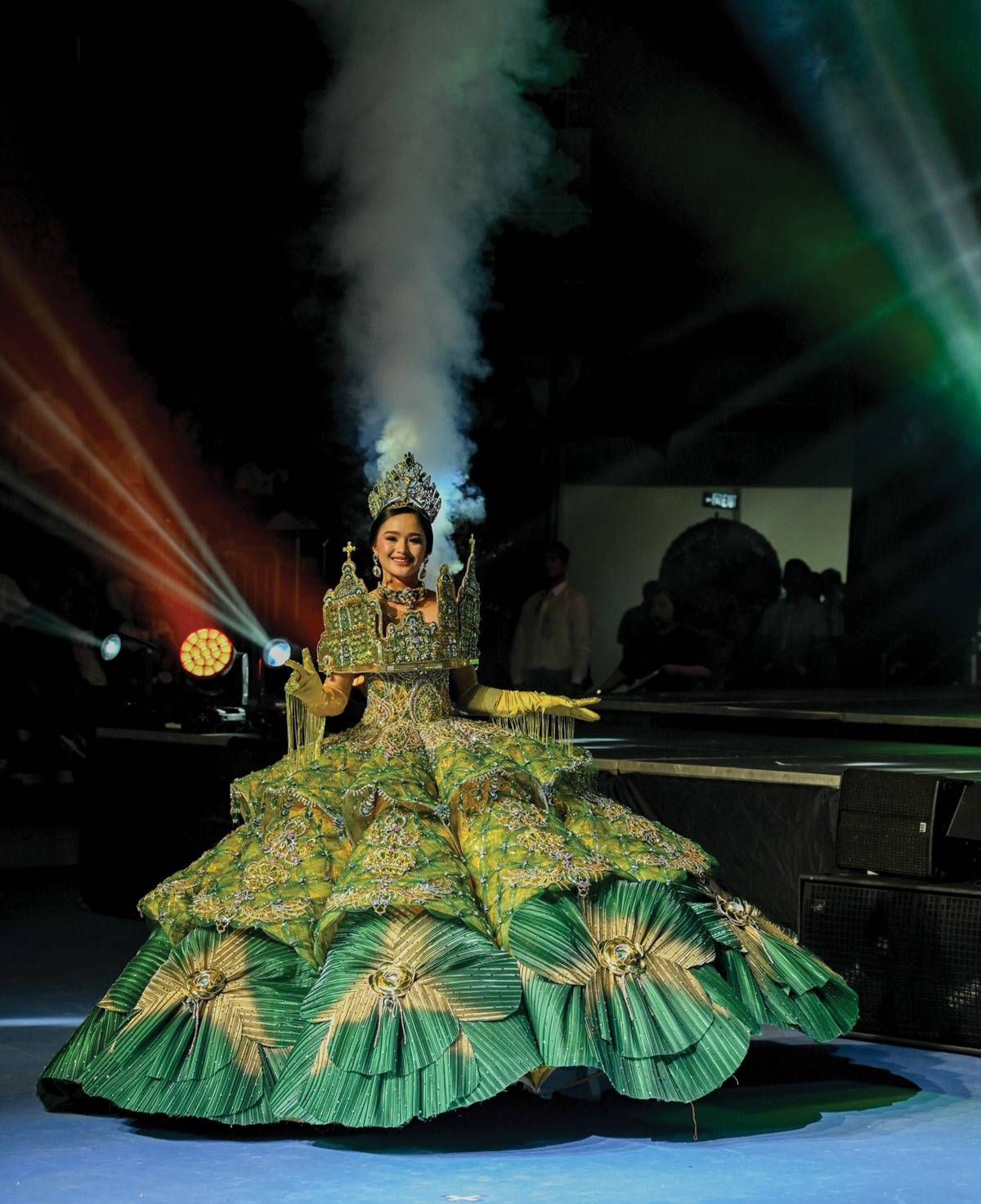
MOISES de la Cruz’s design for Queen San Pablo: ‘Towers That Touch the Heavens.’
According to him, the gown’s silhouette — structured yet flowing — symbolized “leadership rooted in tradition and compassion.” The bodice featured a meticulous architectural rendering of the San Pablo Church, rising as a sacred emblem and reflecting the community’s deep spirituality and unity.
“Flowing from the bodice, the gown transitions into lush shades of emerald green and radiant gold, reflecting San Pablo’s vast and life-giving rice fields. The green fabric cascades in layered panels, mimicking rolling farmlands seen at harvest time, while gold embroidery and beadwork trace patterns of rice grains symbols of abundance, hard work, and sustenance,” De la Cruz said.
Subtle references to the local cow husbandry appeared in the skirt and train, weaving together faith, agriculture, and stewardship into one majestic vision.
Axel Que for Adassah Shen Zuela, Queen Angadanan
Cebu City-based design prodigy Axel Que offered a contemplative yet opulent creation rooted in Baroque splendor. Drawing inspiration from Queen Isabela II of Spain and the province of Isabela, the costume recalled Renaissance court dress and sacred regalia, “where power was expressed through ceremony and devotion,” he explained.
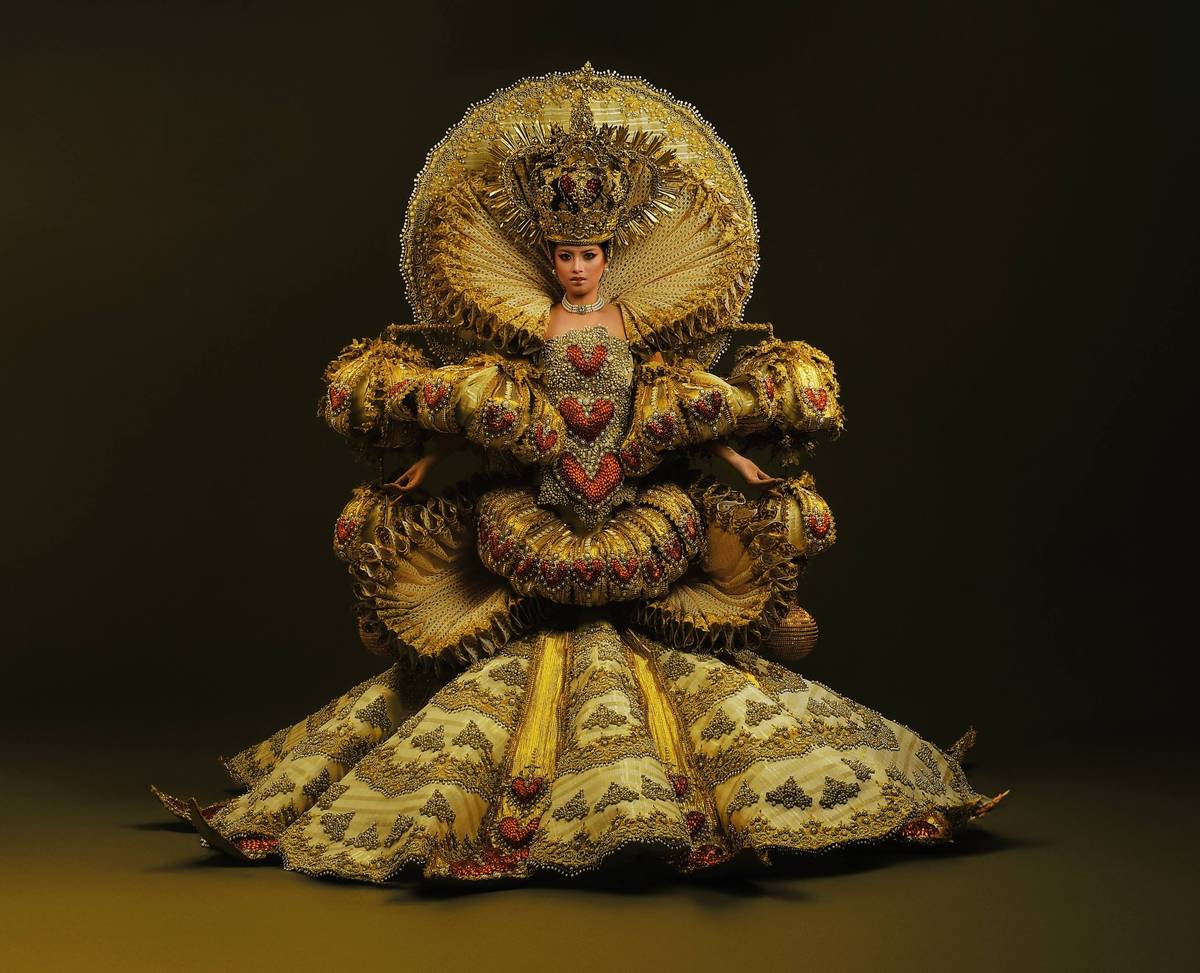
QUEEN Angadanan Adassah Shen Zuela wearing Axel Que’s creation.
Three-dimensional heart motifs adorned the bodice and sleeves like jeweled offerings, symbolizing “both romantic and spiritual love as central forces that bind history, faith and land.” The colors of antique gold, ivory, and crimson conveyed heritage and prosperity, with gold dominating as a tribute to “Isabela’s agricultural wealth and its role as a life-giving landscape.”
“Rich brocades, pearls, metallic embroidery, and sculptural pleating create a sense of cultivated abundance,” he described. Love, Que emphasized, was “woven throughout the design not as spectacle, but as intention: love for land, lineage and labor, expressed through craftsmanship, reverence and restrained grandeur.”