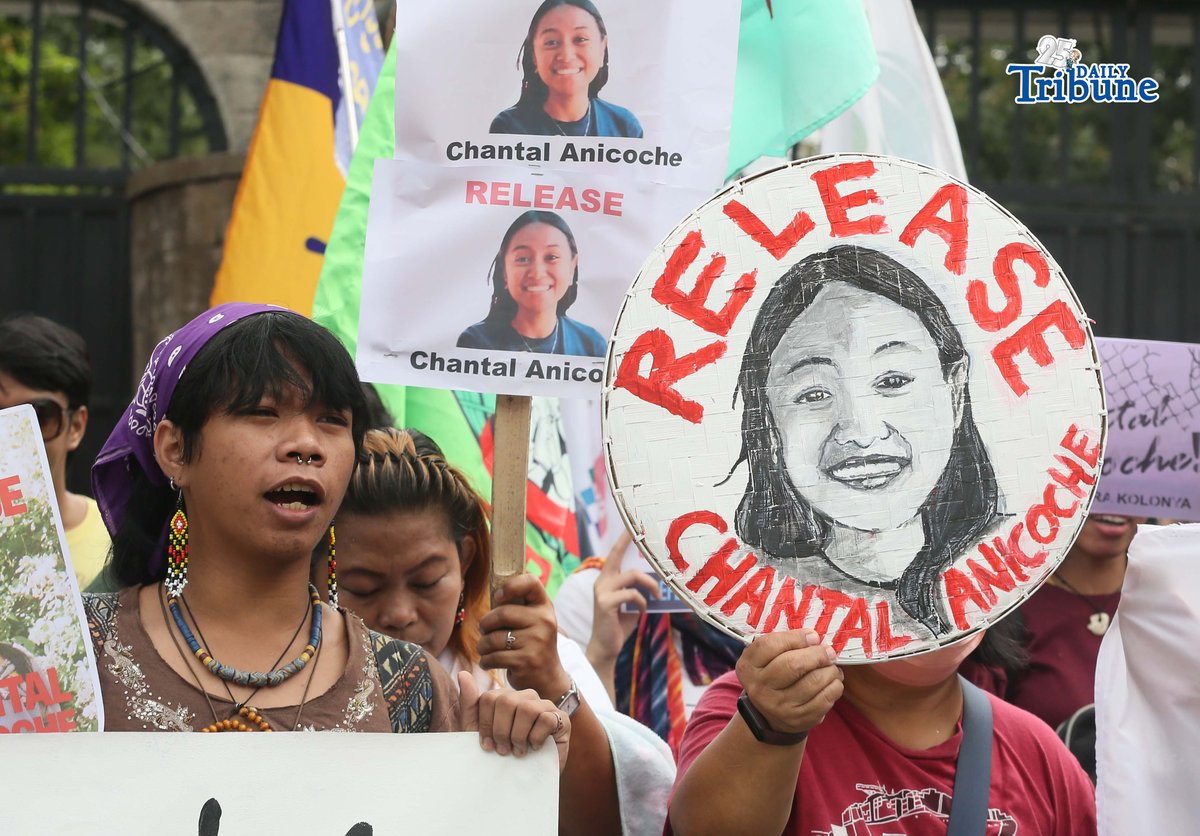
The Philippine government’s decision to order the departure of Filipino-American Chantal Anicoche was rooted in her own admissions of being with the New People’s Army (NPA) during an armed encounter in Occidental Mindoro, as well as her ties to organizations abroad that support the Communist Party of the Philippines’ (CPP) international network, the National Task Force to End Local Communist Armed Conflict (NTF-ELCAC) said Sunday.
In a statement issued after Anicoche left the country, Undersecretary Ernesto C. Torres Jr., executive director of NTF-ELCAC, emphasized that the government’s action was lawful, evidence-based, and driven by security and immigration concerns — not politics.
“The decision was not arbitrary, nor was it political,” Torres said. “It was based on information obtained during lawful processing, including Ms. Anicoche’s own disclosures regarding her activities and affiliations.”
Authorities found Anicoche alive near the site of a 1 January armed clash between government forces and the NPA in Abra de Ilog, an encounter that left a young student dead, another person missing, and two soldiers wounded. During debriefing, she reportedly admitted to traveling to the Philippines to link up with the NPA and staying in an NPA camp at the time of the encounter.
Torres also noted that Anicoche acknowledged her involvement with organizations abroad that authorities say function as part of the CPP’s international support network —groups that play roles in recruitment, fundraising, and ideological promotion for the armed movement.
“These circumstances presented clear security and immigration concerns that warranted decisive administrative action,” Torres said.
The Order to Leave, issued by the Bureau of Immigration, is an administrative immigration measure grounded in law. Torres clarified that it does not imply innocence nor validate narratives portraying Anicoche as a political victim.
“At the same time,” he said, “it allows the relevant institutions in the Philippines and abroad to assess the matter further within their own legal frameworks, especially since both the CPP and NPA are recognized as terrorist organizations under Philippine law and by other governments, including the United States.”
Torres warned that Anicoche’s case highlights a persistent and dangerous pattern: Young people, including foreign nationals, being drawn into conflict zones through pathways framed as advocacy or international solidarity, which in reality intersect with recruitment, radicalization, and direct exposure to armed violence.
“No political narrative is worth a life, and no ideology justifies placing young people in harm’s way,” he said.
The task force also expressed concern that groups linked to Anicoche continued to circulate her name and images publicly without her or her family’s consent, even as authorities handled her case with restraint and respect for her dignity.
With Anicoche now out of the country, Torres said the Philippine government has fully discharged its obligations under the law, leaving further responsibility with her home country and family.
NTF-ELCAC reaffirmed its commitment to exposing recruitment and grooming networks, protecting communities, and advancing peace through accountability and development. Torres warned that distorted narratives of the case only obscure the real dangers of armed conflict and the tragic consequences suffered by families whose loved ones were lost after following similar paths of radicalization.