
Exiled Tibetans choose leaders for lost homeland
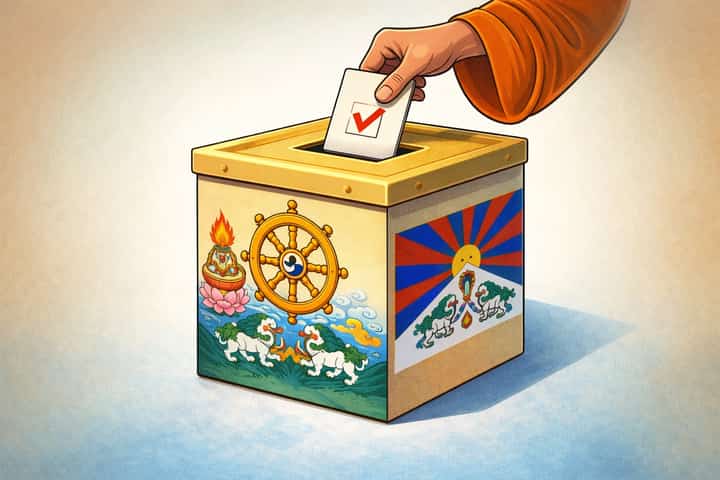
DEHRADUN, India (AFP) — Exiled Tibetans began a unique global election on Sunday for a government representing a homeland many have never seen, as part of a democratic exercise voters say carries great weight.
From red-robed Buddhist monks in the snowy Himalayas, to political exiles in megacities across South Asia, to refugees in Australia, Europe and North America, voting will take place in 27 countries — but not China.
“Elections... show that the struggle for Tibet’s freedom and independence continues from generation to generation,” said candidate Gyaltsen Chokye, 33, based in the Indian hill-town of Dharamsala, headquarters of the government-in-exile, the Central Tibetan Administration (CTA).
It is an electoral system unlike any other, a vote for a parliament without a state.
Beijing, which in 1950 sent troops to the vast high-altitude plateau it calls an integral part of China, condemned the elections as a “farce.”
“The so-called ‘Tibetan government-in-exile’ is nothing but a separatist political group,” China’s foreign ministry said in a written statement to Agence France-Presse.
“It is an illegal organization that completely violates the Chinese constitution and laws.”
The 91,000 registered voters reject that view.
Many see the vote as the most consequential democratic moment for them since their revered Buddhist spiritual leader, the Dalai Lama — who celebrated his 90th birthday last year — fled Chinese rule in 1959.
“These elections show that political agency exists even without a state, especially when democratic participation is denied inside Tibet,” said Sonam Palmo, 38, from Switzerland’s University of Zurich, who helps run Smartvote Tibet, a website helping the diaspora select candidates.