
Why ‘Spring in Prague’ is love with a brain
Its latest production, ‘Spring in Prague,’ is not the typical pre-Valentine movie offering normally lapped up by fans of love stories. It has a tone that will be detected only by the more discerning and politically aware moviegoer.


There was a brief period on this side of the globe when geography lessons became fun for the pedestrian Pinoy. The creative Filipino used names of countries to create acronyms as expressions of love. ITALY, therefore, began to stand for I Trust And Love You.

SARA Sandeva and Paolo Gumabao in ‘Spring in Prague.’
Screengrab from YouTube.com/Borracho Films
Below are the names of other countries that were used as acronyms to express love and concern — and what they stand for: Nepal (Never Ever Part As Lovers), India (I Nearly Died In Adoration), Holland (Hope Our Love Lasts And Never Dies), Libya (Love Is Beautiful; You Also), Egypt (Everything’s Great, You Pretty Thing), China (Come Here, I Need Affection), Korea (Keep Our Romance Engaging Always) and Japan (Just Always Pray At Night).

PAOLO Gumabao and Sara Sandeva in ‘Spring in Prague.’
Screengrab from YouTube.com/Borracho Films
In an attempt to add more names of countries to the list of acronyms that may be used as love language, some inventive Pinoys pushed things to the limit. Not surprisingly, Peru became “Porget” Everyone, Remember Us.
But no matter how they tried, the usually ingenious Filipino was never able to do anything with Philippines. Apparently, it’s too long a name to play around with. The real challenge, though, was Liechtenstein. And so was Cezcholosvakia.
This fad of crafting acronyms out of names of countries to express cheesy affection occurred from the late 1980s to the early 1990s. Around this time, historic events were taking place in Czechoslovakia. Communist rule had ended, and Czechoslovakia eventually became two separate states: the Czech Republic and Slovakia.
Prague remained with the Czech Republic and was retained as capital. This city never lost its charm and has become the setting for some huge international movies. Oscar Best Picture winner Amadeus was shot there in 1984. The list of other major films that used Prague as a location includes The Bourne Identity, Mission: Impossible, Van Helsing, Spider-Man: Far From Home and Casino Royale.
In local entertainment, Prague is also the setting for the upcoming TV5 series A Secret in Prague. The show features Enrique Gil and Andrea Brillantes.
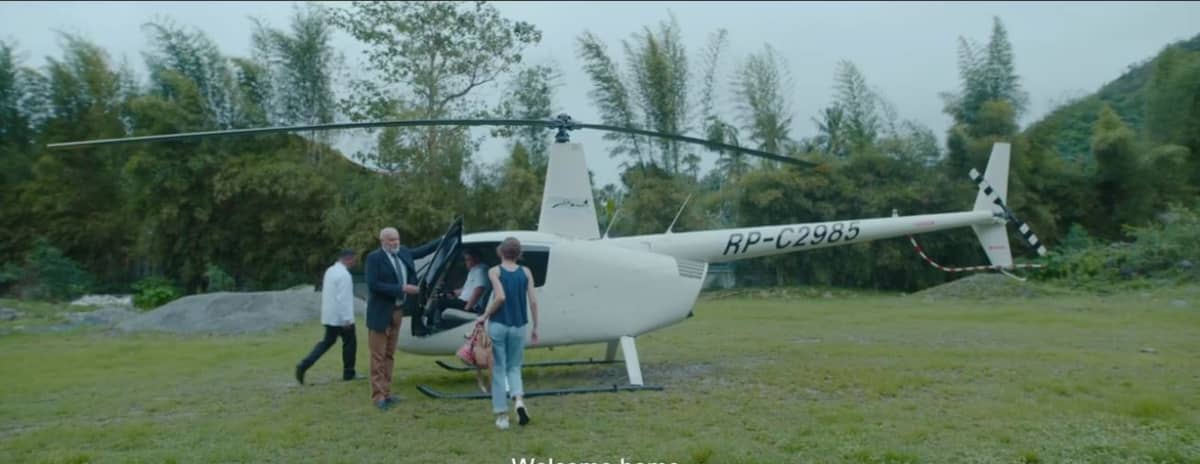
‘SPRING in Prague,’ a leveled-up story that imparts lessons on geography, cultural ties and political oppression.
Screengrab from YouTube.com/Borracho Films
But bigger — and definitely grander — than that Channel 5 series is the movie Spring in Prague, which opens in cinemas on 4 February. This movie is produced by the Borracho film outfit of Atty. Ferdinand Topacio.
Yes, the name of the production group is Borracho, which means “drunk” in Spanish. Was this company formed as a result of an “usapang lasing” (drunken talk)? It doesn’t seem like that was what happened when Atty. Topacio put up this movie outfit. He was obviously serious when he entered the film business.
Prior to Spring in Prague, Borracho Films also came up with Mamasapano: Now It Can Be Told. Released as an entry to the 2022 Metro Manila Film Festival, this movie project is important because it dramatizes one of the darkest chapters in Philippine military history: the death of 44 members of an elite police unit during a counterterrorism mission in Mamasapano, Maguindanao del Sur, in 2015.
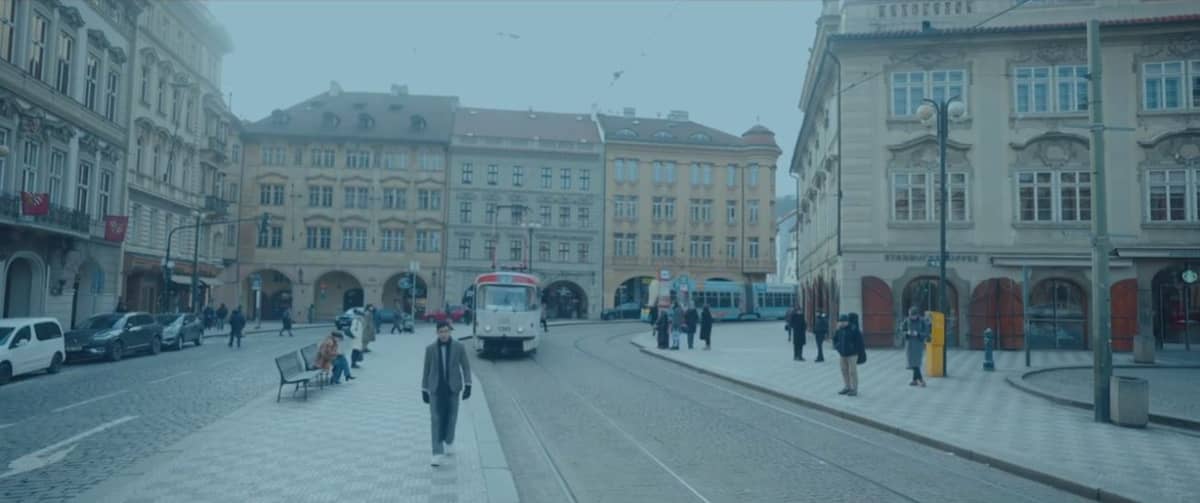
BORRACHO Films tries to elevate the quality of local movies with its choice of projects.
Screengrab from YouTube.com/Borracho Films
Mamasapano: Now It Can Be Told is underrated as a film, but it will always be considered a significant movie in Philippine cinema due to its documentation of the tragic events that led to the killing of several members of the Special Action Force, now collectively known as SAF44.
It can therefore be said that Borracho Films tries to elevate the quality of local movies with its choice of projects. Its latest production, Spring in Prague, is not the typical pre-Valentine movie offering normally lapped up by fans of love stories. It has a tone that will be detected only by the more discerning and politically aware moviegoer.
The story of Spring in Prague opens during a fashion pictorial in the Czech Republic. The photo shoot is interrupted by a carload of men sent out by a powerful figure to monitor the movements of the print and television model named Maruska, as played by Macedonian actress Sara Sandeva. The powerful man is her father, who is obsessed with controlling her life — practically even the air she breathes. Shades of the Diosdado Carandang character of Vic Silayan in Kisapmata, but minus the suggested incestuous desire.
When Maruska gets the chance to escape, she flees to the Philippines with the help of a Fil-Hispanic friend, Estrella (Elena Kozlova). She finds herself in a Puerto Galera resort that is owned and managed by Alfonso Mucho (Paolo Gumabao). The two start out as nemeses. But before the story degenerates into one of those hackneyed Star Cinema plot lines, they quickly iron out their differences and find themselves in a relationship. It’s an instant romance, which is how the young today find love.
The romantic scenes in the island affair are standard. They kiss. They bed — the usual. But it is when Maruska is tricked by her tyrannical father into returning to the Czech Republic that viewers begin to feel what an intense love story Spring in Prague truly is. The swoon-worthy scenes happen, ironically enough, when they are away from each other.
They lose contact because Maruska’s father keeps her a prisoner in their house. The two lovers practically go crazy when they are separated from each other, especially Alfonso, since he is kept in the dark as to what happened to his inamorata.
Alfonso’s passionate love manifests itself when he is shown at the Prague airport looking like a lovesick puppy. Imagine traveling to the other side of the globe in search of the woman he loves, uncertain about where to find her. Now that is true love.
It actually helps that Gumabao is a very good actor — always has been. He is lucky that part of his early training was under Cannes Film Festival winner Brillante Mendoza. As an actor, he is very passionate about his craft. He is perfect playing Alfonso, since the role calls for someone who sounds like a native English speaker. His command of the King’s language is flawless.
In Spring in Prague, he has palpable chemistry with Sandeva, who is very popular in the Czech Republic. Sandeva is a striking beauty with a porcelain-like complexion. She registers well in her scenes with Gumabao. They make a lovely onscreen pair, and their perfect combination helps turn Spring in Prague into a great love story.
The tireless search of Alfonso for Maruska is mostly shot in Prague. But the film’s director, Lester Dimaranan, exercises enough restraint by not turning the movie into a travelogue. After all these decades, Prague is still a beautiful city, with its old-world charm unchanging. (Spring in Prague is done in collaboration with FilmFrame.) Thankfully, there are scenes showing the world-famous Holy Infant of Prague, an icon revered by Catholics all over the globe, especially among Filipinos in search of miracles.
It is in the stolen moments between Maruska and Alfonso in Prague where the excitement in the film intensifies. Viewers feel their pain, their longing for each other. It is in these scenes where the moviegoer begins to appreciate the beauty of Spring in Prague as a love story.
Spring in Prague, of course, is not your run-of-the-mill rom-com. Its screenplay is by the celebrated writer Eric Ramos. And when it is a script by Eric Ramos, expect the material to have a strong socio-political message.
The historical fact that both the Philippines and the Czech Republic were once under dictatorial rule is not lost on Ramos. The fascist figure in the movie, of course, is Maruska’s father. Was his character inspired by Silayan’s Diosdado Carandang in Kisapmata? Most likely, since Kisapmata was filmed during the martial law era and there are a lot of anti-military sentiments in this Mike de Leon masterpiece.
Spring in Prague is a leveled-up love story. It imparts a lot of lessons on geography, cultural ties, political suppression and even smooth transitions in governments. The Philippines had the peaceful EDSA Revolution in 1986, while Czechoslovakia had its own Velvet Revolution later, in 1989.
Even with a change of name, it’s still difficult to make an acronym out of Czech Republic. But Prague is doable. So here’s an acronym to describe Spring in Prague, but using only the name of the city: Prague (Passionate Romance And Geographical Universal Education).
There really is a lot to learn in the film Spring in Prague. It is several notches above the usual love story offered by most other movie companies. The viewer doesn’t only fall in love when watching the film, but also gets informed and educated.