
The AI in Architecture
As the new decade approaches, it will be essential to monitor advancements in AI that may transform the architectural industry.


As we stand at the threshold of 2026, the question of how artificial intelligence (AI) will reshape our daily lives has never been more pressing.
Generative AI has advanced at a staggering pace since the early 2020s and has become seamlessly woven into our routines, from modifying photographs to generating images from text prompts and drafting comprehensive documents. Nevertheless, its long-term effects, especially on creative fields such as architecture, remain uncertain and require careful analysis as the decade progresses.
I believe that AI still has a considerable way to go before fully automating the architectural industry. A common criticism of AI is its tendency to diminish the humanity in our daily lives, and nothing is as personal as designing the spaces and buildings we inhabit and live in.
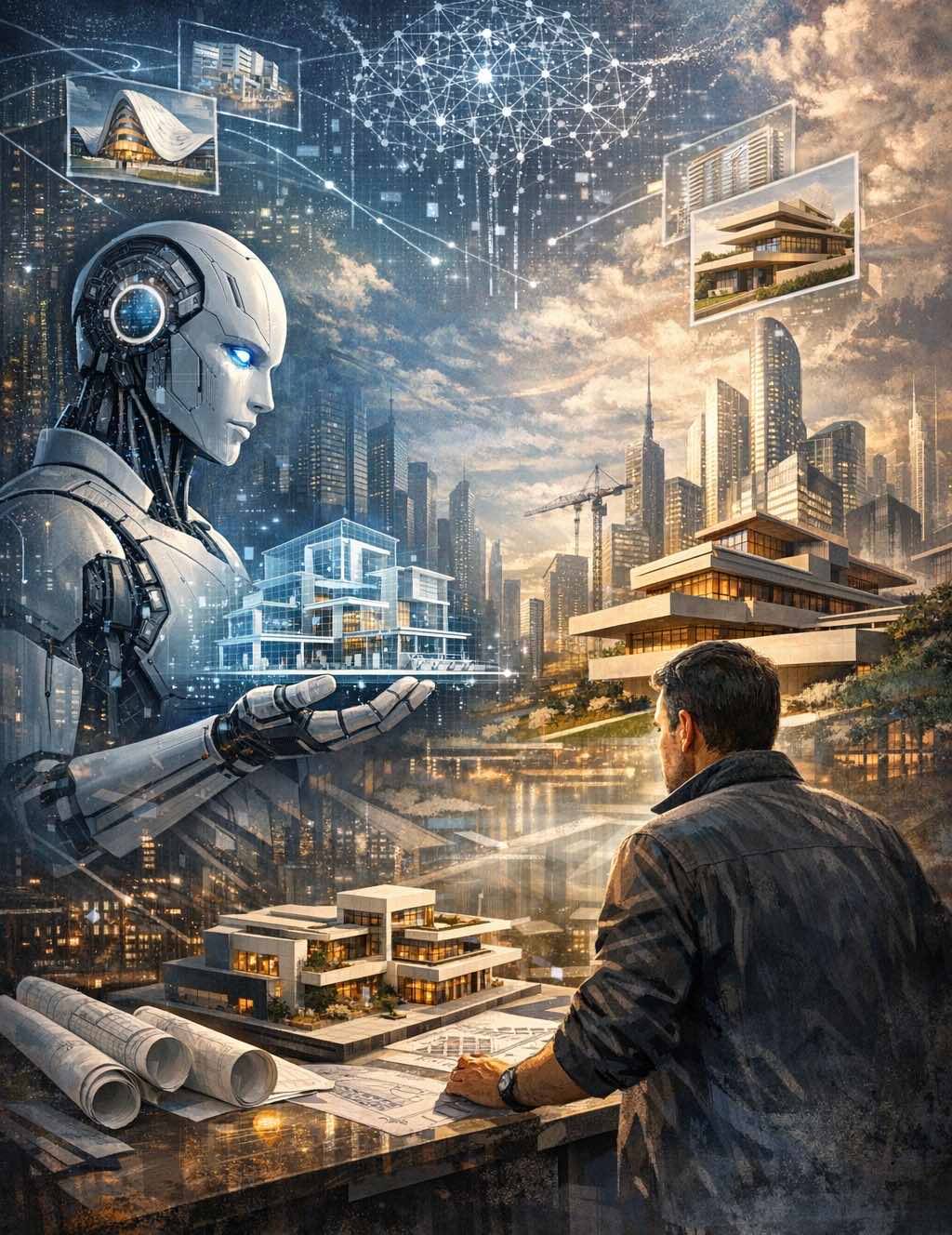
ARCHITECTS turn dreams into lived reality, something AI cannot yet replicate.
AI-generated photo
Architects serve as stewards for their clients, guiding them toward realizing their ideal and lofty design goals while ensuring compliance with all relevant federal and local regulations governing aesthetics and functionality. Additionally, architects routinely collaborate with a diverse range of professionals, including mechanical, plumbing and electrical engineers, as well as specialists such as asbestos consultants, feng shui experts and passive house designers, to name a few. At present, AI has not achieved the capacity to understand the complex relationship between the built environment and human experience to the same extent as actual human architects do. Clients who build their dream homes would be more comfortable being able to collaborate with people over AI as it allows the power of empathy to appease anxiety and reservations in the very stressful process of designing your own home.
Currently, AI generates outputs from pre-existing data, providing a strong informational foundation but also imposing key limitations. This dependence restricts innovation and stifles creativity, making it hard for AI to deliver truly original architectural designs. In contrast, architects like Zaha Hadid and Frank Lloyd Wright created iconic works by deliberately defying convention and pursuing originality.
AI can help architects work smarter, but the vision, empathy and daring originality behind iconic buildings will always be human.
Photograph courtesy of Unsplash/Google DeepMind
While AI excels at automating and completing tasks rapidly, this efficiency introduces another grave and potential risk to the architectural profession, particularly in a capitalist context where investors and developers may prioritize cost and speed over creativity. Such priorities could result in the proliferation of uniform buildings, ultimately eroding the unique character and cultural identity of our cities. When this happens, cities tend to lose their soul.
As the new decade approaches, it will be essential to monitor advancements in AI that may transform the architectural industry. In the foreseeable future, AI is unlikely to replace human architects; however, historical precedent suggests that unforeseen developments can significantly alter established practices. Everything can change in an instant.